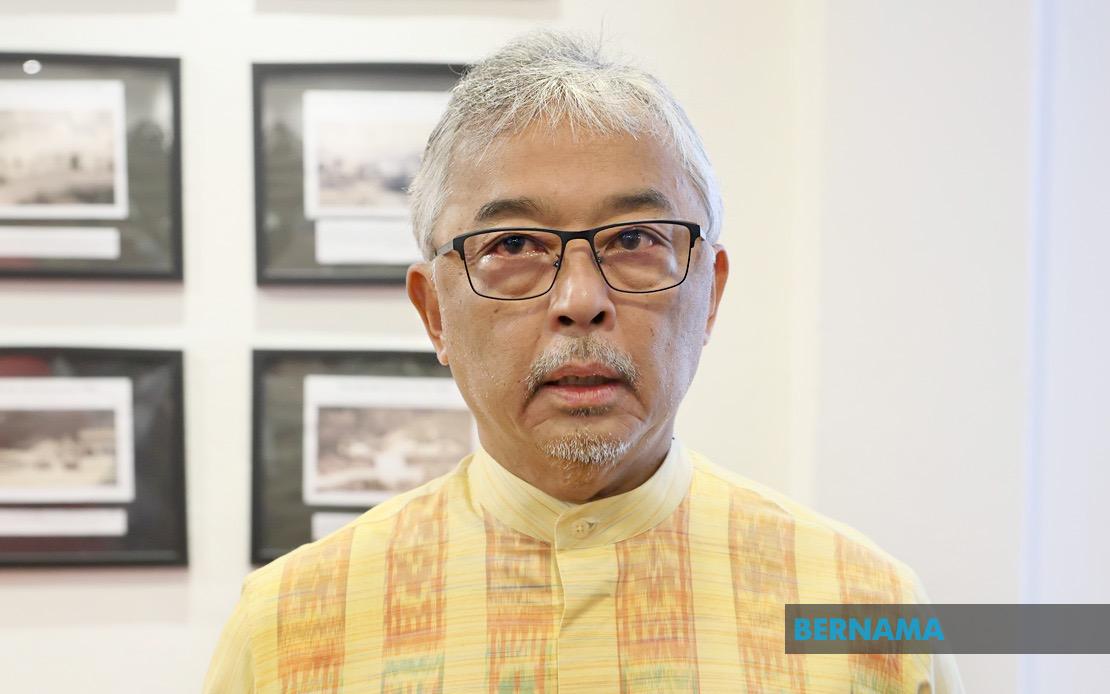
The Sultan of Pahang, Al-Sultan Abdullah Ri'ayatuddin Al-Mustafa Billah Shah, formally inaugurated the centenary celebrations of Sekolah Sultan Ahmad during a ceremony held at the school's Pekan campus on July 25, underscoring the institution's enduring significance within Malaysia's educational landscape. Accompanied by the Tengku Ampuan of Pahang Tunku Azizah Aminah Maimunah Iskandariah and the Tengku Mahkota of Pahang Tengku Hassanal Ibrahim Alam Shah, the monarch's presence reflected the royal family's deep investment in the institution's historical trajectory and contemporary mission.
Established in 1926 under the nomenclature Government English School, Sekolah Sultan Ahmad occupies a distinctive position among Malaysia's heritage educational establishments, having operated continuously for a century through periods of significant social and political transformation. The school has functioned as an incubator for national leadership and intellectual talent, producing alumni of considerable prominence and influence across government, judiciary, and public service sectors. Among its notable graduates are Tun Khalil Yaakub, the late Tan Sri Jamaluddin Jarjis, and Tan Sri Sidek Hassan, individuals who have wielded substantial authority in shaping the nation's institutional development and policy direction.
During the launch proceedings, the Sultan articulated appreciation for the organizing committee and benefactors whose financial commitments enabled the successful orchestration of the anniversary commemorations. This recognition extended beyond ceremonial acknowledgment to encompass a substantive endorsement of the collaborative mechanisms through which educational institutions mobilize resources and stakeholder participation. The royal gratitude served simultaneously as tacit validation of the broader principle that educational advancement depends upon diversified funding sources beyond government allocation alone.
A central component of the Sultan's remarks centered upon his personal dedication to educational access and equity, particularly regarding students from economically disadvantaged households and those encountering academic difficulties. Rather than treating these cohorts as educational periphery, the monarch positioned them within a framework of strategic national importance, suggesting that their advancement directly contributes to broader socioeconomic development objectives. This rhetorical positioning carries implications for how educational policy is formulated and resourced within Pahang and, potentially, across Malaysia's federal system.
The Sultan drew particular attention to a suite of educational initiatives bearing his patronage, which have implemented pedagogical approaches demonstrating measurable efficacy in transforming learning trajectories for students from lower-income backgrounds. The metrics cited—specifically the facilitation of approximately 1,000 students' entry into tertiary institutions—provide quantifiable evidence of programmatic impact rather than aspirational objectives. For Malaysian policymakers and educators, such data points offer empirical grounding for understanding how targeted interventions addressing socioeconomic barriers can yield substantial improvements in educational outcomes.
The pedagogical methodology underlying these initiatives represents a departure from conventional approaches that often assume uniform learning pathways suit all student populations. By acknowledging that students from underprivileged circumstances may require differentiated instructional approaches, the Sultan's framework implicitly critiques deficit-based conceptions of disadvantaged learners. Instead, it proposes that structural impediments and instructional calibration, rather than inherent capability limitations, constitute the primary barriers to academic achievement. This distinction carries profound implications for resource allocation and teacher preparation within educational systems.
The timing of this centennial celebration assumes added significance within Malaysia's contemporary educational policy environment. The nation has long confronted questions regarding equity of access to quality instruction, particularly between urban and rural constituencies and across socioeconomic strata. As Sekolah Sultan Ahmad marks one hundred years of operation, it simultaneously models an institutional commitment to inclusion that extends beyond maintaining traditional standards to encompassing active mechanisms for bringing marginalized students into fuller participation within academic communities.
The presence of the Tengku Mahkota of Pahang at this ceremony further underscores the succession of royal attention to educational matters across generational transitions. His participation signals continuity in princely advocacy for learning institutions and suggests that future leadership within Pahang will sustain analogous commitments to educational development and student welfare. For Southeast Asian observers, the elevation of educational access to the level of royal priority reflects broader regional understanding that human capital development constitutes a foundational requirement for sustainable national advancement.
Sekolah Sultan Ahmad's centennial also invites reflection upon the durability of institutional identity across dramatic historical shifts. An establishment that commenced operations during the British colonial period has survived independence, confronted postcolonial educational restructuring, navigated linguistic and curricular transformations, and adapted to the technological disruptions of the twenty-first century. This longevity testifies both to the institution's adaptive capacity and to the enduring relevance of its educational mission, suggesting that heritage institutions can remain contemporary forces rather than merely historical artifacts.
The school's role in producing figures of national consequence across a century-long arc indicates that educational institutions function as pipelines for talent identification and cultivation at scales difficult to quantify but nevertheless consequential for national trajectory. The investment in secondary education at Sekolah Sultan Ahmad, when viewed from a century-long perspective, has yielded returns extending far beyond individual student advancement to encompass contributions to institutional governance, judicial reasoning, and public administration. This longitudinal view provides context for understanding why royal patronage and public celebration of such institutions serve national interests beyond nostalgic commemoration.
Looking forward, Sekolah Sultan Ahmad's success in facilitating advancement for economically marginalized students offers an instructive model for other Malaysian secondary institutions contemplating how to balance excellence with accessibility. The demonstration that approximately one thousand students from disadvantaged backgrounds have successfully transitioned to higher education through Sultan-patronized programs provides evidence that such outcomes need not represent exceptional or anomalous occurrences. Rather, they can constitute normalized expectations within institutional cultures deliberately structured to identify and nurture talent regardless of socioeconomic origin.

