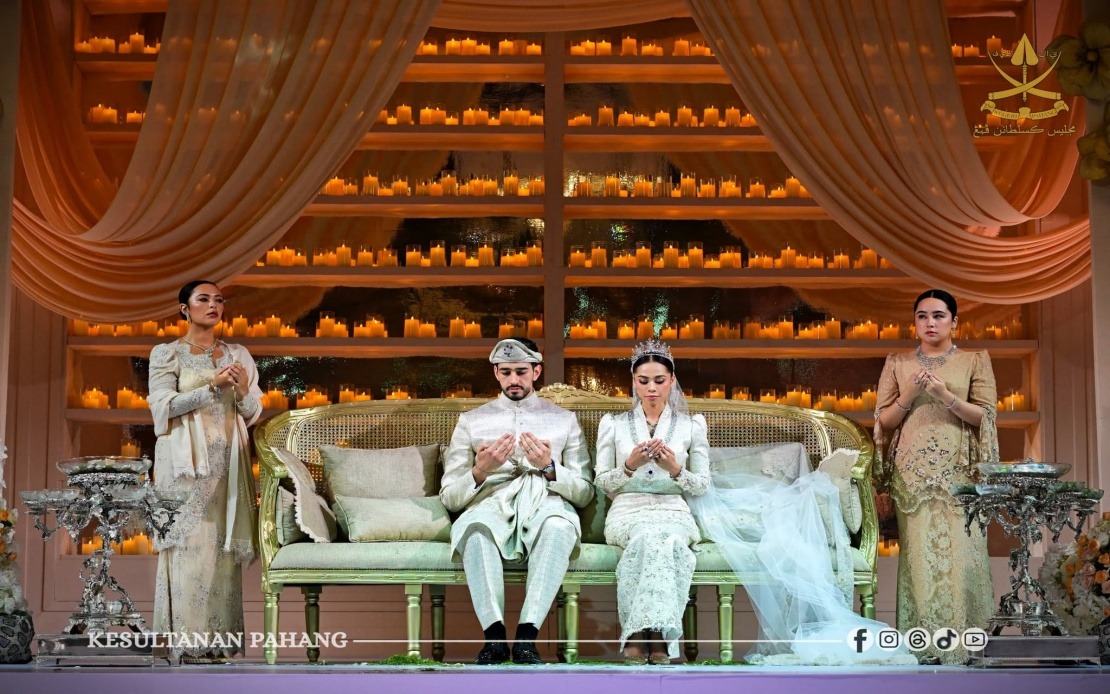
The wedding reception of Tengku Puteri Ilyana Alia and Christopher Lionel Froggatt drew prominent attendance from Malaysia's royal circles when Pahang Sultan Al-Sultan Abdullah Ri'ayatuddin Al-Mustafa Billah Shah graced the ceremony at a Kuala Lumpur hotel, marking a significant royal occasion that brought together members of the state's ruling house and international representatives.
The Sultan's presence underscored the importance of the union, accompanied not only by immediate family members but also by the Regent of Pahang Tengku Hassanal Ibrahim Alam Shah and assorted relatives from the broader royal family. This multi-generational display of royal support typifies how significant family milestones in Malaysia's constitutional monarchies are observed with formal ceremony and extended family participation, reflecting deep-rooted traditions of hereditary privilege and family solidarity within the sultanate system.
Among the distinguished guests were Pahang Menteri Besar Datuk Seri Wan Rosdy Wan Ismail, whose attendance reflected the political and administrative leadership of the state, as well as Shaikh Mohammed Hamad Tahnoon Al Nahyan, representing the President of the United Arab Emirates. The presence of an Emirati dignitary hints at potential diplomatic or business connections between the two nations, a detail that carries subtle significance in regional geopolitics where personal royal networks often facilitate broader bilateral engagement and soft power initiatives.
The wedding ceremony itself adhered closely to Malay-Muslim royal traditions, with the newlyweds occupying places of honour on the dais as proceedings unfolded according to centuries-old protocols. The 'Istiadat Menyuap Nasi Semangat', a symbolic feeding ceremony conducted by Tengku Puteri Seri Lela Wangsa Tengku Tan Sri Meriam Sultan Ahmad Shah, represented the spiritual dimension of the union, connecting the couple to broader cultural and religious frameworks that continue to govern royal life in Malaysia despite modernisation and globalisation.
The 'Istiadat Bersanding dan Merenjis', a sprinkling ceremony performed by the Sultan himself, carried particular weight as it involved the ceremonial head of state participating directly in blessing the union. Such personal involvement by ruling monarchs in family ceremonies reinforces their symbolic position as custodians of tradition and moral exemplars within their realms, a responsibility that extends beyond mere administrative governance to encompass cultural stewardship.
The Sultan's execution of the 'Istiadat Meletakkan Panca Bicara', wherein he placed five traditional ornaments associated with royal blessings upon the couple, represented a formal gesture conferring paternal blessing and dynastic approval. This ritual, rooted in pre-Islamic Malay court traditions and subsequently adapted to Islamic sensibilities, demonstrates how Malaysia's royal houses maintain ceremonial practices that bridge historical continuities with contemporary expectations of monarchical decorum.
The participation of Pahang Mufti Datuk Dr Asmadi Mohamed Naim in reciting prayers provided the Islamic spiritual framework that has increasingly become integral to royal ceremonies across Malaysia's sultanates. The presence of religious authority figures alongside temporal rulers in such occasions reflects the symbiotic relationship between state Islam and the monarchy, wherein the latter derives legitimacy partly from guardianship of religious affairs, a constitutional arrangement unique to Malaysia's federal system.
The marriage itself, between a member of Pahang's ruling house and a British national, exemplifies the increasingly cosmopolitan nature of Malaysia's elite circles. Such unions, once remarked upon as unusual, have become more common as younger members of royal families pursue education and professional opportunities abroad, returning with foreign spouses whose integration into royal life represents broader social shifts in how traditional institutions adapt to global mobility and cross-cultural marriage.
From a broader perspective, the elaborate staging and high-level attendance at this wedding reception underscore how Malaysian royal ceremonies function not merely as private family celebrations but as public affirmations of continuity, tradition, and established hierarchies. The careful choreography of events, the precise ordering of participants, and the invocation of historical ceremonial forms all serve to reinforce the cultural legitimacy and constitutional position of the sultanate system within Malaysian political consciousness.
The international dimension, particularly the UAE representation, hints at networks of royal diplomacy that operate beneath the surface of formal bilateral relations. Personal connections forged through royal families often precede and facilitate formal state interactions, making such occasions windows into how Malaysia's elite maintain regional relationships and project soft power across the Arabian Peninsula and beyond.
For Malaysian observers, particularly those in Pahang, such royal occasions provide occasions to affirm local identity and connection to their Sultan, maintaining affective bonds between ruler and ruled that transcend purely administrative governance. The public reporting of such events through official channels keeps the institution visible and relevant, countering any perception of royal detachment from contemporary Malaysian life even as the substance of monarchical power continues to narrow in the age of democratic reform.

