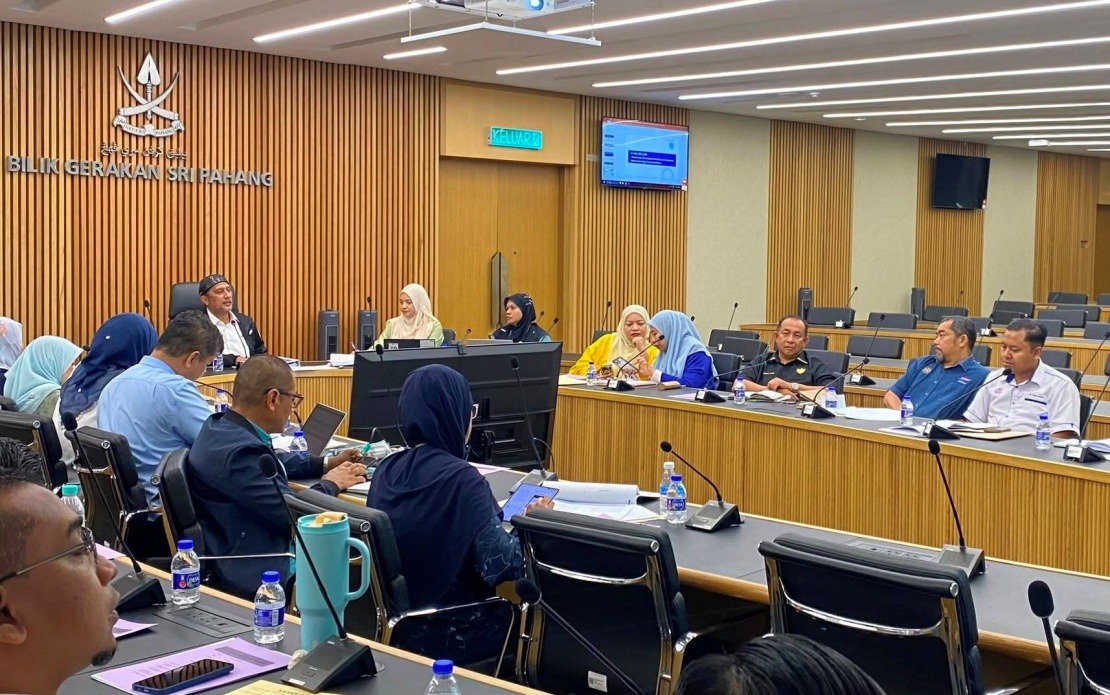
The Pahang state government is stepping in to resolve a complex land ownership dispute affecting members of the Orang Asli community in Kampung Sungai Cot, Maran, by directing the Department of Orang Asli Development (JAKOA), the Pahang Land and Mines Office (PTG), and the Land and District Office to jointly examine potential remedies. Datuk Seri Syed Ibrahim Syed Ahmad, who chairs the state's Islamic Religious Affairs, Rural Development and Orang Asli Affairs Committee, announced the coordinated approach on July 20, emphasising that the government intends to pursue a lawful and consultative process that serves the interests of all stakeholders rather than adopting a unilateral stance.
The underlying problem centres on overlapping territorial claims to the same parcel of land in the Maran district. Twelve Orang Asli individuals had submitted written claims to JAKOA asserting cultivation rights to the area, yet in a separate administrative decision on November 4, 2015, the state's 32nd Executive Council (MMK) granted approval for the same land to be handed to a private company. This simultaneous authorisation created a collision between indigenous land use practices and corporate entitlements, leaving the original claimants in legal limbo.
Syed Ibrahim's statement directly addressed public accusations that the state had mishandled or deprioritised the Orang Asli claim, asserting that media or activist portrayals did not reflect the full complexity of the situation. By framing the dispute as a matter of overlapping approvals rather than government negligence, state officials sought to reset the narrative around how the case has been discussed in broader society. The clarification suggests sensitivity to reputational concerns while the underlying administrative contradiction remains unresolved.
Dialogue between government representatives and affected indigenous parties has already begun through JAKOA-convened meetings, though progress has been limited. Those preliminary talks revealed that only six of the original twelve claimants continued to actively pursue their cases, with the remainder apparently stepping back from the process. The six remaining claimants maintained that the territory represented ancestral Orang Asli land passed down through generations, yet state authorities could not corroborate these historical claims against existing official records and cadastral documentation. This evidentiary gap highlights a persistent tension between oral, community-based understandings of land ownership among indigenous groups and the written, surveyed, and registered systems that Malaysia's land administration relies upon.
Pahang's broader Orang Asli situation extends across 264 recognised villages with more than 90,000 registered indigenous residents, creating a management landscape of considerable scale and complexity. Thirty villages have already received legal protection through formal gazettement under Section 6 and Section 7 of the Orang Asli Act 1954 and Section 62 of the National Land Code, establishing clearer title boundaries and statutory recognition. Furthermore, sixteen additional villages have been designated for land ownership grants under Section 76 of the National Land Code, demonstrating that the state has been allocating resources to formalise Orang Asli territorial rights in selected locations.
The machinery for processing new applications is substantial but slow-moving. Seventy-five applications requesting gazettement status for Orang Asli communities are currently advancing through various stages of the bureaucratic pipeline. Of these, thirty-one have reached the point of formal consideration by MMK meetings, suggesting they may soon receive decisions. A further forty-four applications remain stalled because they involve land overlap complications similar to the Kampung Sungai Cot case, requiring resolution of competing claims before forward progress is possible. An additional 143 applications remain in the preliminary measurement phase conducted by JAKOA itself, indicating that the initial surveying and documentation work has not yet been completed.
This tiered processing system reflects the practical difficulty of simultaneously managing indigenous land claims, corporate commercial interests, and administrative procedure in a state where population growth and economic development pressures continue mounting. The Kampung Sungai Cot dispute is not an outlier but rather a visible manifestation of systemic tensions that have accumulated across dozens of comparable cases. The state government's decision to establish a dedicated multi-agency task force to address this particular situation suggests recognition that conventional departmental channels have proven insufficient to break through the procedural logjams.
For Malaysian and Southeast Asian observers, the case illuminates the persistent challenge of integrating indigenous land rights frameworks with modern state-administered land law systems. Even sympathetic administrations like Pahang's acknowledge that oral histories and traditional occupation patterns, while culturally significant, often cannot be validated against cartographic and registry standards established during the colonial and post-colonial periods. The Orang Asli Act 1954 itself, though foundational to indigenous protections in Malaysia, predates contemporary understandings of land rights and has been amended only incrementally, creating gaps between statutory language and real-world indigenous situations.
The consultative approach that Syed Ibrahim endorsed reflects current best practices in indigenous affairs management, yet consultation without clear authority to prioritise indigenous claims over previously granted commercial interests remains vulnerable to accusations of performative engagement. The involvement of PTG and the Land and District Office alongside JAKOA suggests that any solution will require harmonising decisions across agencies with potentially conflicting mandates and institutional cultures. JAKOA's focus on Orang Asli welfare may not automatically align with land offices' obligations to respect previously issued permits or the state's interest in maintaining investor confidence.
The coming months will test whether this coordinated review can produce substantive relief for the six claimants still pursuing their case or whether bureaucratic consultation yields symbolic gestures without material outcomes. Should the state decide that the six-year-old company approval takes precedence over later-filed Orang Asli claims, the decision would establish a harmful precedent for future disputes. Conversely, if the state moves to revoke or modify the corporate approval, questions will arise about the security of commercial land grants and the transparency of the original 2015 Executive Council decision.
The broader stakes extend beyond Maran. With 143 applications in early measurement stages and 44 caught in overlap disputes, the mechanisms developed to resolve Kampung Sungai Cot will likely be recycled across Pahang's Orang Asli communities for years to come. The state government's willingness to invest in a multi-agency process suggests official recognition that the current system chronically underserves indigenous land security, yet structural reform of how Malaysia adjudicates between indigenous and commercial land claims remains politically fraught at both state and federal levels. The Kampung Sungai Cot case, therefore, functions as a test of whether genuine administrative innovation is possible within existing legal and institutional frameworks.

