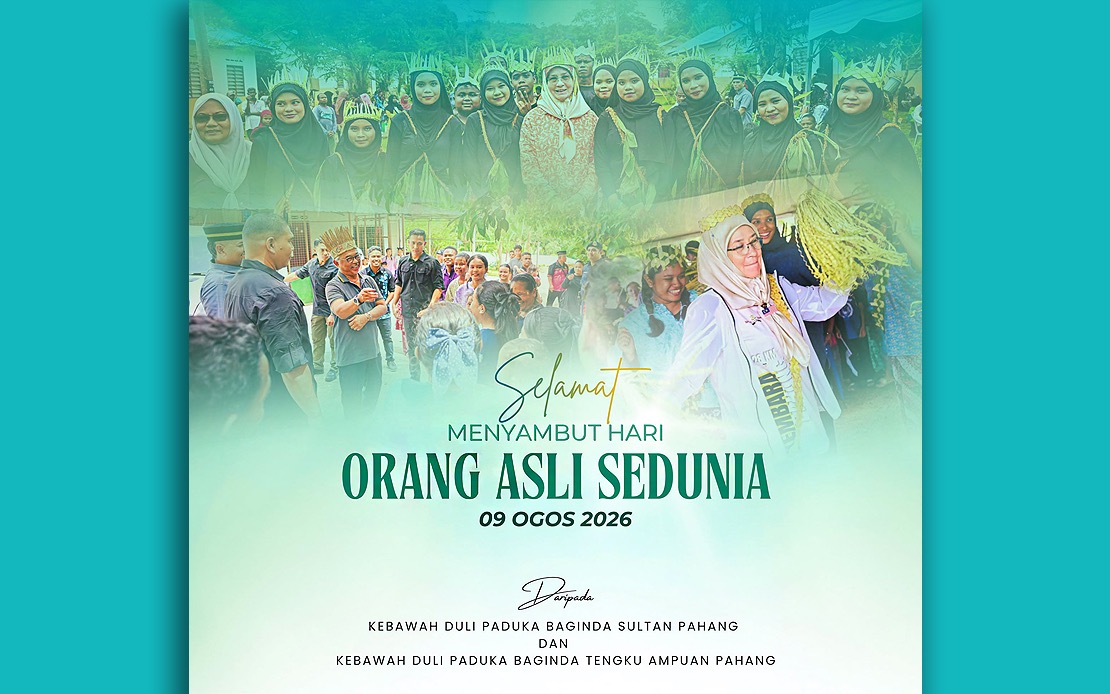
The Sultan of Pahang, Al-Sultan Abdullah Ri'ayatuddin Al-Mustafa Billah Shah, and Tengku Ampuan Pahang Tunku Azizah Aminah Maimunah Iskandariah have publicly acknowledged the substantial contributions made by the Orang Asli community to Pahang's cultural tapestry, recognising their custodianship of traditions and customs that define the state's identity. In remarks shared through official channels, the royal couple underscored the importance of these indigenous communities in maintaining practices that have shaped Pahang's distinctive heritage across generations.
The recognition comes at a significant moment for indigenous advocacy in Malaysia, as the nation approaches the 2026 International Day of the World's Indigenous Peoples. By lending their voices to this observance, the Pahang royalty have elevated the conversation around indigenous rights and representation to the highest levels of state governance, signalling institutional commitment to issues that often receive insufficient attention in mainstream policy discourse.
Central to the royal message is an appeal for substantive expansion of opportunities benefiting the Orang Asli population across multiple domains. The Sultan and Tengku Ampuan specifically highlighted education as a cornerstone area requiring targeted intervention, acknowledging that disparities in access to quality schooling have historically constrained social mobility within these communities. Educational advancement is presented not as charitable assistance but as essential investment in human potential.
Economic development features prominently in their call for action. The royal couple have advocated for targeted programmes designed to generate sustainable livelihoods and reduce economic vulnerability among Orang Asli communities, particularly in Pahang where pockets of severe poverty persist despite the state's broader development trajectory. This reflects growing recognition that indigenous economic marginalisation requires deliberate policy responses beyond conventional development frameworks.
Skills development and human capital investment represent additional pillars of the recommended approach. The royals have emphasised the need for vocational training and capacity-building initiatives tailored to Orang Asli contexts, enabling individuals to participate effectively in modern economic structures while respecting community preferences and traditional knowledge systems. This framing suggests advancement need not come at the cost of cultural continuity.
Crucially, the Pahang royalty have insisted that accelerated development must not erode Orang Asli identity, customs and heritage. This caveat reflects understanding of a persistent tension in indigenous affairs: the risk that integration and modernisation programmes inadvertently facilitate cultural erosion. By positioning heritage preservation as central to any development agenda, Al-Sultan Abdullah and Tunku Azizah have articulated a vision of progress that remains rooted in cultural authenticity.
The emphasis on heritage as shared legacy carries particular significance for Malaysian multicultural identity. By framing Orang Asli customs and traditions as assets belonging not exclusively to indigenous communities but to Pahang and Malaysia more broadly, the royalty have made an implicit case for mainstream engagement with indigenous cultures. This reframing can catalyse broader social appreciation and commitment to preservation efforts.
The royal message also carries implications for governance frameworks. By articulating these priorities from the highest state office, Al-Sultan Abdullah and Tunku Azizah have created political space for policy makers to pursue indigenous-focused initiatives without framing such efforts as marginal concerns. State-level institutional backing can facilitate interagency coordination and resource allocation to priority areas identified by the Pahang administration.
The call for unity, respect and cooperation reflects understanding that indigenous welfare depends partly on inter-communal relations. By urging all Pahang residents to uphold these principles, the royalty have positioned Orang Asli advancement as integral to broader social harmony rather than a separate or competing agenda. This integration of indigenous rights into holistic state stability narratives represents sophisticated approach to potentially divisive issues.
For Malaysian readers, these remarks underscore that indigenous affairs have transcended niche policy discourse to command attention at the highest institutional levels. The Pahang precedent may influence how other state leaders engage with Orang Asli communities within their jurisdictions, potentially establishing expectations for royal and governmental acknowledgement of indigenous contributions and commitment to substantive opportunity expansion.
The timing and platform of this message—through official state communications ahead of an international observance—suggests deliberate strategic emphasis. Rather than relegating indigenous recognition to secondary forums, the Pahang palace has made this commitment visible at primary channels, signalling that Orang Asli welfare represents core state preoccupation rather than peripheral concern accommodated through routine protocols.

