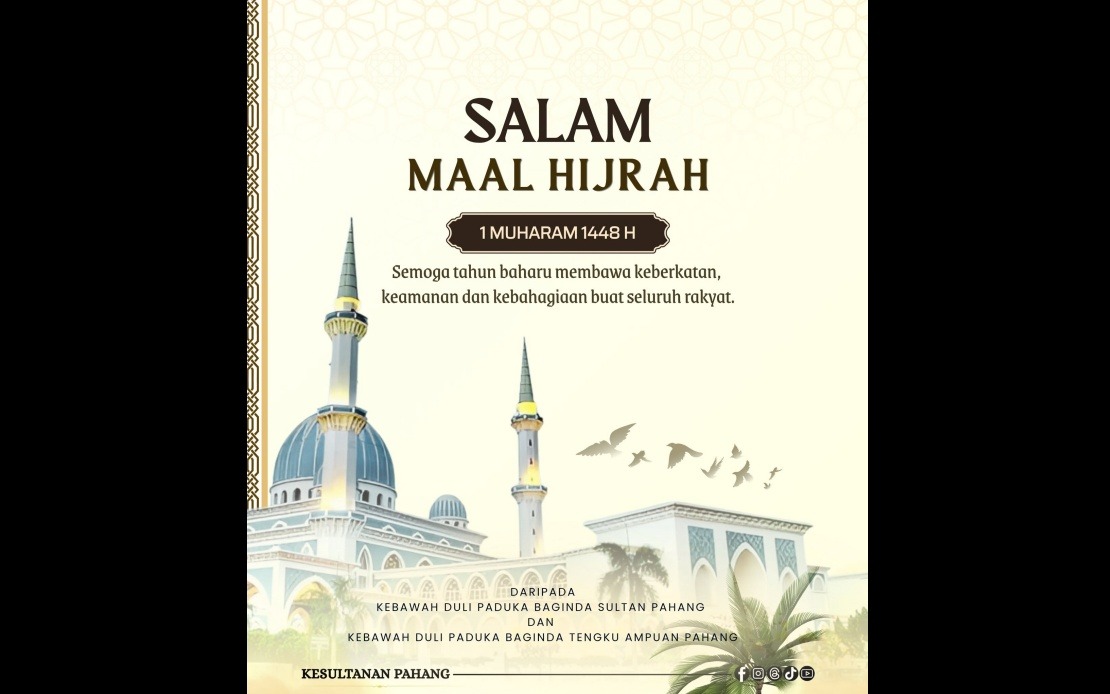
The Sultan of Pahang, Al-Sultan Abdullah Ri'ayatuddin Al-Mustafa Billah Shah, and the Tengku Ampuan of Pahang, Tunku Azizah Aminah Maimunah Iskandariah, have released their official greeting as the Islamic calendar marks the beginning of the year 1448 Hijrah. Delivered through the Kesultanan Pahang's social media channels on June 16, the message carries traditional wishes for divine blessings alongside contemporary aspirations for the state's residents across all faiths.
The Islamic New Year, known as Maal Hijrah, commemorates Prophet Muhammad's migration from Mecca to Medina in 622 CE, a pivotal moment that fundamentally transformed Islamic history and community organisation. For modern Malaysia, the occasion presents an opportunity for religious reflection and public demonstration of shared values, particularly from the constitutional heads of state and their consorts who serve as custodians of Malay-Muslim traditions.
Their Royal Highnesses framed their message around three core wishes: that the new year would deliver blessings, foster peace, and cultivate happiness among all inhabitants of Pahang. This inclusive framing, addressing the broader population rather than exclusively Muslims, reflects the multicultural reality of the state and the constitutional role of the Sultan as head of Islam in the region while simultaneously serving as ceremonial leader for all citizens.
Pahang Menteri Besar Datuk Seri Wan Rosdy Wan Ismail expanded on these themes in his own statement, articulating a more prescriptive vision for how the new Islamic year should influence individual and collective behaviour. He positioned Maal Hijrah not merely as a calendar milestone but as a psychological and spiritual reset point, an opportunity for Muslims to recalibrate their commitments and strengthen their relationship with faith.
The Menteri Besar's message explicitly connected the historical narrative of Hijrah—the journey undertaken for principles and survival—to contemporary challenges facing Pahang. He encouraged residents to emulate the Prophet's spirit by initiating positive change within their communities, whether through personal conduct improvements or broader social initiatives. This interpretation transforms a religious observance into a call for active civic participation and moral renewal.
Wan Rosdy's invocation of unity, integrity, and charitable action addresses several interconnected priorities for the state administration. The emphasis on strengthening unity resonates against a backdrop of increasing polarisation in Malaysian politics and society. The call to instil integrity reflects ongoing concerns about governance standards and public trust. The focus on charitable deeds aligns with Islamic principles while also serving welfare objectives as the state navigates economic challenges affecting vulnerable populations.
The greetings also carry implicit political messaging. By publicly marking Islamic observances with traditional language and religious conviction, Pahang's leadership reinforces their commitment to defending Islam's position within the constitutional framework of Malaysia. In the context of ongoing national debates about religious authority, interfaith relations, and the proper role of Islamic institutions, such statements from state rulers carry symbolic weight and influence public discourse.
For the broader Malaysian context, particularly Southeast Asia's predominantly Muslim but multicultural society, how individual states celebrate and frame Islamic occasions matters considerably. Pahang's approach—combining spiritual aspiration with inclusive language and forward-looking pragmatism—offers one model for negotiating the relationship between religious identity and multiethnic governance. The Sultan's position as both Islam's state leader and constitutional monarch of all residents creates an inherent tension that his messaging seeks to bridge.
The invocation of Allah's mercy and protection, alongside practical wishes for state development and improved living standards, demonstrates how religious language and administrative concerns are woven together in Malaysian political communication. This integration reflects the historical evolution of the sultanate system within the modern nation-state framework, where ceremonial religious roles coexist with constitutional governance responsibilities.
Maal Hijrah observances across Malaysia typically include community events, religious lectures, and official proclamations from state and federal leaders. Pahang's 2024 greeting arrives as the state continues implementing development initiatives and navigating challenges related to infrastructure, education, and economic diversification. The Menteri Besar's connection between spiritual renewal and state development efforts implicitly frames religious observance as compatible with, indeed supportive of, modernisation and progress.
The timing and medium of these greetings—social media dissemination in June—reflect how traditional Islamic practices have adapted to digital communication. The Sultan and Tengku Ampuan's use of Facebook ensures broad reach among Pahang's population, while also creating a documented record of their statements for future reference and historical purposes.
For Malaysian Muslims particularly, Maal Hijrah carries personal spiritual significance beyond its constitutional or political dimensions. The season prompts individual reflection on one's faith journey, moral decisions, and relationship with religious practice. Religious scholars and community leaders typically use the occasion to deliver sermons exploring the lessons of Hijrah and their applicability to modern life challenges.
As Pahang moves forward through 1448 Hijrah, the leadership's framing of this moment as one demanding renewed commitment to community values, integrity, and mutual support establishes an implicit benchmark against which the state's performance might later be measured. Whether these aspirations translate into concrete policy improvements or community outcomes remains to be seen, but the public articulation of such goals creates accountability and shapes expectations for the year ahead.