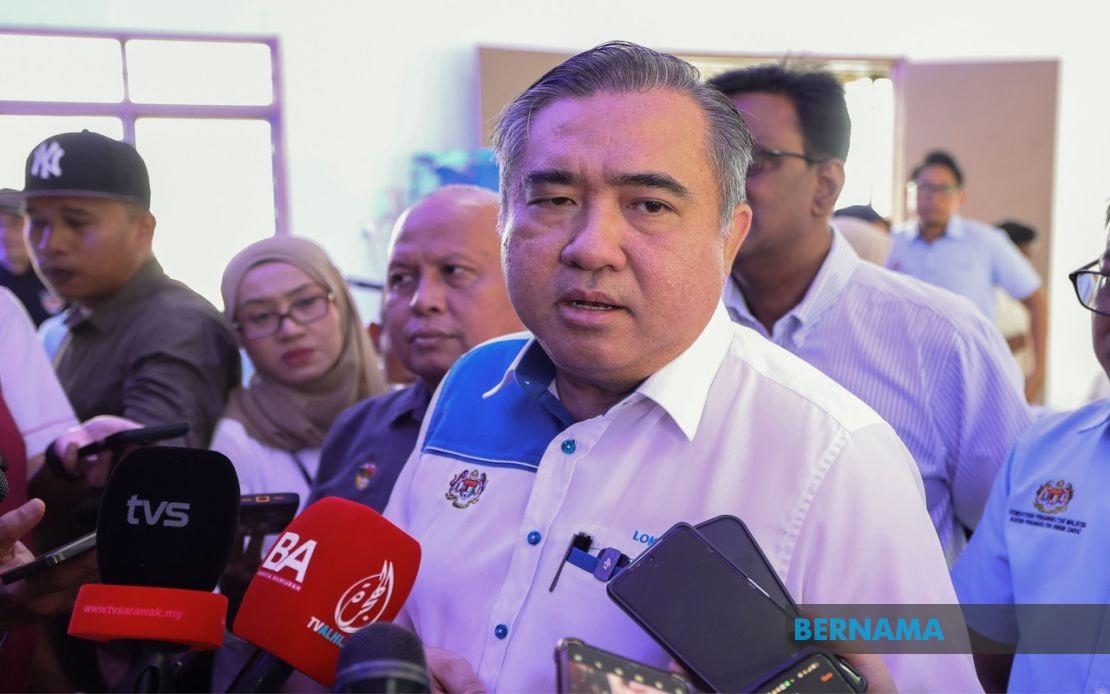
Pakatan Harapan has acknowledged the outcome of Johor's recent state election in which Barisan Nasional decisively claimed victory, demonstrating the coalition's acceptance of democratic processes even when results prove unfavourable. The opposition alliance, which captured eight of the 56 seats up for grabs in the contest, views the loss as an inevitable consequence of the prevailing political climate rather than a permanent setback to its electoral prospects across Malaysia. This pragmatic response from PH leadership signals the coalition's readiness to move forward strategically rather than dwell on disappointments in individual contests.
Anthony Loke, serving concurrently as PH deputy chairman and DAP secretary-general, revealed during a public address in Jelebu that the coalition had braced itself for a challenging contest given the momentum building behind the incumbent state administration. Loke acknowledged that the competitive landscape in Johor presented structural disadvantages for his coalition, yet emphasised that retaining eight state assembly seats represented a meaningful foothold in a state where PH historically struggles to compete with BN's organisational machinery and rural support networks. His measured assessment avoided inflammatory rhetoric and instead framed the outcome within the context of regional political realities that have long favoured the ruling coalition in this particular state.
A significant positive development for PH in the Johor election involved the defensive performance of the Democratic Action Party, the coalition's largest component. DAP successfully retained six of the ten seats it had won in the preceding state election cycle, demonstrating resilience in maintaining voter loyalty despite the overall coalition's retreat. The importance of this outcome lies in what it reveals about PH's urban strongholds, particularly in developed and semi-urban constituencies where DAP traditionally commands competitive advantages. All six successfully defended seats were won with majorities exceeding the fifty percent threshold, a indicator that support for PH remains concentrated rather than geographically dispersed across the state.
Loke attributed some of PH's electoral difficulties to the structural shift from three-cornered contests involving multiple candidates to straight fights between two contenders. This electoral geometry change, he explained, inadvertently advantaged the larger and more cohesive BN coalition by eliminating vote-splitting scenarios that previously benefited opposition candidates in fragmented contests. In constituencies previously won through plurality results against divided opposition, the new two-candidate dynamic allowed BN to consolidate votes more efficiently. This technical explanation underscores how electoral system design can substantially influence outcomes independent of shifting voter preferences, a reality Malaysian political analysts have long emphasised when evaluating poll results.
Barisan Nasional's achievement of a two-thirds supermajority, capturing 48 of 56 available seats, represents a commanding mandate that reinforces the ruling coalition's control over Johor state politics and policy-making. This overwhelming dominance permits BN government to implement legislation and budgetary measures without requiring any cross-party support or consensus-building, fundamentally reshaping the state's political balance. For PH strategists, the scale of this defeat in a major state underscores the formidable challenge of dislodging entrenched incumbency, particularly in states where BN maintains deep organisational roots and historical legitimacy dating back decades.
Despite the disappointment of Johor's outcome, Loke cautioned against drawing sweeping conclusions about PH's national electoral prospects from a single state contest. He argued that Malaysia's thirteen states each possess distinct political characters, voter demographics, historical voting patterns, and substantive issues that shape electoral competition independently. What works electorally in Johor may not translate to Selangor, Penang, or Negeri Sembilan, where different coalitions currently hold power and where PH occupies varying competitive positions. This sophisticated understanding reflects recognition that Malaysian state politics cannot be reduced to monolithic national trends, as local personalities, state-specific grievances, and regional economic conditions substantially influence outcomes.
The coalition's strategic pivot toward Negeri Sembilan reflects hard-headed calculation about where PH can most effectively deploy limited campaign resources and organisational capacity. In that state, PH holds the incumbent government's position following its 2018 electoral breakthrough, occupying seventeen of thirty-one state assembly seats compared to BN's fourteen. This incumbent advantage provides substantial leverage in any forthcoming election, as the coalition can point to four years of governance record, implemented projects, and policy initiatives when appealing to voters. The contrast with Johor, where PH lacks governmental incumbency and associated institutional advantages, makes Negeri Sembilan a far more defensible and potentially winnable battleground.
Loke articulated a clear campaign framework for Negeri Sembilan centring on defensive consolidation coupled with selective expansion. PH candidates must mobilise extensively in the seventeen constituencies where the coalition currently holds seats, seeking to retain every possible seat while simultaneously identifying marginal BN-held constituencies where concentrated campaigning might flip results. This dual strategy acknowledges mathematical reality: losing even two or three incumbent seats would significantly undermine PH's ability to form government, making defensive consolidation the overriding priority. The emphasis on defending existing support base reflects lessons learned from multiple electoral cycles where opposition coalitions have foundered by failing to adequately protect their parliamentary foothold.
The political dynamics distinguishing Negeri Sembilan from Johor centre fundamentally on incumbency and governance performance. As the sitting government, PH possesses institutional authority, media access through state-controlled channels, and ability to highlight development projects and welfare initiatives benefiting constituents. These advantages typically accrue to incumbent administrations during election campaigns, as voters respond positively to evidence of effective governance and tangible improvements in their communities. Conversely, opposition challengers must overcome the gravitational force of incumbency by convincing voters that past government performance has proven inadequate and that alternating to opposition control will produce superior outcomes.
The composition and capability of PH candidates will substantially influence whether the coalition can defend its Negeri Sembilan majority or whether BN can engineer a reversal of the 2018 election outcome that brought PH to power in that state. Loke's instruction that all PH candidates intensify their grassroots engagement and community outreach signals recognition that the 2024 Negeri Sembilan contest will likely prove highly competitive, with both major coalitions investing significant resources in what represents a potentially pivotal battleground. The stakes extend beyond Negeri Sembilan itself, as a PH defeat in a state it currently governs would amplify narrative momentum favouring BN's return to dominance across Malaysian federalism.
The Johor election outcome, while disappointing for opposition aspirations, has clarified strategic priorities for PH leadership heading into Negeri Sembilan. Rather than attempting simultaneous competitive efforts across multiple states with low probability of success, the coalition has logically concentrated capacity on defending its governmental position in a state where incumbent advantages provide realistic pathways to electoral retention. This focused approach reflects maturation of PH strategic thinking beyond the euphoria of its 2018 breakthrough, acknowledging that sustainable opposition influence requires careful prioritisation of winnable contests rather than quixotic battles in unfavourable terrain.

