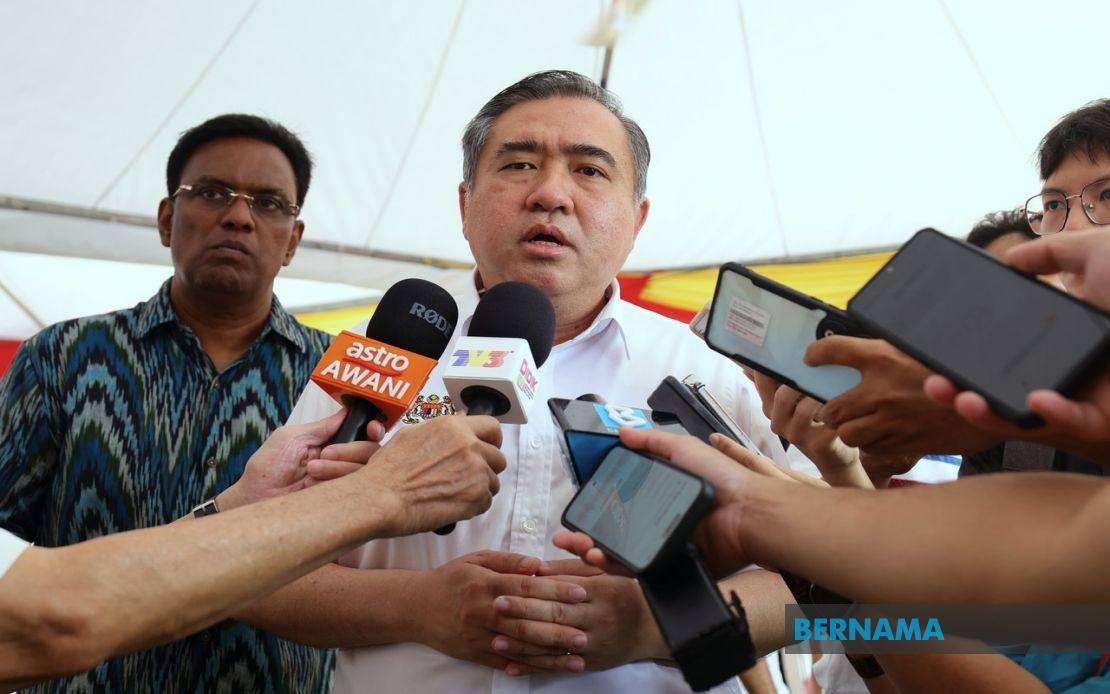
Pakatan Harapan has moved to assure supporters that it stands ready to navigate whatever political landscape emerges from the Negeri Sembilan state election, including the possibility that Barisan Nasional and Perikatan Nasional might present a united front. DAP secretary-general Anthony Loke delivered the message during a campaign-season event in Seremban, where he was officially launching rural development programmes organised by the Ministry of Transport.
Loke's statement reflects a calculated calibration of expectations as the state electoral contest looms. Rather than dismissing concerns about opposition coordination, the DAP leader acknowledged that PH has studied the tactical playbook written during the Johor state election, where similar alignments between rivals took shape. This experience, he suggested, means the coalition enters the Negeri Sembilan race with few illusions about the challenges ahead. The emphasis on anticipatory strategy signals confidence tempered by realistic assessment of the competition.
At the heart of PH's approach lies a strategic pivot inward. Rather than expending energy countering each move by BN and PN separately, Loke articulated a philosophy of controlled focus: PH would concentrate on strengthening the organisational infrastructure and unity among its own component parties. This messaging serves a dual purpose—it allows the coalition to project unflappability in the face of external manoeuvrings while simultaneously pressing its constituent parties to demonstrate coherence and discipline. In Malaysian electoral politics, where fractious coalitions have historically imploded, such reminders carry real weight.
The DAP leader's comments arrived in response to earlier reports that BN and PAS had been negotiating seat allocations and constituency boundaries for the Negeri Sembilan contest. These negotiations, while routine in multi-party competition, carry particular significance because they suggest a tactical alliance that could dilute PH's electoral advantage in what has been a relatively friendly terrain. Whether such cooperation translates into electoral gains remains contingent on ground-level execution and voter sentiment.
Loke also addressed the emerging narrative around shifting support among Chinese voters, acknowledging that some communities might consider moving toward opposition parties such as MCA. Rather than contest these claims directly—a posture that often backfires—he deflected to the ultimate arbiter: the ballot box. This rhetorical move implicitly concedes that pre-election assertions about voter loyalty are largely theatre, and that actual behaviour on polling day will determine outcomes. For Malaysian readers familiar with the volatility of ethnic voting blocs, such candour carries persuasive weight.
The incumbent Chennah assemblyman anchored much of PH's competitive position in the track record of the Negeri Sembilan state government, which has operated under the stewardship of Menteri Besar Datuk Seri Aminuddin Harun since 2018. By emphasising governmental performance as a primary asset, Loke shifts the contest from abstract positioning to tangible deliverables. In a state where the incumbent coalition enjoys administrative control, this framing allows PH to claim credit for infrastructure projects, policy initiatives, and service delivery. Whether voters reward incumbency or punish it often hinges on their personal experience with state services, a terrain where PH arguably enjoys advantage through six years of administrative tenure.
Beyond Negeri Sembilan, Loke addressed the political turbulence in Melaka, where DAP's withdrawal from the state administration following disagreements over nominated assembly member appointments had triggered a realignment. Characterising the decision as final and already resolved, he signalled that the party had moved past the episode. This posture—matter-of-fact rather than aggrieved—reflects political maturity and an effort to contain narrative damage. For coalition partners and voter constituencies concerned about PH's internal stability, such categorical statements serve a reassurance function.
Loke also deployed his platform to defend the MADANI Adopted Village initiative, a rural development programme operated across multiple ministries, against suggestions that it represented election-season theatrics. He reframed the initiative as a continuous, ministry-wide undertaking launched in 2025 and designed to ensure sustained improvement in village infrastructure. This defensive posturing reveals sensitivity to a common criticism in Malaysian politics: that development programmes clustering near election dates invite suspicion of being electorally motivated. By asserting systematic, ongoing implementation across the bureaucracy, Loke attempted to inoculate the initiative against such charges.
The specific beneficiaries of these programmes—Kampung Mantin Dalam under the village scheme, Sekolah Jenis Kebangsaan Cina Chung Hua Mantin as an adopted school, and Kampung Baru Mantin under the Santuni MADANI welfare initiative—illustrate how development resources are being directed into constituencies relevant to the upcoming contest. The choice of a Chinese-medium school for adoption is particularly notable, suggesting deliberate attention to communities that may be reassessing their political allegiances. Such targeted allocation of resources, while consistent with good governance, inevitably invites scrutiny about electoral intent in the months preceding polling.
From a broader Southeast Asian perspective, the Negeri Sembilan election looms as a significant test of PH's durability as Malaysia's leading coalition. The party has governed Malaysia nationally since 2022, yet state-level contests remain proving grounds for its ability to maintain electoral momentum. Negeri Sembilan's diverse demographic composition—with substantial Malay-Muslim, Chinese, and Indian communities—makes it a microcosm of national electoral dynamics. Any substantial loss here could signal erosion in urban Chinese support or Malay-Muslim backing, both constituencies critical to PH's national viability.
The tactical positioning Loke articulated—preparedness for opposition alliances, internal coalition discipline, emphasis on incumbent performance, and defence of development initiatives—reflects the evolution of PH's electoral strategy over six years. No longer the insurgent challenger it was in 2018, the coalition now operates as a defending incumbent navigating the familiar terrain of coalition management, resource allocation, and narrative control. Whether this maturation translates into electoral success in Negeri Sembilan will provide important signals about PH's prospects in the broader political cycle ahead.

