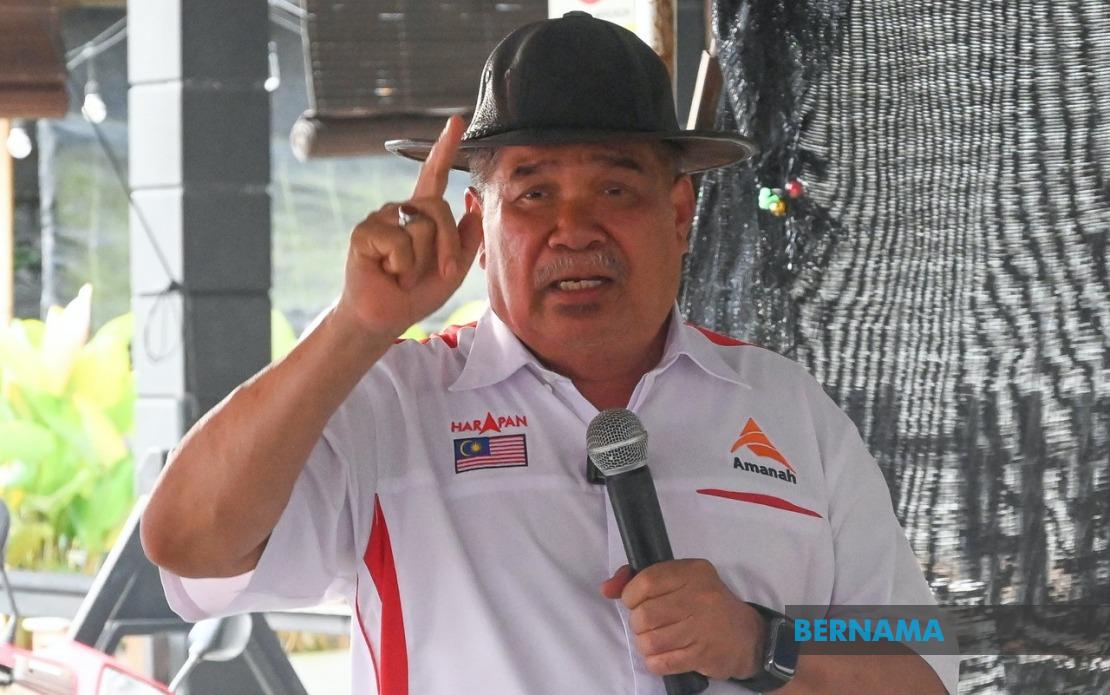
The opposition-turned-ruling coalition Pakatan Harapan (PH) will not be deflected from its core mission of prioritising public welfare over partisan advantage, according to Amanah President Datuk Seri Mohamad Sabu, signalling stability within the government despite recent political realignments. Speaking against the backdrop of strengthening cooperation between Barisan Nasional (BN) and Perikatan Nasional (PN), the Amanah leader projected confidence in the PH's ability to weather political pressure through demonstrable governance rather than reactive crisis management.
The political landscape has shifted markedly in recent months, with the traditional BN machinery appearing to strengthen ties with PN after the latter's success in the previous general election. For Pakatan Harapan, which secured the mandate to form government but without an outright parliamentary majority, the development represents a consolidation of opposition forces that could complicate legislative priorities. Yet Mohamad Sabu's statement suggests PH leadership views such manoeuvres as background noise rather than an existential threat, instead urging party members and allies to maintain focus on bread-and-butter governance.
Prime Minister Datuk Seri Anwar Ibrahim's commitment to protecting Malay-Muslim interests remains central to PH's positioning, though Mohamad Sabu emphasised that this protection should manifest through substantive policy achievements rather than fear-based narratives. This distinction carries significance in Malaysian politics, where appeals to communal anxieties have historically shaped electoral behaviour. The Agriculture Minister's framing suggests an intellectual shift within PH: that defending constitutional provisions protecting Islam, Malay Rulers, the Malay language, and Bumiputera rights requires confidence-building rather than perpetual alarmism.
A particularly striking element of Mohamad Sabu's intervention concerns his critique of what he termed endless political sentiment games and narratives depicting the Malay community as perpetually under siege. This message constitutes a subtle but direct rebuke of opposition rhetoric, suggesting that PH believes it can outflank rival coalitions by offering a more constructive vision of Malay empowerment. Rather than recycling warnings of communal dilution or cultural erosion, the government proposes to build economic capacity, technological mastery, and self-reliance among Malay-Muslim populations—outcomes that would presumably yield more durable political loyalty than fear-mongering alone.
The emphasis on building confidence rather than sowing doubt reveals a calculus about where Malaysian politics is heading. Mohamad Sabu's assertion that the Malay community is growing more mature and resistant to sentiment-based manipulation suggests PH strategists believe voters can be persuaded by performance metrics—employment creation, skills training, business support—rather than endless identity reassurance. If this assessment proves correct, it would represent a meaningful evolution in how ruling coalitions appeal to core constituencies. If it misjudges voter psychology, PH risks ceding ground to competitors who continue deploying communal grievance narratives.
The timing of these remarks, released via Facebook to reach supporters directly, indicates deliberate messaging discipline within the government. Rather than responding defensively to BN-PN coordination, Mohamad Sabu positioned PH as the coalition committed to constitutional safeguards for Malay-Muslim interests whilst also pursuing broader nation-building. This rhetorical positioning attempts to occupy the centre ground—neither dismissing concerns about constitutional arrangements nor exploiting them through fearmongering—whilst implicitly contrasting PH's approach with opposition tactics.
For Malaysian readers assessing government performance, Mohamad Sabu's statement offers a window into how PH intends to justify its continued hold on power. The coalition faces genuine pressures: a slim parliamentary majority, competing demands from multiple partners with divergent ideological positions, and the opposition's demonstrated ability to coordinate strategically. Under such constraints, PH must persuade voters that cohesion and policy delivery matter more than the theatrical competition for communal loyalty that characterized previous electoral cycles.
The Minister of Agriculture also invoked a vision of Malay economic transformation—mastery of technology, competitive capacity, reduced dependence on state support—that resonates with development objectives articulated by policymakers across Southeast Asia. Economies throughout the region are wrestling with how to support disadvantaged communities whilst building human capital suited to the digital economy. Malaysia's approach, as articulated here, suggests a shift from redistributive patronage towards capability-building, though rhetoric often diverges sharply from implementation.
Within Pakatan Harapan itself, Mohamad Sabu's intervention reinforces Amanah's positioning as the component party most invested in cross-communal bridge-building and governance fundamentals rather than zero-sum identity competition. The party has consistently emphasised inclusive development and constitutional liberalism, themes evident throughout his statement. By framing PH's strategy around these principles, Amanah attempts to define the coalition's identity against populist or divisive alternatives.
Looking forward, the durability of this PH messaging will depend on whether government initiatives actually deliver the confidence and capacity improvements Mohamad Sabu promised. Voters observing persistent unemployment, stagnant wages, or inadequate public services will discount rhetoric about Malay empowerment through capability-building. Conversely, tangible improvements in education quality, skills training accessibility, or entrepreneurship support could validate PH's approach and inoculate it against opposition claims that the government neglects core constituencies.
The broader implication for Malaysian politics concerns whether identity-based competition can be displaced by performance-based assessment. Mohamad Sabu's intervention suggests PH believes this transition is possible and desirable. Rival coalitions, by contrast, appear to be betting that sentimental and fear-based appeals remain potent enough to recapture power. The outcome of this strategic divergence will likely shape Malaysian politics well beyond the current parliamentary term, determining whether future campaigns emphasise delivery and development or revert to the communal mobilisation strategies of previous decades.

