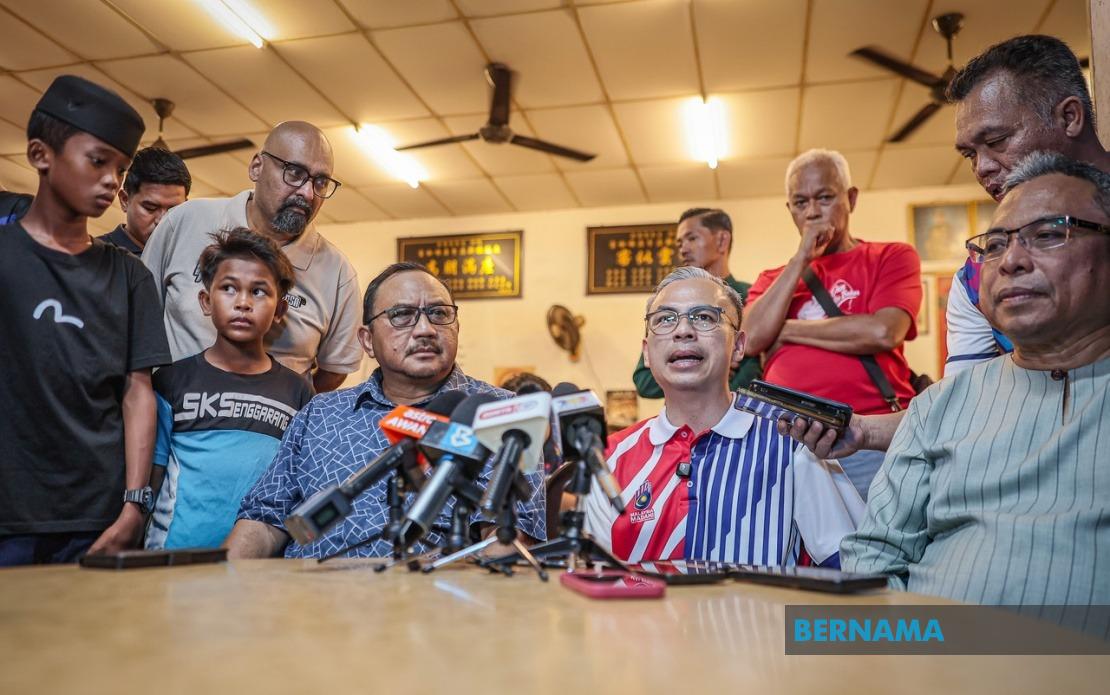
Pakatan Harapan is preparing for the 16th Johor State Election by deploying a two-pronged campaign strategy that marries traditional ground-level engagement with the reach and speed of social media platforms. The coalition's Communications director Datuk Fahmi Fadzil outlined this approach in Batu Pahat, emphasising that combining both methods is essential to penetrate all layers of society and ensure the coalition's policy platform gains traction among diverse voter groups. This hybrid model reflects a broader recognition within opposition ranks that no single channel—whether traditional retail politics or online messaging—can alone guarantee electoral success in an increasingly digitally connected but still predominantly ground-based Malaysian political landscape.
PKR, which is fielding candidates across 20 constituencies in the Johor contest, is preparing to activate its campaign machinery immediately after the nomination process concludes. Fahmi indicated that senior party figures would be strategically deployed across key battlegrounds, with him personally heading to Semerah and PKR deputy president Nurul Izzah Anwar accompanying candidate Onn Abu Bakar at the Senggarang nomination centre. The coalition has also established a dedicated media apparatus designed to rapidly disseminate information about its candidates, reflecting the recognition that controlling the narrative and responding swiftly to developments can significantly influence voter perceptions during the crucial early phase of an election campaign.
A cornerstone of PH's campaign message centres on the primacy of fact-based communication. In an electoral environment increasingly characterised by misinformation and competing narratives, Fahmi stressed that the coalition will prioritise accuracy and evidence-based policy discussion. This positioning attempts to differentiate PH from potential competitors while also appealing to voters fatigued by the noise and unreliability of unverified claims that often circulate during election periods. By anchoring its campaign in verifiable information, PH is essentially betting that voters in Johor will reward transparency and substantive policy engagement over rhetoric and unfounded assertions.
The coalition's development agenda showcases federal-state coordination as a mechanism for delivering tangible results to Johor residents. Fahmi highlighted two flagship projects emerging from this partnership: the Rapid Transit System Link and the Johor-Singapore Special Economic Zone, both framed as catalysts for economic expansion and the reduction of regional development imbalances within the state. These projects hold particular significance for Malaysian and Southeast Asian observers, as the Johor-Singapore initiative represents a deepening of economic integration with the island nation and signals Malaysia's commitment to being a competitive node in regional supply chains and logistics networks. For Johor voters, successful implementation of such projects translates into employment opportunities, infrastructure improvements, and the potential for sustained economic prosperity.
Pakatan Harapan is banking substantially on its proven track record in other Malaysian states to persuade Johor voters of its governing competence. Fahmi referenced Selangor, Negeri Sembilan, and Penang as evidence of the coalition's ability to translate policy commitments into actual delivery, a claim designed to counter narratives that might portray PH as inexperienced or merely offering hollow promises. This invocation of state-level success is strategically important in Malaysian politics, where voters often look to how parties perform in their respective fiefdoms as a barometer of broader capability. Johor, however, remains a state where PH's control is not assured, making the appeal to demonstrated governance elsewhere a crucial legitimacy-building tool.
The presence of figures such as Dr Maszlee Malik in Puteri Wangsa and Onn Abu Bakar in Senggarang underscores PH's effort to field candidates perceived as capable and change-oriented. In Malaysian state elections, the quality and reputation of individual candidates can substantially sway local voting patterns, particularly in constituencies where personal relationships and trust in individual representatives carry significant weight. The coalition's selection of such personalities suggests a calculated effort to compete effectively in seats deemed pivotal to its overall performance in Johor.
Pakatan Harapan has committed to unveiling a dedicated election manifesto specific to Johor, a move that acknowledges the state's distinct regional interests and challenges. Rather than simply transposing a national platform onto a state election, the coalition recognises that Johor voters expect locally-tailored policy responses to issues that matter most to their communities. This approach reflects a maturing understanding of how modern electoral competition operates, with parties needing to demonstrate nuanced awareness of regional complexities rather than applying one-size-fits-all solutions.
The broader ecosystem of election integrity has also come into focus, with the Malaysian Communications and Multimedia Commission establishing a specialised task force in coordination with the Election Commission, the Royal Malaysia Police, and the Malaysian Media Council. This multi-agency effort specifically targets the spread of misinformation during the election period, addressing a challenge that has become increasingly acute in Southeast Asian politics. For Malaysian voters, such institutional vigilance offers some assurance that the information environment will be monitored and that false claims may be identified and countered, though the effectiveness of such measures remains contested among observers.
Fahmi's engagement in Senggarang, including participation in the Hasrat MADANI programme and attendance at a wayang pacak screening of Blood Brothers, illustrates how PH intends to embed its campaign within the fabric of community life. Rather than restricting outreach to formal political rallies or social media posts, the coalition is inserting itself into cultural and social spaces where residents gather, a tactic that humanises political figures and creates informal opportunities for direct conversation. This ground-level presence, combined with digital amplification, represents the coalition's gamble that voters will reward a comprehensive, multifaceted approach to political engagement over more conventional or narrowly-targeted strategies.

