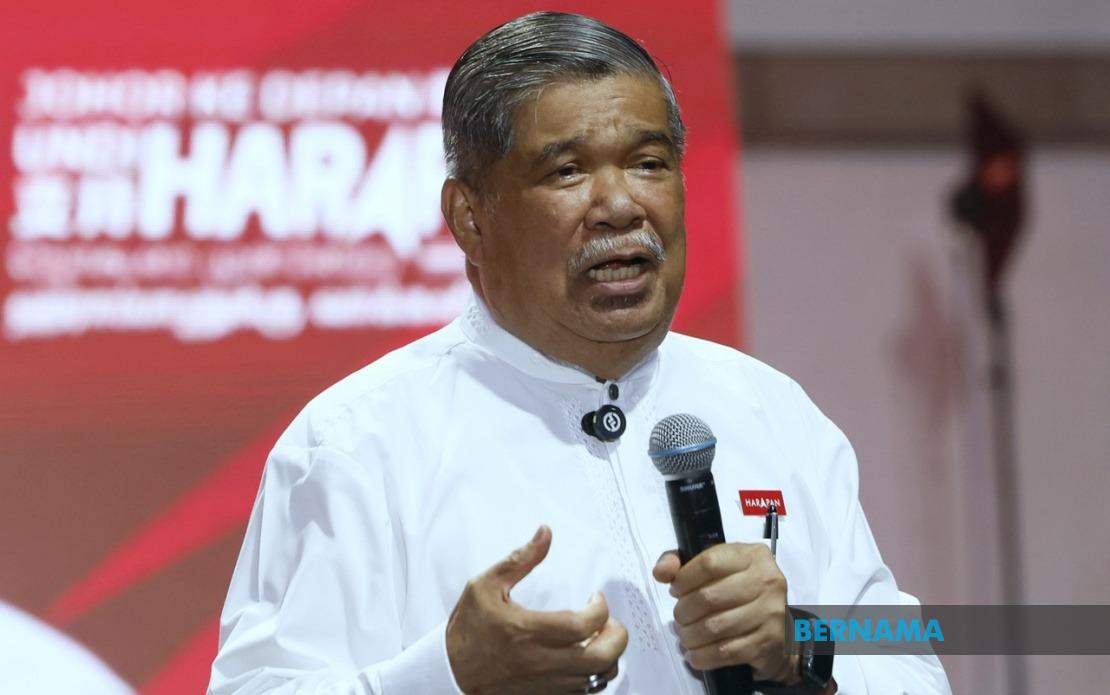
The Pakatan Harapan coalition has declared itself undeterred by an unexpected political manoeuvre from PAS, which has instructed its supporters to back Barisan Nasional candidates in constituencies where the Islamic party is not fielding its own nominees during the forthcoming Johor state election. Amanah president Datuk Seri Mohamad Sabu made the assertion during a campaign event in Permas Jaya on July 1, signalling that the opposition alliance would proceed with its electioneering strategy without modification or hesitation.
Mohamad Sabu, who simultaneously holds the portfolio of Minister of Agriculture and Food Security, characterised the PAS directive as a tactic that would not deflect Pakatan Harapan from its established course. The Amanah leader stressed that the coalition possessed resilience and conviction in its message, refusing to be provoked or distracted by the competing strategies deployed by rival political formations. His remarks underscored a determination to maintain campaign intensity across all 56 seats contested in the state ballot, where both Pakatan Harapan and Barisan Nasional are fielding candidates.
The Amanah president anchored his confidence in what he described as the fundamental strength of Pakatan Harapan: its commitment to multiracial and multi-religious cooperation. Mohamad Sabu framed this pluralistic approach as essential to political stability and as a critical engine driving the nation's economic advancement. This positioning attempts to draw a sharp contrast with alternative political narratives and suggests that the coalition's electoral appeal transcends narrow communal or sectarian appeals.
In articulating Pakatan Harapan's message to Johor voters, Mohamad Sabu urged electors to select representatives based on substantive criteria: administrative competence, demonstrated service records, and commitment to justice and fairness. He cautioned against allowing racial or religious sentiment to guide voting decisions, implicitly challenging the appeal to such sentiments that competitors might employ. The appeal seeks to elevate the campaign discourse beyond identity politics toward governance performance and policy delivery.
A critical element of Pakatan Harapan's strategic argument centres on administrative synchronisation between state and federal governments. Mohamad Sabu contended that alignment between these levels of administration would substantially improve the implementation of major developmental initiatives throughout Johor. This rationale addresses a practical governance concern likely to resonate with voters: the inefficiency and delays that can result when state and national authorities pursue divergent policies or lack coordination in project execution.
The coalition specifically identified three infrastructure and economic development priorities requiring such coordination. These include a comprehensive overhaul of the public transport system, enhancements to facilities at major entry points such as airports and ports, and a deliberate drive to attract foreign and domestic investment. Each initiative directly impacts Johor's economic dynamism and quality of life, providing concrete policy anchors for Pakatan Harapan's campaign messaging.
Deputy Finance Minister and DAP strategic director Liew Chin Tong introduced a different analytical dimension by emphasising voter participation as the principal variable determining the election outcome. Liew observed that the 2022 Johor state election demonstrated how suppressed voter turnout, particularly among younger demographics, had benefited Barisan Nasional. That historical experience carries particular weight given that the contest occurs during a period when the pandemic's mobility constraints have largely dissipated, suggesting that broader participation may be achievable this time.
Liew noted that abnormally low turnout in the previous election had been compounded by the practical inability of Johor citizens employed in Singapore to return home for voting due to COVID-19 travel restrictions. With those restrictions now lifted, Liew's analysis implies that mobilising this contingent of voters could meaningfully alter the electoral mathematics. The younger demographic profile of Johor's working-age population creates additional leverage for turnout strategies targeting this group.
The DAP strategist also reframed the campaign's second phase, arguing that it should transcend purely partisan competition to emphasise substantive policy proposals addressing population needs. This rhetorical shift reflects an attempt to anchor Pakatan Harapan's campaign in governance questions rather than political rivalry, potentially broadening its appeal beyond committed supporters to swing voters motivated by policy concerns. Liew identified employment quality and wage competitiveness as paramount, noting that many young Johoreans continue seeking work across the border in Singapore due to inadequate domestic job opportunities.
Liew expanded the policy agenda to encompass infrastructure and social services critically affecting daily life and long-term demographic trends. Public transport accessibility and efficiency, flood management, drainage and river maintenance, aged care provisions, and childcare facilities emerged as priority areas where state government intervention directly influences citizen welfare. By emphasising these tangible concerns, Pakatan Harapan attempts to ground its electoral appeal in the practical governance challenges facing ordinary families rather than abstract political ideology.
The question of federal-state coordination resurfaces in Liew's analysis through the Johor-Singapore Special Economic Zone initiative, a major development project requiring sustained cooperation between the national government and state administration. Liew cast this partnership as essential to accelerating development implementation and generating high-quality employment opportunities, reinforcing the logic that electoral alignment between Johor's state government and the federal Pakatan Harapan administration would yield tangible economic benefits for residents.
The Johor state election will unfold across all 56 constituencies on July 11, with early voting scheduled for July 7. Both Pakatan Harapan and Barisan Nasional contest the complete slate of seats, ensuring comprehensive geographic competition. The contest represents a significant electoral test for both coalitions and carries implications for Malaysia's broader political trajectory, given Johor's historical importance and the evolving factional dynamics within the opposition and ruling blocs.
The PAS directive to support Barisan Nasional represents a noteworthy tactical shift that highlights the fluid and sometimes counterintuitive alignments characterising contemporary Malaysian politics. The move suggests that PAS prioritises preventing Pakatan Harapan's advancement in Johor over maintaining the joint opposition platform, reflecting deeper tensions within opposition unity that voters will observe closely as the campaign enters its final phase.

