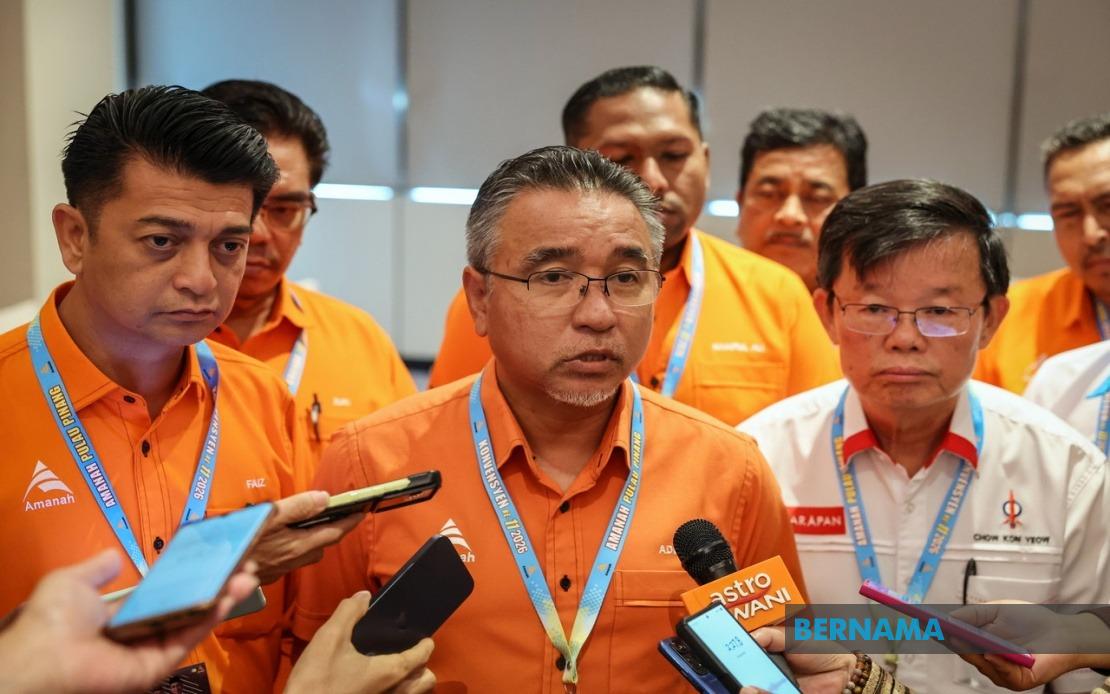
Pakatan Harapan is reaffirming its commitment to politics grounded in ethical governance and administrative effectiveness, even as the coalition grapples with disappointing results from recent state elections. Speaking at the Penang Amanah Convention in Bukit Mertajam on August 2, Amanah vice-president Adly Zahari stressed that the opposition coalition will maintain its principled approach while simultaneously conducting a thorough assessment of what went wrong at the ballot box. The pledge comes amid intensifying scrutiny of PH's political strategy, particularly following its underwhelming performance in the Negeri Sembilan state election held on August 1, where the coalition captured just 11 of 36 contested seats.
The Negeri Sembilan result underscores the challenge facing PH as it attempts to navigate Malaysia's fractured political environment. Barisan Nasional dominated the contest with 18 seats, while Perikatan Nasional secured seven seats, leaving PH in a distant third position. This outcome mirrors broader concerns about the coalition's electoral momentum and raises questions about whether its emphasis on governance standards and institutional reform genuinely resonates with voters preoccupied by immediate livelihood concerns. For many Malaysians, particularly those struggling with inflation and rising household costs, abstract notions of political integrity often take a backseat to concrete promises of economic relief and improved public services.
Adly's remarks highlight a fundamental tension within PH's electoral positioning. The coalition argues that value-based governance—encompassing integrity, transparency, and competent administration—should form the cornerstone of its political platform. Yet party strategists increasingly acknowledge that this messaging framework may not translate effectively to voters evaluating government performance through the lens of tangible outcomes. Adly specifically cited cost of living, economic conditions, education quality, and government service delivery as the yardsticks by which voters assess political parties. This admission suggests PH recognizes that whatever moral authority it claims must be backed by demonstrable improvements in these everyday domains.
Recognizing this gap between principle and perception, PH leadership has embarked on a post-election diagnostic process. Adly indicated that the coalition will undertake detailed analysis to identify shortcomings and areas requiring strategic adjustment. This self-examination extends beyond mere tactical recalibration; it reflects growing awareness within PH that sustaining its values-focused identity while improving electoral prospects requires more sophisticated messaging and policy communication. The coalition faces the delicate task of maintaining its differentiating principle—that politics should prioritize ethical conduct over populism—while simultaneously demonstrating that such governance delivers material benefits to ordinary citizens.
A critical focus of PH's strategic review centres on communication deficiencies. Adly emphasized the need to strengthen how the coalition articulates government achievements, economic initiatives, and welfare-enhancing policies to the public. This implies that PH believes its actual record merits stronger advocacy rather than fundamental policy recalibration. Whether this assessment proves accurate remains uncertain, particularly in an environment where voter dissatisfaction appears rooted in genuine economic hardship rather than mere information gaps. Nevertheless, PH appears committed to testing whether improved messaging around job creation, living standards initiatives, and government service quality can rebuild public confidence.
Penang remains a potential bellwether for gauging PH's capacity to sustain support in its strongest state stronghold. Penang PH chairman Chow Kon Yeow announced that coalition leadership will convene on August 8 to scrutinize results from both the Negeri Sembilan and earlier Johor state elections, alongside developing contingency strategies should a general election be called ahead of schedule. This convening suggests PH recognizes that consecutive electoral disappointments demand urgent strategic repositioning. The timing is significant, as Malaysia's political calendar remains fluid, and Prime Minister Anwar Ibrahim could theoretically dissolve Parliament and call fresh national elections at any juncture, though such a move would require careful calculation regarding electoral viability.
Chow's emphasis on refocusing voter attention on government performance and service delivery echoes Adly's earlier comments, suggesting consensus within PH leadership about necessary communication priorities. The Penang chief stressed the importance of highlighting administration achievements, welfare improvements, employment generation, and quality-of-life enhancements. These themes directly address voter concerns documented in multiple surveys showing that economic anxiety dominates Malaysian political consciousness. However, whether PH can successfully reframe public perception of its economic management remains contested, particularly given that the coalition shares governing responsibility at federal level with non-PH partners in Prime Minister Anwar Ibrahim's administration.
The coalition's strategic recalibration also occurs against the backdrop of a resurgent Barisan Nasional under Prime Minister Mohamed Anwar Ibrahim, which demonstrated substantial electoral appeal in Negeri Sembilan. BN's performance suggests that voters may be responding to renewed confidence in traditional ruling structures or that dissatisfaction with PH has sufficiently crystallized to drive tactical voting toward rival coalitions. Simultaneously, Perikatan Nasional's competitive showing in several constituencies indicates that opposition voices remain fragmented across multiple platforms, a dynamic that could advantageously position any single coalition able to consolidate anti-government sentiment.
For Malaysian voters and regional observers, the unfolding strategic deliberations within PH carry broader implications about opposition politics in the post-2018 period. The coalition's emergence through the Mahathir-era transition represented a genuine rupture with Malaysian governance conventions, emphasizing institutional accountability and ethical standards. Yet transforming such principles into electoral durability depends crucially on whether PH can convince voters that values-based governance tangibly improves their material circumstances. The coming weeks will prove instrumental in determining whether PH's August 8 strategic review produces messaging and policy frameworks capable of reversing recent electoral momentum.
Moreover, PH's stated commitment to maintaining values-based politics while reviewing strategies suggests the coalition seeks differentiation without fundamental repositioning. This balancing act—sustaining ethical governance emphasis while improving communication and policy visibility—reflects confidence that the coalition's core identity remains electorally viable if articulated more persuasively. However, such confidence must contend with sobering electoral returns suggesting voters increasingly privilege immediate economic relief and service improvements over abstract governance principles. The next few months will reveal whether PH can successfully bridge this gap between ideological positioning and electoral performance.

