Pakatan Harapan has signalled a strategic shift in its approach to the upcoming 16th Negeri Sembilan state election by rolling out a manifesto that broadens its social safety net to encompass middle-income households, marking a departure from its previous concentration on the lowest-earning B40 segment. The coalition's manifesto, unveiled under the banner 'Negeri Sembilan Kekal Harapan', articulates 10 principal commitments and represents an attempt to address the growing economic anxieties of Malaysia's squeezed middle class, a demographic increasingly central to electoral calculations across the country.
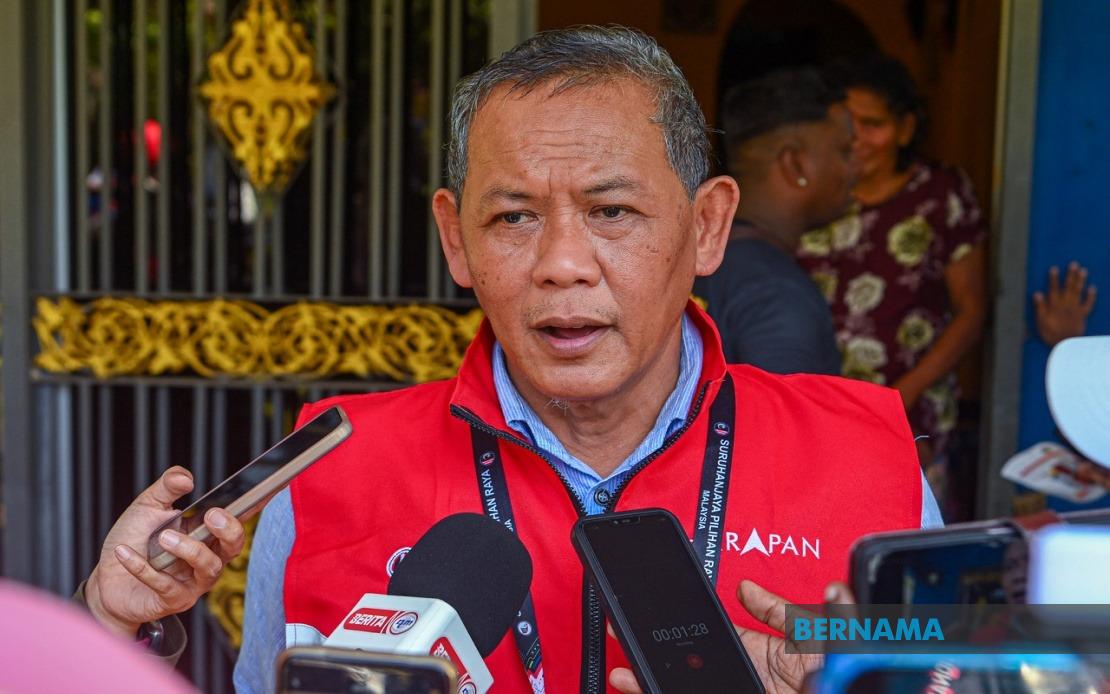
Menteri Besar Datuk Seri Aminuddin Harun, addressing a community engagement session with the Indian community at Sekang Estate in Linggi, underscored that the expanded policy framework aims to create tangible welfare improvements for a substantially larger proportion of the state's population. The decision to include M40 households—those earning between RM3,001 and RM6,000 monthly—reflects growing acknowledgement that middle-income earners have been squeezed by inflation, healthcare costs, and educational expenses, concerns that have not always featured prominently in opposition political messaging.
Aminuddin, who holds concurrent positions as Negeri Sembilan PKR chairman and PKR vice-president, framed the expansion as evidence of PH's willingness to evolve its policy priorities in response to constituent demands. He distinguished between the previous iteration of PH's approach, which prioritised lower-income households, and the current strategy of extending educational access and welfare programmes across income brackets. This recalibration suggests the coalition recognises that electoral success increasingly depends on appealing beyond the traditional poverty-alleviation narrative to address the material concerns of middle-class voters who fear economic stagnation or downward mobility.
The political context for this announcement carries significance beyond Negeri Sembilan's borders. The state election occurs at a moment when Malaysian politics is experiencing recalibration following the 2022 general election outcome. The M40 demographic has become a focal point for multiple political coalitions seeking to construct winning electoral coalitions, as this group represents neither the politically reliable vote-banks of earlier eras nor a unified constituency with easily identifiable demands. By explicitly acknowledging this group's concerns, Aminuddin is positioning PH as responsive to evolving socioeconomic realities rather than wedded to inherited policy frameworks.
Aminuddin's own electoral contest in Linggi presents a microcosm of contemporary Malaysian politics. Standing against both Barisan Nasional's incumbent Datuk Mohd Faizal Ramli and Bersatu's Zamri Md Said, Aminuddin faces a three-cornered contest that reflects the fragmentation of the opposition vote when multiple coalitions compete in the same constituency. His previous electoral performance and organisational strength as Menteri Besar provide advantages, though the presence of a Bersatu candidate complicates the arithmetic of vote consolidation that PH would ideally achieve.
The coalition's invocation of its track record since 2018 warrants scrutiny. Aminuddin argued that PH's five years governing Negeri Sembilan demonstrate credibility in translating manifesto promises into implemented programmes, contrasting what he characterises as performative politics with substantive delivery. This argument addresses a persistent challenge facing opposition parties across Southeast Asia: the perception that manifestos function primarily as vote-winning devices rather than genuine policy blueprints. For Malaysian voters increasingly sceptical of political rhetoric, evidence of previous delivery carries electoral weight, particularly in a state election where voters can directly assess PH's governance record.
The timing of the manifesto announcement, occurring just eleven days before early voting and two weeks before the August 1 election date, reflects the compressed campaign calendar that limits time for detailed policy discussion. The manifesto's ten commitments presumably address immediate concerns—likely encompassing education, healthcare, infrastructure, and employment opportunities—though the original announcement does not itemise specific pledges. For Malaysian readers seeking detailed policy differentiation, such specificity would prove more persuasive than broad thematic positioning.
Aminuddin's appeal for a mature campaign environment and social harmony, while rhetorically appealing, also signals awareness of the risk that three-cornered contests can descend into personality-driven antagonism. Election Commission dissolution on June 5 and the subsequent campaign period have provided competing coalitions opportunity to stake claims on voter allegiance. The invitation to conduct civilised discourse reflects not only genuine concern for communal relations but also recognition that divisive campaigns can produce outcomes unpredictable for any single coalition, potentially advantaging fringe candidates or spoiling vote distributions in ways that disadvantage the primary contenders.
For Malaysian policymakers and analysts, the expansion of PH's welfare focus to include M40 households carries broader implications. It suggests recognition that addressing only the most economically vulnerable leaves a substantial segment of the electorate feeling neglected by political discourse. The M40 group—numbering millions across Malaysia—faces genuine economic pressures that neither traditional poverty-alleviation frameworks nor pro-business policies adequately address. Whether PH's manifesto offers sufficiently concrete measures to address these concerns, rather than merely gesturing toward expanded eligibility, remains a question that would require examination of the full policy document.
The strategic repositioning also reflects demographic realities. Malaysia's continued economic development has expanded the middle class substantially since independence, yet political narratives have sometimes lagged behind these demographic shifts. By explicitly acknowledging M40 concerns, PH positions itself as attuned to contemporary Malaysia's social composition. Whether this translates into electoral gains in Negeri Sembilan, however, depends not merely on manifesto rhetoric but on voter confidence that PH can deliver measurable improvements in middle-income household living standards.
Election Commission's August 1 polling date and July 28 early voting arrangements provide the calendar within which voters will render judgment on competing visions for Negeri Sembilan's future. The state, with its modest population and tradition of relatively moderate politics, offers a testing ground for electoral strategies that may influence how larger coalitions position themselves in eventual national elections. Aminuddin's emphasis on delivery, expansion of welfare eligibility, and appeals for campaign civility together constitute PH's positioning for this state-level contest, where the stakes extend beyond Negeri Sembilan itself to signal broader coalition strategies and voter preferences.

