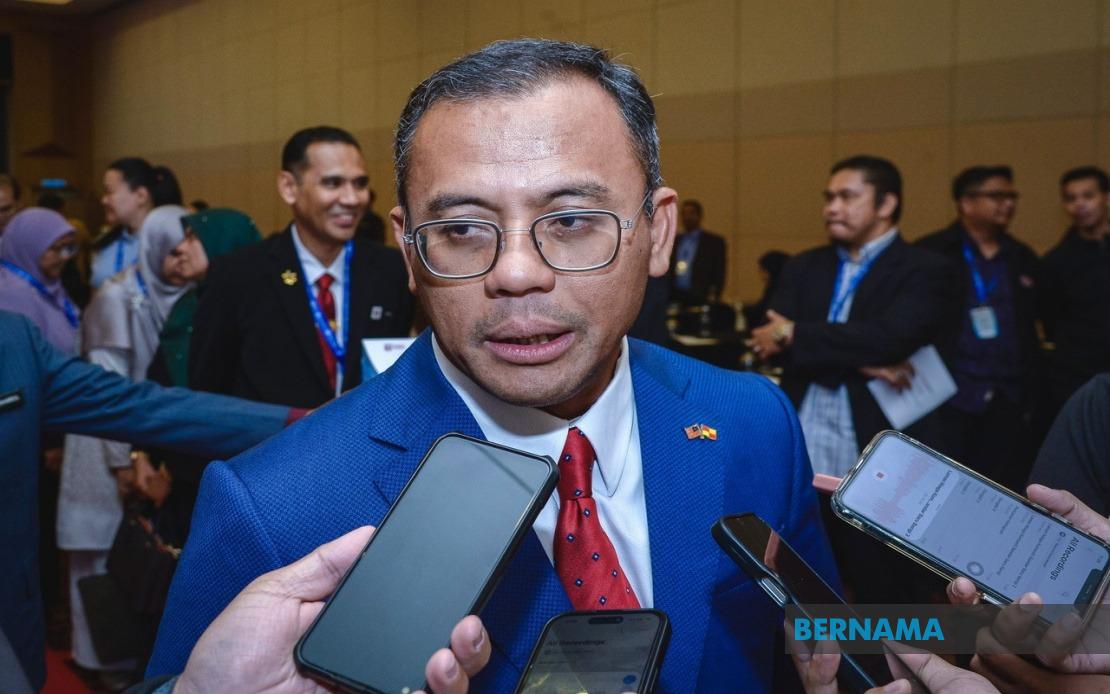
Pakatan Harapan has signalled conditional openness to forging political alliances with rival parties, provided that any such arrangement prioritises political stability and the welfare of ordinary Malaysians. The stance was articulated by Datuk Seri Amirudin Shari, the Selangor Menteri Besar and a member of PH's Presidential Council, during remarks made at an international ecology conference in Bangi. His comments suggest that Malaysia's main opposition coalition is willing to reassess its political relationships in response to shifting electoral dynamics and the imperatives of governance.
Amirudin, who also serves as PKR vice-president, emphasised that PH does not confine potential cooperation exclusively to any single party or grouping. The coalition would consider working arrangements with Bersatu, Perikatan Nasional, or indeed any other political entity, provided those partnerships remain anchored in two foundational principles. These principles—stability in governance and tangible improvements in the daily lives of Malaysian citizens—represent what PH leadership views as non-negotiable criteria for any future political accommodation.
The timing of these remarks carries particular significance given recent media speculation about possible collaboration between Selangor's PH chapter and Bersatu. Reports surfaced last week suggesting the two parties were exploring grounds for state-level cooperation ahead of upcoming electoral contests. Amirudin moved swiftly to clarify that no formal discussions or binding arrangements have materialised between Selangor PH and Bersatu, effectively dampening speculation that had begun circulating within political circles.
Amirudin's framing of potential cooperation as contingent upon rational evaluation at the national leadership level underscores the complex decision-making structures within Malaysian political coalitions. Rather than allowing state-level party units to independently chart alliances, he indicated that any meaningful cooperation would require scrutiny and approval from PH's central hierarchy. This centralised approach reflects the recognition that electoral politics in Malaysia operates simultaneously across multiple administrative tiers, with state contests often serving as precursors to or dress rehearsals for general elections.
The Selangor leader acknowledged that external commentary regarding potential alignments has circulated, attributing such speculation to broader national-level political realignments and the approach of competitive electoral contests. This framing suggests that while PH maintains its formal coalition structure, the political landscape surrounding it remains fluid and responsive to changing circumstances. The emergence of such external discussion points indicates that other political actors are also contemplating alternative arrangements, creating a complex environment of shifting possibilities and negotiations.
For Malaysian observers, Amirudin's statements reveal an important evolution in PH's strategic thinking. Rather than maintaining an ideologically rigid stance towards potential rivals, the coalition appears increasingly pragmatic in its approach. This flexibility may reflect lessons learned from PH's previous period in government, which was marked by intra-coalition tensions and the eventual defection of Bersatu under Mahathir Mohamad's leadership. By explicitly stating openness to cooperation while setting clear conditions, PH seeks to position itself as a flexible but principled political force.
The mention of upcoming electoral contests—including a general election and state elections such as Melaka's—provides important context for understanding the timing of these overtures. Political coalitions in Malaysia routinely recalibrate their relationships in preparation for major electoral battles, and the current period appears to constitute a moment of such recalibration. For PH, demonstrating willingness to work with other parties may serve multiple purposes: signalling confidence in its electoral prospects, demonstrating pragmatism to voters, and keeping potential allies engaged in discussions.
However, Amirudin's emphasis on stability and people's interests as prerequisites reveals PH's effort to distinguish itself from arrangements based purely on numerical advantage or power-sharing calculations. By articulating principles rather than naked political interest, PH leadership seeks to frame any future cooperation as serving the broader national good rather than merely advancing sectarian party interests. This rhetorical positioning becomes increasingly important as Malaysian voters demonstrate growing scepticism towards purely transactional political deals.
For Southeast Asia's broader political landscape, Malaysia's coalition dynamics merit close attention. The region's democracies increasingly grapple with challenges of maintaining stable governing coalitions while preserving electoral competition. PH's approach—conditional openness paired with principled criteria—represents one model for navigating these tensions. The extent to which such arrangements succeed or falter will carry implications for how other Southeast Asian parties approach coalition formation and inter-party relations.
The implications for Malaysian voters extend beyond immediate electoral calculations. Coalition flexibility can enhance governance responsiveness, as parties must court support from constituencies representing diverse interests. Yet excessive pragmatism divorced from ideological or programmatic coherence risks generating voter cynicism. PH's challenge lies in demonstrating that its openness to cooperation reflects strategic wisdom rather than expedient calculation, and that any partnerships genuinely serve the stated principles of stability and public welfare.
Looking forward, the coming weeks and months will reveal whether PH's expressed openness translates into concrete negotiations and arrangements. The nature and timing of any formal cooperation agreements will signal much about Malaysian politics' trajectory. State elections in Melaka and other contests scheduled before a general election will serve as testing grounds for potential new political configurations, allowing parties to assess whether cooperation frameworks produce electoral benefits or liabilities.
Amirudin's articulation of PH's negotiating position ultimately reflects a coalition learning to operate in Malaysia's contemporary political environment, characterised by volatility, shifting voter preferences, and the ever-present possibility of unexpected electoral outcomes. By anchoring potential cooperation in clear principles rather than vague posturing, PH leadership attempts to signal both flexibility and coherence—a delicate balance that will require careful management as political negotiations develop.

