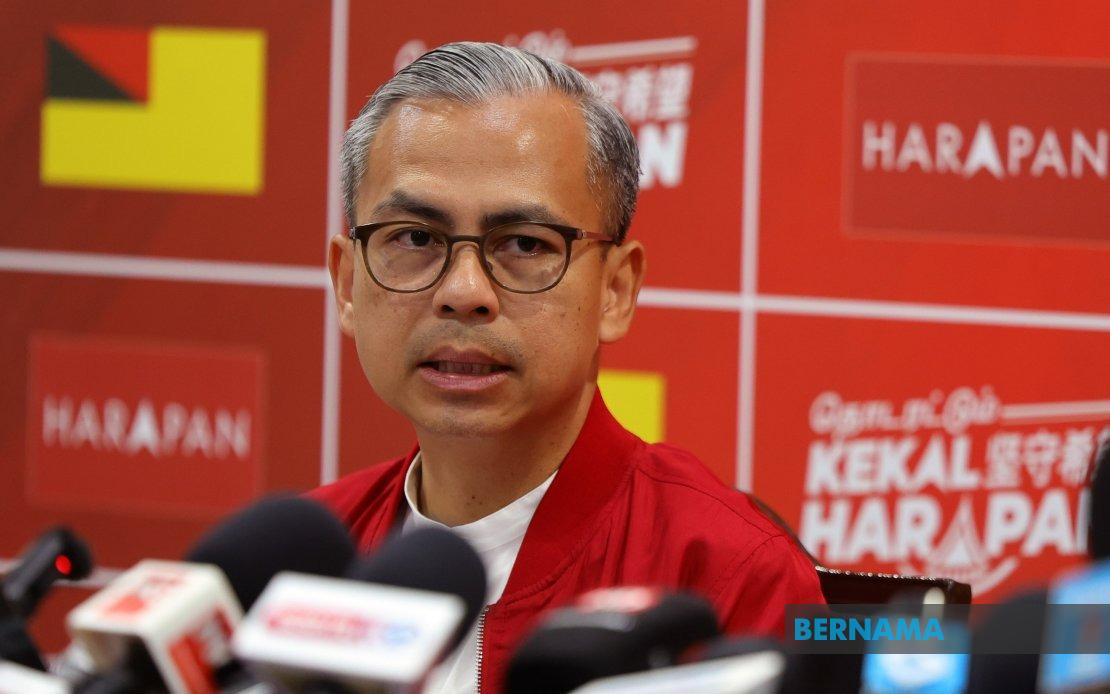
The notion that any single political alliance holds exclusive claim to representing Malaysia's Malay-Muslim constituency represents a dangerous distortion of the country's plural democracy, according to senior Pakatan Harapan figures campaigning ahead of the Negeri Sembilan state election. Speaking in Seremban on July 23, the coalition rejected what it characterizes as a deliberate effort by rival groups to monopolize communal representation during the electoral contest, arguing that such framing ignores the coalition's substantial bench of Malay-Muslim leaders across its component parties.
Datuk Seri Fahmi Fadzil, who serves simultaneously as PH communications director, PKR information chief, and federal Communications Minister, articulated the coalition's core objection to what party strategists view as a divisive campaign tactic. By pointedly invoking his own Muslim Malay identity alongside that of Khalid Abdul Samad, the Amanah politician also present at the press conference, Fahmi underscored the logical fallacy at the heart of the competing narrative. The rhetorical question—is he not Malay-Muslim, is Khalid not Malay-Muslim—functioned as a direct challenge to opponents' implicit claim of monopolistic representation.
The timing of these comments reflects broader anxieties within the coalition about messaging ahead of scheduled voting. Early balloting for the Negeri Sembilan contest began on July 28, with the main polling day set for August 1. The campaign environment appears sufficiently charged around questions of communal interest that the coalition deemed it necessary to mount a coordinated public response through multiple senior figures, suggesting internal concern that such narratives may resonate with sections of the electorate despite what PH considers their fundamental factual incorrectness.
Fahmi's articulation of PH's counter-argument emphasized what the coalition presents as a more authentic rendering of Malaysian political identity. Rather than organizing political appeal around ethnic boundaries and claims of exclusive custodianship, the coalition advocates for what it terms unity grounded in shared values and collective benefit. This framing attempts to reposition the political debate away from competitive claims about which group best serves particular communities, instead emphasizing cross-cutting solidarities that transcend racial categories. The formulation—that Malays should unite with one another, Chinese among themselves, Indians with their own, and all Malaysians standing together—attempts to maintain community cohesion while embedding those communities within a larger national framework.
The coalition marshalled concrete administrative achievements to substantiate its claim that Malay-Muslim interests have not been marginalized under its governance. Negeri Sembilan's performance under Menteri Besar Datuk Seri Aminuddin Harun offers what PH strategists believe constitutes empirical refutation of opposition claims. The administration cites expansion in mosque construction as evidence of continued religious infrastructure development and highlights zakat collection figures that have nearly two-and-a-half times exceeded levels achieved by the predecessor administration, a metric that carries particular symbolic weight within the Muslim community.
These metrics reveal something significant about how political coalitions attempt to validate their stewardship when facing challenges about communal representation. Rather than relying solely on philosophical arguments about pluralism, PH has anchored its counter-narrative in measurable outputs directly relevant to the communities it seeks to reassure. The doubling of zakat collections particularly carries weight, as this Islamic levy functions not merely as a religious requirement but as a tangible expression of governance commitment to Islamic institutional development. Mosques, similarly, represent both spiritual infrastructure and visible symbols of state support for Muslim community life.
The appearance of Cha Kee Chin, Negeri Sembilan DAP secretary, alongside the Muslim figures from PKR and Amanah itself carried communicative weight beyond the explicit rhetoric deployed. The multi-ethnic coalition's visible unity on this particular message attempted to demonstrate that the coalition genuinely functions as an integrated political force rather than separate communal fiefdoms cooperating tactically. The choice to highlight DAP representation alongside Muslim-majority party figures implicitly argued that the coalition's multicommunal character reflects genuine commitment rather than strategic convenience.
Fahmi's emphasis on continuing engagement with voters suggests PH recognizes that a single coordinated response proves insufficient to address what the coalition views as a systematic challenge to its legitimacy within Muslim communities. The commitment to ongoing voter education reflects recognition that narratives about political representation, once established in voter consciousness, require sustained counter-messaging rather than one-off correctives. This approach acknowledges the competitive nature of contemporary Malaysian political communication, where multiple coalitions deploy tailored messaging to reach specific demographic segments.
The broader context of these claims and counter-claims illuminates fault lines within contemporary Malaysian politics that extend beyond individual elections. The recurrence of assertions that certain coalitions lack authenticity or commitment to particular communities suggests that questions of representation remain potent even within ostensibly settled democratic systems. That PH felt compelled to deploy multiple senior figures to refute such narratives indicates the coalition judges these claims as potentially electorally consequential, particularly in contests involving swing voters who may harbor uncertainties about which bloc best serves their communal interests.
The fundamental disagreement being prosecuted through these competing narratives concerns the proper organization of political representation in a multicommunal democracy. Should political appeal flow through community-specific channels with representatives claiming special custodianship, or should coalitions present themselves as broad-based entities within which diverse communities retain meaningful voice and influence? These questions lack definitive technical answers; rather, they reflect distinct visions of how plural societies should organize their politics. PH's insistence that its approach better reflects Malaysian reality and values contests opposition claims that effective representation of Muslim interests requires exclusive communal focus.
As voting approaches in Negeri Sembilan, these arguments will face empirical test through voter behavior. Whether the coalition's invocation of shared values, multicommunal leadership, and administrative achievements suffices to counter opposition narratives about exclusive representation will become apparent once ballots are counted. The underlying tension between competing models of political organization and communal representation, however, will likely persist beyond this particular electoral contest, shaping how Malaysian political coalitions position themselves to voters across multiple future contests.

