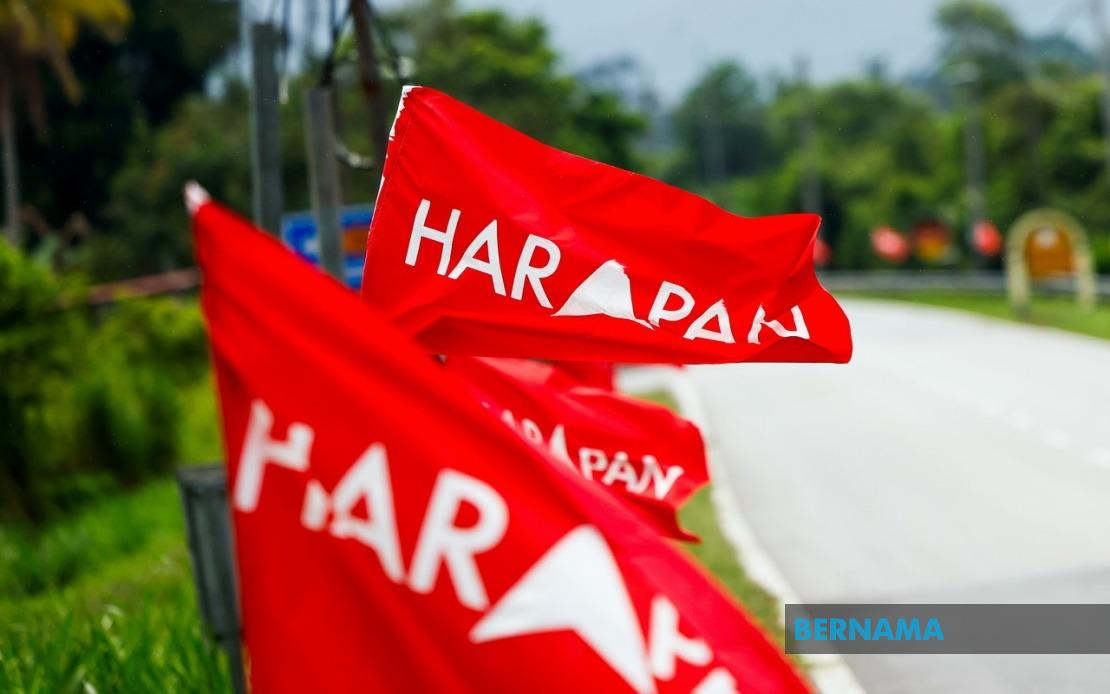
Pakatan Harapan is preparing to present its campaign platform for the upcoming Negeri Sembilan state election, with the manifesto scheduled for unveiling tomorrow evening. The coalition's regional leadership has positioned the document as a comprehensive blueprint addressing the state's economic and social future, building on what party officials describe as achievements accumulated since the coalition first assumed control of the state administration in 2018.
Muhammad Zaki Md Sabri, who directs PH's operations in Negeri Sembilan, characterized the manifesto as a detailed product of deliberation among the coalition's senior strategists. According to his statements, the document prioritizes what the party views as the essential task of maintaining the prosperity and development momentum that residents have experienced under PH governance. This framing suggests the election will largely revolve around a narrative of incumbency and continuity, with voters asked to assess whether the coalition merits another term to advance ongoing initiatives.
The formal launch will occur at a venue and with attending dignitaries whose specifics the PH secretariat promised to communicate shortly. This timing—with the manifesto rollout occurring midway through the campaign period—reflects a strategic choice to inject fresh momentum into the coalition's grassroots efforts. For Malaysian political observers, manifesto launches typically serve dual purposes: they provide media focus and anchor policy messaging while simultaneously signalling internal party organization and readiness to voters evaluating competing visions for state governance.
Muhammad Zaki indicated satisfaction with the operational efficiency and volunteer mobilization evident in the opening days of campaigning. He reported receiving encouraging feedback from candidates interacting with constituents across the state, suggesting the party organization is functioning effectively at the district and constituency levels. This observation carries weight in Malaysian state elections, where ground machinery—the network of party volunteers and local coordinators—often proves decisive in converting nominal support into actual votes, particularly in closely contested seats.
The operations director simultaneously issued a call for elevated conduct across all competing political formations. He specifically advocated for campaigns conducted within professional boundaries, free from inflammatory rhetoric and inflammatory tactics that exploit communal sensitivities. His explicit reference to avoiding provocation touching on the "3R"—religion, royalty, and race—underscores the delicate political environment in which Malaysian state elections operate, where certain topics carry constitutional and social significance that transcends ordinary campaign discourse.
The broader electoral context frames these campaign activities within specific institutional parameters. The Negeri Sembilan State Legislative Assembly was formally dissolved on June 5, initiating the constitutionally mandated campaign period. The Election Commission subsequently announced August 1 as polling day, with early voting opportunities scheduled for July 28 to accommodate military personnel, police officers, and their family members. This compressed timeline compresses the campaign into roughly five weeks, meaning each strategic initiative carries heightened importance for candidate positioning and voter persuasion.
The electorate participating in this contest numbers approximately 889,490 registered voters across the state. This includes 867,151 ordinary voters who will cast ballots on the standard polling date, supplemented by 16,884 military personnel and their spouses along with 5,455 police personnel eligible for early voting. These numerical parameters define the scale of mobilization required for any serious campaign, suggesting that effective ground organization across multiple voting phases will significantly influence electoral outcomes. The incorporation of early voting mechanisms for security personnel reflects Malaysian electoral administration's pragmatic accommodation of professional scheduling constraints.
For Negeri Sembilan specifically, the election represents a critical juncture in the state's recent political trajectory. The coalition has governed since 2018, a period spanning five years and multiple domestic and regional challenges including the COVID-19 pandemic's economic disruptions. Voters will effectively render judgement on PH's stewardship—whether the party's governance record justifies renewal of its mandate or whether alternative coalitions merit consideration. The manifesto functions as PH's formal argument for continued support, detailing proposed directions and commitments for the next state administration.
The timing of manifesto presentation also reflects broader patterns in Malaysian electoral politics, where such documents increasingly receive intense scrutiny from media organizations, think tanks, and politically engaged citizens. Unlike earlier decades when campaign platforms received minimal public attention, contemporary Malaysian elections feature detailed policy discussions and comparative analysis of competing manifestos. This evolution indicates voters are increasingly sophisticated in evaluating party proposals and holding elected officials accountable to campaign commitments, shifting away from purely personality-driven or ethnic-based voting patterns toward more programmatic considerations.
Since the 2018 seismic political shift that first brought PH to power both federally and in Negeri Sembilan, Malaysian politics has experienced substantial realignment. The coalition's governing record—both federal performance under former Prime Minister Mahathir Mohamad and state-level administration—remains contested terrain in public discourse. Some segments view PH governance as deliveryand reform-oriented, while critics argue administrative efficiency remains inconsistent and policy implementation lags behind announcements. The Negeri Sembilan manifesto will explicitly address this contested narrative, offering PH's framework for evaluating its tenure and staking claims for future direction.
Regional implications extend beyond Negeri Sembilan's borders. State elections in Malaysia function as barometers of shifting electoral sentiment, with outcomes influencing calculations across national political parties and coalitions. A strong PH performance in Negeri Sembilan would validate the coalition's recovery narrative following federal defeats in subsequent elections post-2018, while disappointing results would reinforce narratives of declining political viability. Conversely, gains by opposition coalitions would signal continued voter appetite for alternative arrangements, affecting national political calculations as Malaysia approaches its next federal election cycle.

