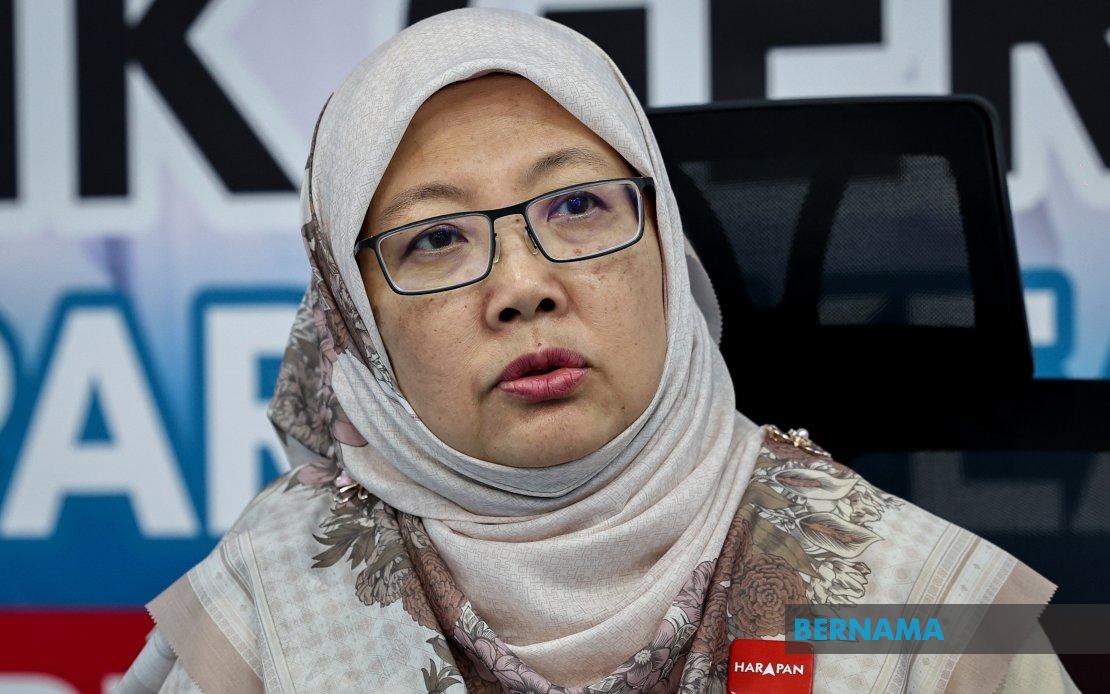
Pakatan Harapan will formally introduce its slate of candidates for the Johor state election during a ceremony scheduled for Monday, according to Johor PKR chairman Datuk Seri Dr Zaliha Mustafa. The event is expected to draw senior coalition leadership, including PH chairman Datuk Seri Anwar Ibrahim, signalling the strategic importance PH assigns to reclaiming the southern state's administration.
The candidate announcement represents a culmination of weeks of internal deliberation across PH's constituent parties and grassroots structures. Dr Zaliha, who serves as PKR vice president, disclosed that venue selection has settled on Bukit Gambir in Tangkak within northern Johor. This geographic choice reflects a deliberate political calculation by PH strategists seeking to capitalise on demonstrated momentum across the region's constituencies.
The northern zone location acknowledges tangible shifts in voter sentiment that emerged following a sustained series of community engagement initiatives. Canvassing activities conducted across constituencies including Bukit Naning generated responses encouraging enough to warrant basing the marquee announcement in that territory. PH leadership perceives the north as fertile ground for expanding its electoral footprint and believes publicising candidates in this zone amplifies the coalition's visibility precisely where organisational energy appears most concentrated.
Candidate selection incorporated a rigorous consultative process spanning from local branches to state and national PH structures. This hierarchical approach sought to identify contenders genuinely connected to their communities' concerns and demonstrating substantive service records. The vetting methodology acknowledged that electoral competitiveness hinges not merely on institutional affiliation but on individual candidates' credibility and demonstrated commitment to constituent welfare.
Demographic and ideological diversity shaped the final candidate portfolio. PH deliberately wove together professionals, younger politicians, female representatives, and candidates spanning Malaysia's ethnic communities. This conscious balancing reflects the coalition's understanding that electoral legitimacy in contemporary Johor requires demonstrating inclusive representation capable of addressing heterogeneous voter interests. Such diversity also signals PH's positioning as a genuinely multiethnic political force distinct from monolithic competitors.
The coalition's strategic orientation extends beyond merely accumulating additional parliamentary seats. PH explicitly targets assuming administrative control of Johor's state government, representing a qualitatively different objective from incremental seat gains. This governmental ambition requires constructing candidate lists where cumulative electoral appeal translates into legislative majorities enabling executive authority. The candidate selection therefore prioritises not individual popularity metrics alone but collective capacity to govern across the state's diverse communities and competing policy priorities.
PH is contesting all 56 State Legislative Assembly seats through its established tripartite formula. PKR will contest 20 seats, Democratic Action Party fields 17 candidates, and Parti Amanah Negara contests 19 seats. This seat allocation reflects prior negotiations balancing each component party's organisational capacity, geographic strongholds, and broader coalition equilibrium. The distribution ensures all three parties maintain meaningful presence while concentrating resources where polling data indicates strongest competitive positioning.
The election timeline compresses activity across coming weeks into consequential phases. Nominations close on June 27, providing four days between candidate announcement and official registration deadlines. This truncated window demands flawlessly executed logistical coordination and candidate vetting to avoid procedural disqualifications or last-minute substitutions that could disrupt carefully calibrated seat allocations. Early voting scheduled for July 7 precedes the principal election day on July 11, fragmenting the campaign period into distinct phases where different voter cohorts exercise franchise at divergent times.
For Malaysian political observers, this Johor contest carries significance transcending southern state boundaries. The peninsula's most industrialised state and Southeast Asia's third-largest economy, Johor's political complexion influences national configuration. PH's performance here tests coalition viability following earlier transitions in Selangor and Penang administrations. Conversely, opposition parties defending the state face reinvigorated competition after prior electoral cycles delivered diminished parliamentary representation. The July 11 results will substantially clarify whether 2022's national political realignment has solidified into durable new patterns or represents merely transitory disruption to established orders.
The candidate announcement's staging reflects sophisticated political communication strategy. By concentrating leadership presence and media attention into a single ceremonial event rather than dispersing announcements across multiple venues, PH maximises news cycle penetration and creates visual narrative emphasising cohesion and gravitational force among coalition leadership. The northern venue selection simultaneously addresses legitimacy concerns among northern constituencies while avoiding perceptions of coastal urban bias that might alienate inland communities comprising substantial electoral populations.