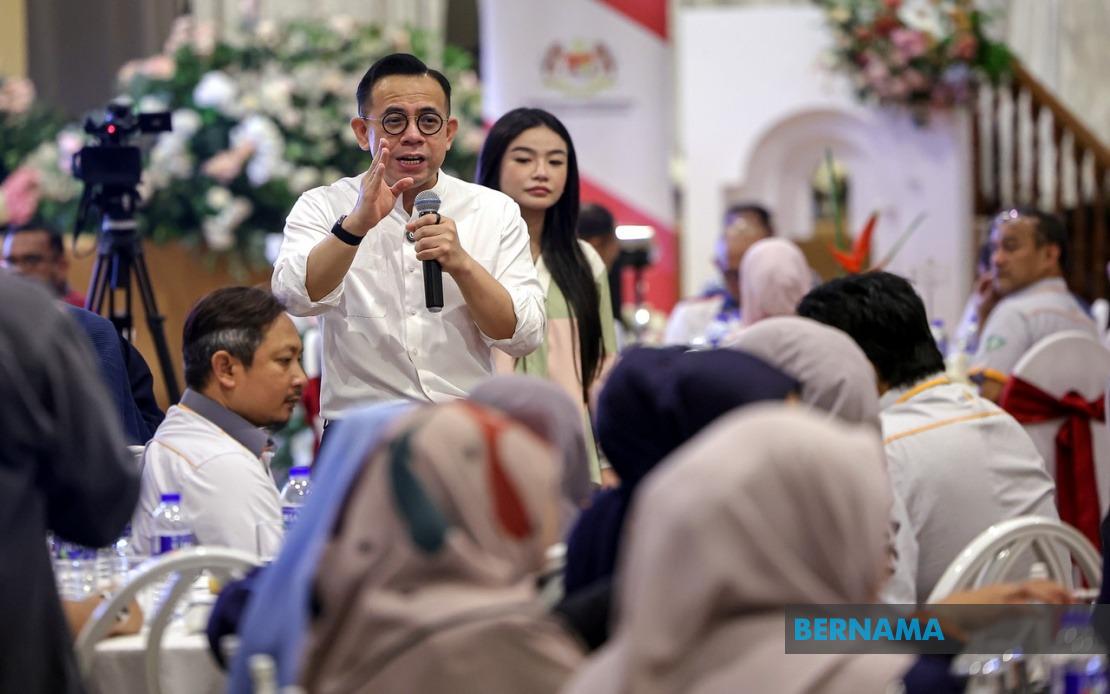
Pakatan Harapan (PH) is positioning its manifesto for the 16th Negeri Sembilan state election as fundamentally different from typical campaign documents—a blueprint grounded in demonstrable achievements and a governance record that voters can verify. Speaking in Seremban on July 21, Penang DAP chairman and federal Entrepreneur Development and Cooperatives Minister Steven Sim distinguished PH's approach by emphasising that its ten core commitments emerge from years of proven implementation under incumbent Menteri Besar Datuk Seri Aminuddin Harun's administration, not abstract political aspirations.
The contrast Sim draws is significant for Malaysian voters accustomed to manifestos that often remain aspirational. He argues that any political party can articulate commitments on paper, but PH's competitive advantage lies in its ability to point to specific programmes already delivering measurable change in Negeri Sembilan. This distinction matters particularly in a state election where voters evaluate incumbent performance against challenger promises. By framing the manifesto as an evolution and intensification of existing successful initiatives, PH appeals to voters seeking continuity backed by evidence rather than risk backed by untested proposals.
Simplifying the political messaging, Sim presents the 2024 election as a choice between two fundamentally different approaches to governance. On one side sits PH's methodology—rooted in experience, accountable to previous undertakings, and demonstrated through visible state-level outcomes. This positioning requires voters to assess not just what parties promise, but what they have already accomplished, a frame that typically favours the incumbent. For Negeri Sembilan specifically, this means evaluating Aminuddin's tenure against alternative visions offered by opposition parties.
The manifesto's emphasis on tangible benefits represents a deliberate rhetorical shift away from statistical measures that often fail to resonate with ordinary citizens. Sim explicitly distances PH from merely citing figures and slogans, acknowledging that many voters feel disconnected from economic data that government agencies tout as success. Instead, he stresses benefits "truly felt by the people of Negeri Sembilan"—a framing that prioritises lived experience and direct impact over macroeconomic indicators. This approach recognises a persistent challenge for incumbent governments: translating national or state-level growth figures into personal improvements in employment, incomes, and quality of life.
Among the concrete initiatives PH highlights is the proposed Youth Entrepreneurs Fund (TUB), which represents a direct line from federal policy support to state-level implementation. This programme exemplifies how Sim's federal ministry intends to collaborate with a retained PH state government, pooling resources and expertise across governance levels. The fund's focus on young entrepreneurs responds to a demographic priority—youth employment and entrepreneurship—that transcends party politics but shapes voting behaviour among younger voters and their families. By anchoring the manifesto in such specific, implementable schemes, PH demonstrates how federal and state coordination would function under continued coalition governance.
The federal government's continued economic support for Negeri Sembilan contingent upon PH's electoral victory carries implicit messaging about the costs of regime change. Sim's statements suggest that switching state governments might disrupt collaborative arrangements with federal ministries, potentially slowing infrastructure development, entrepreneurship initiatives, and economic programmes. This framing is particularly potent in Negeri Sembilan, a mid-tier state economically dependent on federal support and private investment. Voters must weigh whether electoral change is worth the potential friction with federal authorities and the uncertainty surrounding which federal resources would flow to a non-PH state government.
The Electoral Commission's scheduling—early voting on July 28 and election day on August 1—compresses the campaign period, giving PH limited time to communicate its message. Sim's appearance at a Negeri Sembilan state ministry assembly and his subsequent media engagement serve double duty: reinforcing PH's administrative competence while demonstrating federal-state alignment. Such coordinated messaging suggests a disciplined campaign strategy that emphasises incumbency advantages and interconnected governance rather than charismatic leadership or personality-driven appeals.
For Malaysian regional politics, Negeri Sembilan's election carries disproportionate significance. The state has traditionally reflected broader national political trends, and its result will be scrutinised as an indicator of PH's electoral resilience more than two years after the 2022 general election. If PH performs strongly despite inflation, cost-of-living pressures, and perennial internal coalition tensions, the result bolsters the coalition's narrative of stability and competent governance. Conversely, a loss would signal vulnerability even in states PH governs, potentially reshaping calculations for the next general election.
Among Southeast Asian democracies, PH's emphasis on track record and proven achievement reflects a broader global trend: incumbent governments increasingly campaign on delivery rather than vision, whilst opposition movements struggle to overcome voter scepticism about untested alternatives. This shift reflects decades of development experience showing that voters reward tangible results, particularly in healthcare, education, and infrastructure. Sim's messaging aligns with this pattern, positioning PH as the capable custodian of Negeri Sembilan's progress rather than as a party offering radical departures from existing policy directions.
The manifesto's ten commitments, elaborated through initiatives like TUB, represent calculated political choices about voter priorities. Rather than attempting to address every conceivable grievance, PH concentrates on areas where its administration has established credibility and where continued federal support can reinforce state-level efforts. This focused approach differs markedly from opposition parties that typically promise expansive reform across all governance domains, a contrast that highlights different philosophical approaches to leadership—incremental advancement versus transformational change.
As Negeri Sembilan heads toward August 1, the election will test whether voters prioritise demonstrated competence or desire for alternative governance. Sim's carefully calibrated statements suggest PH recognises that governance achievement, when properly communicated, represents its strongest electoral asset. Whether this message penetrates beyond sympathetic media coverage and reaches persuadable voters in constituencies where results will be decided remains the critical question in the coming campaign.

