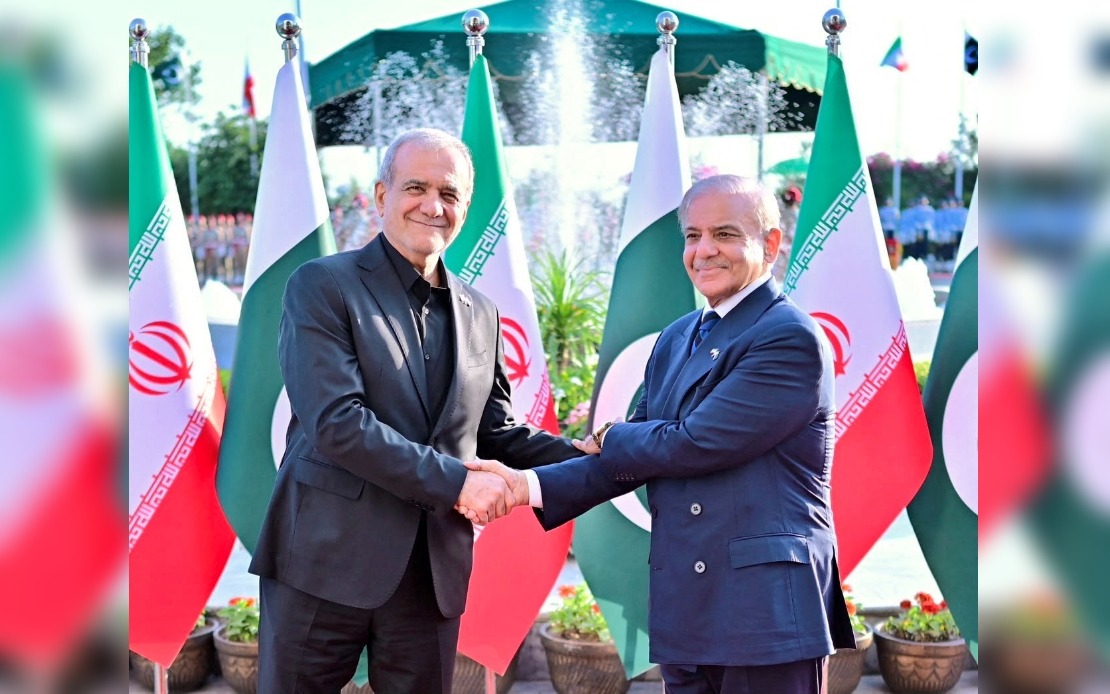
Pakistan and Iran have renewed their commitment to resurrecting the Islamabad-Tehran-Istanbul freight train corridor, a strategic infrastructure project that could fundamentally reshape trade dynamics across South Asia, the Middle East, and beyond. The initiative was advanced during discussions between Pakistan's Railway Minister Muhammad Hanif Abbasi and Iranian Interior Minister Eskandar Momeni in Islamabad, signalling a shared determination to overcome the operational hurdles that have plagued the service in recent years.
The ITI freight route represents more than a simple commercial artery; it embodies a broader vision of continental connectivity that promises to integrate Pakistan, Iran, and Turkey into a seamless logistics network reaching toward Central Asia, Russia, and Europe. For Pakistan specifically, the corridor offers a critical alternative to traditional maritime shipping routes and could unlock new export markets while simultaneously diversifying import sources. The reactivation would be particularly significant for Pakistani industries reliant on raw materials from Iran and transit trade through Turkey, potentially reducing transportation costs and delivery times considerably.
The service had been dormant for an entire decade before resuming operations in December 2021, a momentary victory that quickly unravelled when it was suspended again the following year. The operational interruption reflected the complex challenges inherent in maintaining cross-border rail infrastructure, including logistical coordination between three sovereign nations with distinct regulatory frameworks, political tensions, and capacity constraints. These obstacles underscore the technical and diplomatic complexity of reviving such an initiative, requiring not merely financial investment but sustained political will and meticulous operational planning.
Pakistan's commitment to enabling this corridor is evident in its substantial investment in upgrading the Main Line-3 railway, the critical domestic link connecting Sindh and Balochistan provinces. This infrastructure forms the backbone of Pakistan's ability to facilitate cargo movement toward the Iranian border. The modernisation initiative, anticipated to commence this fiscal year with completion targeted for December 2029, demonstrates a multi-year commitment to addressing the fundamental capacity and quality constraints that have hindered previous attempts at regional rail integration. This timeline suggests Pakistani authorities recognise that piecemeal upgrades will not suffice; instead, comprehensive modernisation is essential.
Iran's contribution to this partnership equally merits scrutiny. The country has signalled its intention to complete the modernisation of the Zahedan–Mirjaveh railway line within approximately one month, indicating that Tehran has already invested considerable resources in preparing its portion of the corridor. By positioning the completion of this segment as imminent, Iran is establishing a clear deadline that implicitly pressures Pakistan to accelerate its own work on the standard-gauge rail line stretching from Mirjaveh to Taftan in Balochistan. This asymmetrical sequencing—with Iran completing first—creates leverage in negotiations and underscores Iran's strategic priority attached to the initiative.
For Malaysian and Southeast Asian stakeholders, the restoration of this corridor carries significant implications for regional positioning and supply chain resilience. The reintegration of Iran into mainstream international trade networks, facilitated by infrastructure projects like the ITI corridor, could influence global commodity prices, shipping patterns, and investment flows. Malaysian exporters of palm oil, electronics, and manufactured goods might discover new opportunities in Central Asian and European markets accessible through this expanded corridor, while simultaneously facing competition from Iranian and Turkish producers in regional markets.
The geopolitical context cannot be overlooked. Pakistan's interest in strengthening infrastructure ties with Iran and Turkey reflects its broader strategic realignment and its determination to reduce dependence on volatile maritime routes vulnerable to disruption. For Iran, the initiative offers a path toward economic normalisation and reintegration into global commerce without requiring formal sanctions relief. Turkey's position as the western terminus makes it a crucial gatekeeper to European markets, consolidating its role as an indispensable transit hub.
The technical specifications being negotiated—particularly the standardisation of rail gauges across borders—reveal the granular nature of this cooperation. The shift toward standard-gauge systems, internationally recognised and more efficient for cross-border operations, indicates a commitment to genuine interoperability rather than ad-hoc arrangements. This technical standardisation mirrors broader efforts to harmonise regulations and procedures, creating the institutional framework necessary for sustained commercial relationships.
However, historical precedent counsels caution. The previous suspension in 2022 demonstrated how quickly political tensions, security concerns, or operational bottlenecks can derail such initiatives. The participants must therefore establish robust dispute resolution mechanisms and contingency protocols to weather inevitable challenges. Regular high-level consultations, as evidenced by the recent ministerial meeting, suggest awareness of this requirement.
For Pakistan, successful completion of the Main Line-3 upgrade represents a critical test of its ability to execute large-scale infrastructure projects on schedule and within budget—a persistent challenge for the nation's development programmes. The seven-year timeline for completion is ambitious, particularly given Pakistan's track record with railway modernisation initiatives. Delays would not merely inconvenience commercial users; they would undermine confidence in Pakistan's reliability as a transit corridor, potentially encouraging alternative routing through Central Asian nations.
The broader implications extend to energy security and resource access. A functioning ITI corridor could facilitate energy trade, particularly gas pipelines and petroleum products, creating new commercial interdependencies that reinforce political stability. For Central Asian nations, the corridor offers direct access to Persian Gulf markets without transiting through Russia, diversifying their commercial relationships and reducing strategic vulnerability.
Ultimately, the revival of the Islamabad-Tehran-Istanbul freight service represents an ambitious attempt to reconstruct the historical Silk Road through modern infrastructure. Success would require not merely capital investment but sustained diplomatic engagement, institutional reform, and genuine commitment from all parties to resolving contentious issues. The coming months will reveal whether the recent discussions translate into concrete progress or represent another cycle of unfulfilled ambitions that characterise many regional megaprojects.

