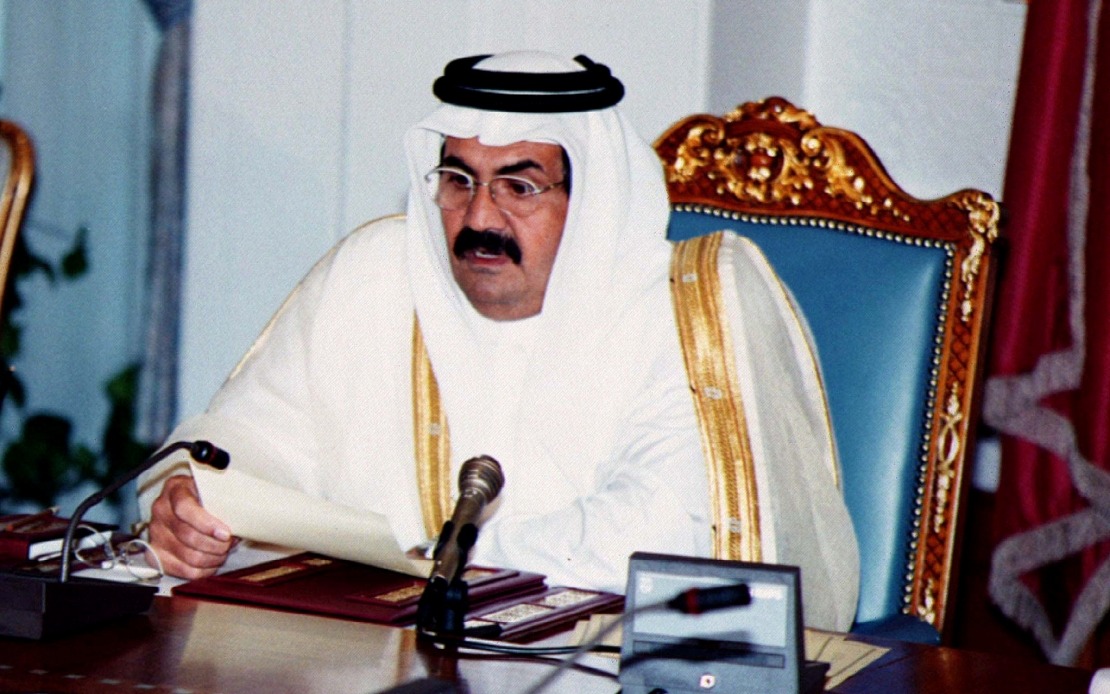
High-level delegations from Pakistan and the Maldives arrived in Qatar on Monday to express their condolences following the death of former Emir Sheikh Hamad Bin Khalifa Al Thani, who passed away at the age of 74 on Sunday. The visits underscore the significant diplomatic ties between these nations and Qatar, as regional leaders converge to pay their respects to the late emir and his successor, current Emir Sheikh Tamim Bin Hamad Al Thani.
Pakistan's delegation was led by Prime Minister Shehbaz Sharif, who undertook a single-day journey to the Gulf state. The prime minister's visit carries particular symbolic weight, as he was accompanied by his brother Nawaz Sharif, a former prime minister of Pakistan. This dual representation reflects the importance placed on honouring Sheikh Hamad's legacy across Pakistan's political establishment. The delegation further included senior government figures: Deputy Prime Minister and Foreign Minister Senator Ishaq Dar, alongside Information Minister Attaullah Tarar, demonstrating the comprehensive nature of Pakistan's representation at this moment of regional mourning.
The Maldivian government similarly responded to the occasion with high-level representation. President Mohamed Muizzu's journey to Qatar represents the Indian Ocean nation's acknowledgement of the former emir's profound influence on regional affairs. This move reflects the interconnected nature of Gulf-South Asian relations, where Qatar's leadership has long played a pivotal diplomatic role in addressing cross-regional challenges and fostering cooperation among diverse nations.
Sheikh Hamad's tenure as emir, which spanned from 1995 until his voluntary abdication in 2013, fundamentally transformed Qatar from a modest Gulf state into a major regional and global player. During nearly two decades of his leadership, the emirate underwent extraordinary economic diversification, leveraged its vast natural gas reserves to build unprecedented wealth, and invested heavily in becoming a centre for international diplomacy, sports, culture, and education. The transformation was not merely economic but societal, reshaping Qatar's infrastructure, institutions, and international standing with remarkable speed and ambition.
International tributes to Sheikh Hamad have emphasised these multifaceted achievements. World leaders, in their formal condolence messages, have highlighted the former emir's instrumental role in driving Qatar's modern development and his contributions to broader Arab and Islamic world progress. These recognitions extend beyond mere diplomatic courtesy, reflecting genuine acknowledgement of the structural changes he initiated that continue to influence regional geopolitics.
Bangladesh Prime Minister Sheikh Hasina, in her formal message to the current Emir Sheikh Tamim, specifically enumerated the late emir's legacy across multiple critical domains. She noted his contributions to regional peace-building efforts, which positioned Qatar as a neutral mediator in various Middle Eastern conflicts and disputes. His commitment to economic development extended Qatar's influence throughout the Gulf and beyond, while his focus on education created world-class institutions that attracted regional and international students. Sheikh Hasina particularly underscored his dedication to international cooperation, which elevated Qatar's diplomatic profile and enabled it to host major global events and forums.
President Mohamed Muizzu of the Maldives echoed these sentiments in his own tribute, emphasising that Sheikh Hamad's legacy and extensive contributions to Qatar's development, as well as his broader impact on the Arab and Islamic world, would endure in collective memory across generations. The Maldivian perspective carries particular resonance given the island nation's own development challenges and its reliance on strategic partnerships with wealthy Gulf states for economic cooperation and support.
The decision by both Pakistan and the Maldives to engage in official mourning reflects deeper bilateral relationships with Qatar that extend to trade, investment, labour migration, and strategic partnership. For Pakistan specifically, Qatar remains a significant source of foreign direct investment and employment for millions of Pakistani workers. The country has also benefited from Qatar's mediation in regional disputes, including its diplomatic efforts related to Afghanistan. Similarly, the Maldives, as a small island developing state in the Indian Ocean, values its strategic relationship with Qatar and the broader Gulf Cooperation Council nations.
Both Pakistan and India have formally designated Monday as a national day of mourning to honour Sheikh Hamad's memory. This joint gesture across the South Asian rivalry underscores the former emir's respected position even among traditionally competing nations in South Asia. The official day of mourning serves not merely as ceremonial respect but as recognition of his role in facilitating dialogue and cooperation among diverse nations with competing interests.
The convergence of regional leaders in Doha for this occasion symbolises how Sheikh Hamad's legacy transcends Qatari borders. His vision of Qatar as a bridge between the Arab world, Islamic nations, and the broader international community has created networks of relationships that persist beyond his formal tenure. The current Emir Sheikh Tamim, who took over leadership in 2013 following his father's abdication, continues to build upon the institutional foundations and strategic relationships established during his predecessor's transformative rule.
For Southeast Asian nations like Malaysia monitoring these developments, the mourning period in Qatar carries implications for regional diplomacy and cooperation frameworks. Qatar's role as a wealthy Gulf state with significant influence in multilateral organisations, international finance, and conflict resolution affects the broader calculus of Asian geopolitics. The respectful manner in which Pakistan, the Maldives, and other regional powers have responded to Sheikh Hamad's passing reflects the pragmatic diplomacy required in navigating contemporary global affairs where multiple power centres and interests intersect.

