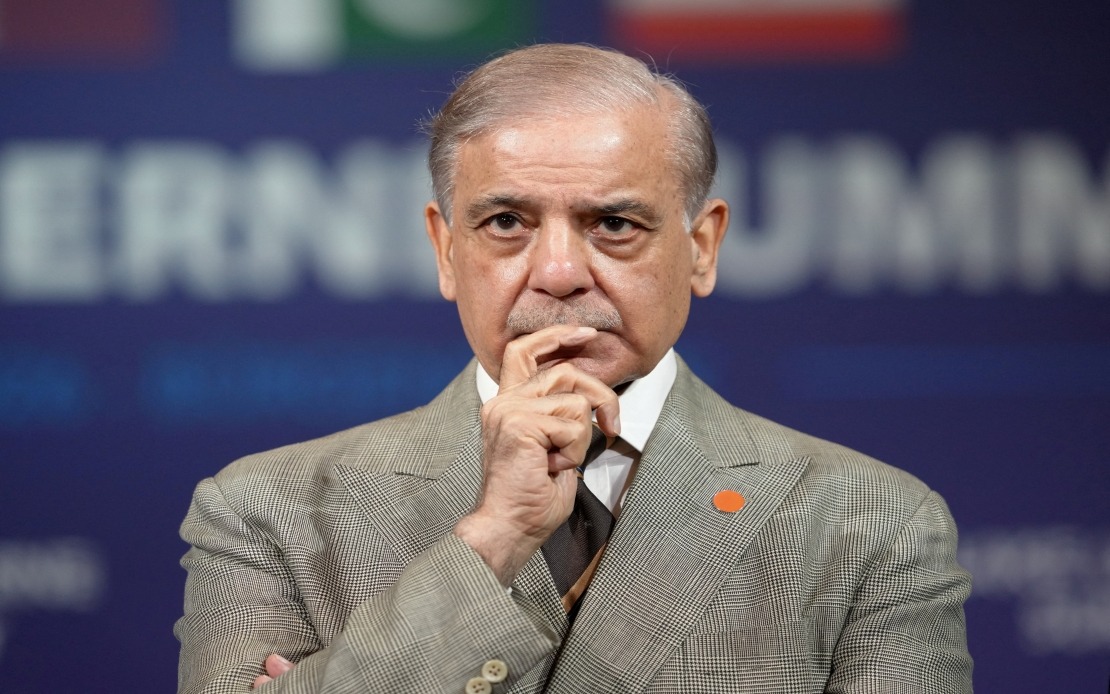
Pakistan and Türkiye have committed to substantial economic expansion, with Prime Minister Shehbaz Sharif and President Recep Tayyip Erdogan setting an ambitious target of $5 billion in annual trade during weekend talks in Istanbul. The initiative represents a significant step toward deeper commercial integration between the two Muslim-majority nations and reflects Pakistan's broader strategy to diversify economic partnerships beyond traditional relationships.
The bilateral engagement moved beyond diplomatic pleasantries, with Shehbaz directly addressing a Pakistan-Türkiye business conference where major Turkish industrial players gathered. This format allowed the Pakistani premier to present his government's economic vision directly to decision-makers who control substantial capital and operational capacity in Türkiye's private sector. By combining high-level political discussions with grassroots business engagement, both nations sought to create concrete pathways for investment and collaboration rather than leaving agreements at rhetorical levels.
Central to the partnership framework is an ambitious digital corridor initiative that Shehbaz outlined in separate discussions with Turkcell chief executive officer Ali Taha Koc. This project moves beyond traditional trade considerations and into the strategic arena of digital infrastructure, a sector increasingly vital for economic competitiveness across South Asia and the broader region. The corridor would facilitate secure cross-border data flows and integrate digital systems, positioning both countries as technology hubs within their respective regions and creating new revenue streams from digital services and fintech operations.
The scope of proposed cooperation spans multiple economic sectors reflective of both nations' development priorities and complementary strengths. Energy cooperation holds particular significance for Pakistan, which faces chronic power generation deficits that constrain industrial growth and economic expansion. Türkiye's expertise in energy production and distribution, combined with its experience in managing complex energy infrastructure projects, offers potential solutions to Pakistan's persistent electricity challenges. Transportation collaboration could improve bilateral connectivity and facilitate smoother movement of goods and services across both countries' borders.
Critical minerals represent another strategic dimension to the partnership. Global supply chain disruptions and rising geopolitical tensions have made access to minerals essential for battery production, electronics manufacturing, and renewable energy infrastructure. Pakistan possesses substantial mineral reserves that remain underdeveloped, while Türkiye has advanced processing capabilities and established markets. Joint ventures in this sector could create value-addition opportunities and reduce both nations' import dependence for critical materials required in emerging technologies.
Pakistan's delegation, headed by Deputy Prime Minister and Foreign Minister Ishaq Dar, included ministers controlling key economic portfolios: maritime affairs, power generation, petroleum resources, privatisation, information technology, and telecommunications. This comprehensive ministerial participation signaled serious intent and provided Turkish investors direct access to officials who control regulatory frameworks, policy decisions, and investment approvals. Such structured engagement reduces transaction costs for foreign investors and accelerates project development timelines.
The business conference attracted executives from Türkiye's most influential conglomerates and enterprises. Koc Holding, one of Asia's largest industrial groups, brings decades of experience in manufacturing and diversified operations. Arcelik, a global home appliances manufacturer with significant market presence across Asia and Europe, could introduce advanced manufacturing practices and technology transfer. Aygaz's participation signals interest in energy distribution and gas sector cooperation. Demir Export's involvement suggests interest in trade facilitation and commodity markets. This caliber of corporate participation indicates serious market testing and genuine commercial interest beyond ceremonial commitments.
The emphasis on manufacturing and industrial investment reflects both nations' recognition that sustainable economic growth requires productive sector development rather than reliance on services and remittances alone. Pakistan has long struggled to develop robust manufacturing capacity and international competitiveness in industrial goods. Turkish companies have experience establishing manufacturing facilities across multiple continents and possess established supply chains. Potential joint ventures could help Pakistan develop manufacturing expertise while providing Turkish firms access to South Asian markets and lower-cost production bases.
From a Southeast Asian perspective, the Pakistan-Türkiye economic deepening carries regional implications. Pakistan's integration into alternative economic networks potentially creates new trade routes and commercial relationships that bypass traditional Western-dominated frameworks. For Malaysian businesses and policymakers, this development presents both competitive and collaborative opportunities. Malaysian companies with expertise in technology, manufacturing, or energy could potentially participate in Pakistan-Türkiye joint ventures or provide complementary services to expanding bilateral projects.
The $5 billion annual trade target, while ambitious, remains achievable given both nations' populations, economic sizes, and complementary resource profiles. Current bilateral trade likely falls substantially below this figure, suggesting substantial untapped potential. Achieving this target would require removing tariff barriers, harmonizing standards, establishing specialized trade corridors, and creating institutional mechanisms for dispute resolution and contract enforcement.
Pakistan's strategic positioning at the intersection of South Asian, Central Asian, and Middle Eastern markets makes it valuable to Türkiye's economic expansion eastward. Conversely, Türkiye's positioning between Europe, Asia, and the Middle East offers Pakistan pathways to markets and technologies currently accessed through costlier Western intermediaries. The digital corridor initiative particularly reflects recognition that traditional geographic proximity matters less in digital economy, where infrastructure and regulatory compatibility determine competitive advantage.
The success of these commitments depends on follow-through implementation and overcoming historical challenges that have constrained Pakistan-Türkiye commercial ties. Establishing dedicated working groups, setting milestone targets with clear accountability, and creating dispute resolution mechanisms will be essential. Both governments must also coordinate on regulatory harmonization, visa facilitation for business travelers, and financial infrastructure that enables smooth capital flows between the two nations.

