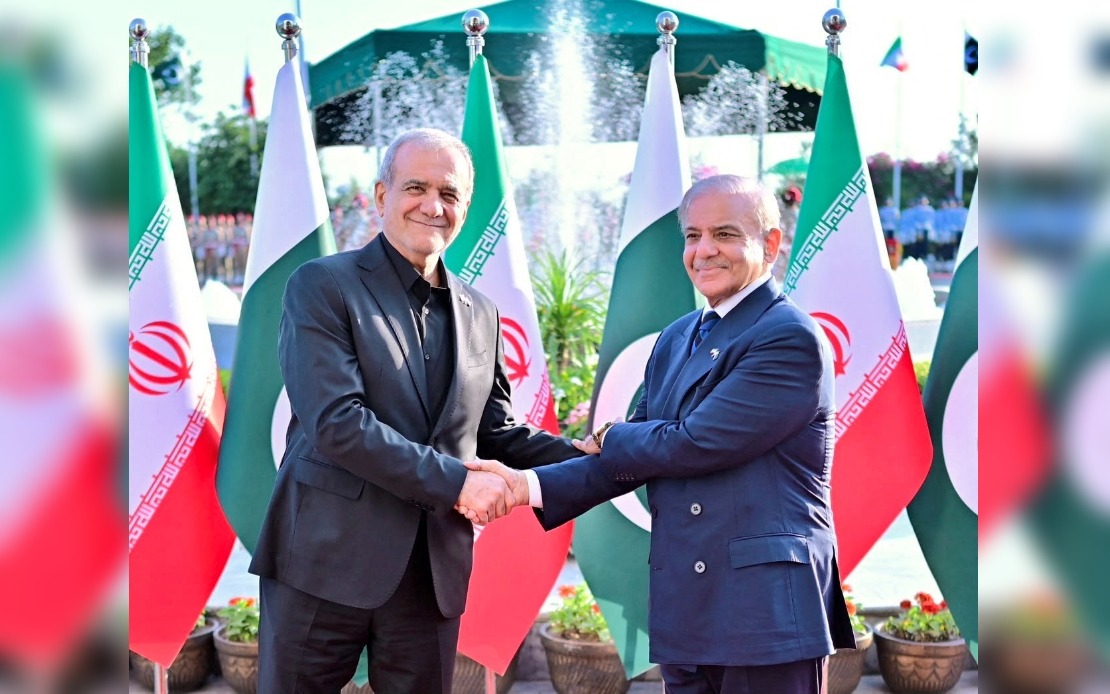
Pakistan's leadership has thrown its weight behind Iran's ballistic missile programme during a high-profile visit by Iranian President Masoud Pezeshkian to Islamabad, with Prime Minister Shehbaz Sharif rejecting what he characterised as discriminatory international standards on weapons development. Speaking alongside the Iranian delegation on Tuesday, Sharif made clear that Tehran's missile capabilities formed no part of the June 17 memorandum of understanding between Iran and the United States, a deal that Islamabad had played a crucial mediating role in achieving.
Sharif's unequivocal support reflects Pakistan's evolving geopolitical positioning in South Asia and the broader Middle East. The Prime Minister argued forcefully against what he termed double standards in international discourse surrounding military capabilities, noting that multiple nations maintain ballistic missile arsenals without facing the same international scrutiny or conditions placed on Iran. By framing the missile question as separate from the recent diplomatic breakthrough, Sharif sought to insulate the nascent US-Iran understanding from becoming derailed by a contentious issue that has long divided Washington and Tehran. His position essentially signals that Pakistan will not permit external pressure regarding Iranian weaponry to undermine the delicate peace arrangement it has helped construct.
The timing of this declaration carries particular significance given the volatile regional security environment. Iran had endured direct military strikes from both Israel and the United States on February 28, attacks that underscored Tehran's vulnerability and reinforced its conviction that missile deterrence represents an essential component of national survival. For the Iranian leadership, abandoning or limiting ballistic capabilities would effectively surrender the asymmetric defensive posture that has thus far prevented larger-scale military operations on Iranian soil. Pezeshkian articulated this calculation bluntly during the joint press conference, drawing an explicit parallel to Gaza and suggesting that without Iran's defensive arsenal, Israel and the United States would pursue unconstrained military operations with devastating consequences for the Iranian population.
Pakistan's intermediary role has become increasingly significant as regional tensions persist. Beyond the June agreement, Islamabad had previously brokered a temporary ceasefire between Iran and the United States in April, demonstrating Islamabad's unique diplomatic access and credibility with both parties. Deputy Prime Minister and Foreign Minister Ishaq Dar alongside Field Marshal Syed Asim Munir, Pakistan's Chief of Army Staff, invested substantial political capital in these negotiations, positioning Pakistan as an indispensable honest broker in a region where trust between adversaries remains exceptionally fragile. Sharif's public gratitude toward Iran for accepting Islamabad's mediation efforts reflects the importance both nations attach to their bilateral relationship.
However, Sharif acknowledged that substantial obstacles remain to consolidating the fledgling peace framework. He identified what he termed "spoilers" operating globally who seek to undermine the agreement, a reference that implicitly encompassed Israel and its regional allies. Israel has indeed emerged as perhaps the most significant impediment to sustained peace in West Asia, with ongoing military operations in Lebanon and the occupied Palestinian territories creating constant flashpoints that threaten to drag Iran and its allies into wider conflict. The destabilizing effect of these operations extends far beyond the immediate conflict zones, creating conditions where hardliners within Iran can argue against continued restraint and diplomatic engagement.
The positioning of the United States adds another layer of complexity. US President Donald Trump's recent concession that Iran's possession of ballistic missiles constitutes a reasonable position provided unexpected diplomatic cover for those seeking to normalise this aspect of Iranian security policy. Trump's statement to reporters in Paris that "if other countries have them, it is a little bit unfair for them not to have some" effectively legitimised arguments that Pakistan and Iran have been advancing, though whether this represents settled American policy or merely presidential commentary remains unclear. The ambiguity surrounding Trump's authority on such matters and the potential for policy reversal under different circumstances creates ongoing uncertainty.
Iran's public posture during the visit reinforced that its defensive capabilities remain beyond negotiation. Pezeshkian's pointed reference to Gaza—where extensive military operations have proceeded largely unimpeded—conveyed the conviction that any surrender of ballistic capabilities would invite similar treatment of Iranian territory. This rhetorical positioning establishes a red line that complicates future negotiations and makes any agreement limiting Iranian missiles extraordinarily difficult to achieve absent fundamental changes in regional threat perceptions. For Malaysia and other Southeast Asian nations observing these dynamics, the episode illustrates how regional security arrangements increasingly revolve around permanent deterrent capabilities rather than trust-based agreements.
The ceremonial dimension of Pezeshkian's visit underscored the depth of Pakistani-Iranian partnership. The Iranian president's arrival in Islamabad featured an escort of six Pakistani Air Force fighter jets, with Prime Minister Sharif and President Asif Ali Zardari providing the reception and a 21-gun salute according him full state honours. Such displays communicate to regional and international audiences the strength of bilateral relations and Pakistan's willingness to publicly align with Iran despite pressure from other quarters. For Southeast Asian observers, this represents a reminder that strategic partnerships in the Islamic world remain robust regardless of international pressure, and that mediation efforts by respected intermediaries can yield genuine diplomatic achievements even amid profound regional divisions.
Looking forward, the sustainability of the US-Iran understanding will depend heavily on whether spoiler elements can be contained and whether the core participants maintain commitment to the framework. Pakistan's vocal defence of Iranian positions regarding missiles suggests that Islamabad believes the best path toward regional stability involves accepting Iranian security priorities rather than attempting to pressure Tehran into further concessions. This approach reflects a realistic assessment that Iran simply will not surrender weapons it considers existentially important, making it pragmatic to build peace frameworks around Iranian retention of these capabilities rather than attempting their elimination. For the broader international community, Pakistan's mediation illustrates how regional powers wielding credibility with multiple parties can shape diplomatic outcomes in ways that reflect geopolitical realities rather than ideological preferences.