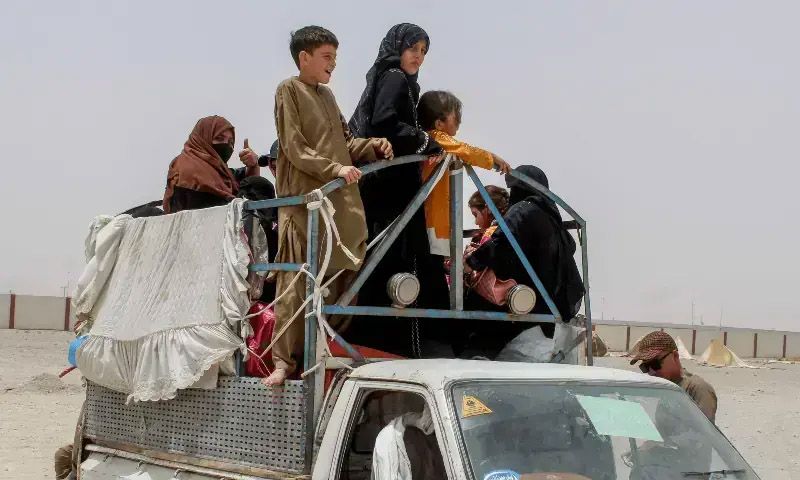
Pakistan is executing one of South Asia's largest deportation operations, having sent back approximately 2.59 million Afghan nationals residing illegally in the country since the beginning of 2023. The unprecedented scale of the crackdown reflects Islamabad's determination to enforce stricter immigration controls and manage what officials describe as an unsustainable burden on the nation's resources and infrastructure. The campaign, coordinated between federal and provincial authorities, has fundamentally reshaped Pakistan's approach to undocumented migration and triggered substantial humanitarian concerns across the region.
The Punjab province, Pakistan's most populous region, has emerged as the epicentre of this enforcement initiative. The provincial home department's foreign national security cell maintains 36 operational detention facilities where approximately 53 Afghan nationals currently remain in custody awaiting processing and deportation. Punjab authorities have independently processed and expelled 138,342 Afghans from their holding centres, representing a significant portion of the total national deportation figures. This regional concentration underscores both the scale of undocumented Afghan settlement in Punjab's urban centres and the institutional capacity that provincial authorities have mobilized to execute the government's mandate.
The deportation mechanism operates through a structured administrative process that begins with arrest in residential and commercial areas, moves through documentation and verification at holding centres, and concludes with transportation across the Torkham border crossing into Afghanistan. Officials maintain that detained individuals receive basic accommodation and logistical support during their detention period. The process reflects coordination between Pakistani security agencies and border management authorities, with departures conducted through established land border checkpoints rather than ad hoc methods. This systematization distinguishes the current campaign from earlier, more sporadic enforcement efforts.
Government officials have articulated a clear legal rationale for the deportations. A spokesperson from the Punjab home department emphasized that Pakistan's immigration framework categorically prohibits residence without valid visa documentation, and that individuals failing to meet this requirement face automatic deportation. According to the official narrative, the home department has completed comprehensive surveys in both markets and residential areas to identify illegally residing foreigners. These operations have been characterized as systematic rather than reactionary, suggesting a planned approach to population management rather than emergency interventions prompted by specific incidents.
The timing and scale of this operation carry significant implications for neighbouring Afghanistan, which continues to grapple with political instability, economic collapse, and humanitarian crises following the Taliban's return to power in August 2021. The arrival of 2.59 million deportees strains an already fragile state infrastructure and displaces vulnerable populations who may have accumulated Pakistani wages, investments, and social connections over years or decades. The humanitarian dimension of mass deportation—including family separations, loss of employment, and integration challenges in Afghanistan—remains largely absent from official Pakistani government statements, which focus instead on sovereignty and resource management.
For Malaysia and other Southeast Asian nations hosting significant Afghan diaspora populations, Pakistan's enforcement campaign offers cautionary context about immigration policy tensions. Afghanistan's protracted instability continues to generate regional migration pressures, and Pakistan's experience demonstrates both the institutional strain that host nations experience and the limitations of purely enforcement-based migration management. The scale of deportation suggests that voluntary repatriation and international burden-sharing mechanisms have proven insufficient in addressing cross-border population movements driven by conflict and economic desperation.
The federal government has mobilized public cooperation in the enforcement effort, establishing an emergency reporting mechanism through which Punjab residents can contact authorities regarding suspected illegal Afghan residents. A home department representative stated that the confidentiality of informants would be protected, a provision designed to encourage community participation in identifying undocumented individuals. This approach converts ordinary citizens into frontline enforcement agents and represents a significant expansion of surveillance mechanisms within Pakistani society, with implications extending beyond immigration control into broader questions of state capacity and citizen-state relations.
Pakistan's aggressive stance reflects mounting pressures on the country's social and economic infrastructure, though precise figures on the fiscal impact of undocumented Afghan populations remain contested. Official estimates place the total Afghan population in Pakistan—both documented and undocumented—at several million individuals, representing one of the world's largest refugee and irregular migrant populations. The government has justified the deportation campaign partly through arguments about resource allocation, public services delivery, and security concerns, though international humanitarian organizations have questioned whether blanket deportation serves legitimate state interests or constitutes disproportionate enforcement against a vulnerable population.
The Torkham border crossing serves as the primary gateway for deportations, creating logistical bottlenecks and placing significant administrative burden on both Pakistani and Taliban-controlled Afghan border authorities. The volume of deportations has occasionally overwhelmed reception infrastructure on the Afghan side, leading to temporary processing backlogs and inadequate facilities for managing hundreds of thousands of returning nationals. These capacity constraints suggest that the deportation campaign may reach natural limits based on the speed at which authorities on both sides can process human movement.
International responses to Pakistan's deportation campaign have been mixed. The United Nations and various human rights organizations have expressed concern about the pace and scale of enforcement, questioning whether adequate safeguards exist to protect vulnerable individuals including children, persons with disabilities, and those with medical conditions requiring specialized care. Pakistani officials, however, have emphasized that the campaign reflects legitimate government prerogatives in controlling borders and managing national resources, and have resisted external pressure to moderate enforcement intensity.
The deportation campaign also reflects changing dynamics within Pakistan's political economy. The country faces significant fiscal constraints, currency instability, and inflation affecting ordinary citizens, creating domestic political pressure on governments to prioritize resource allocation toward Pakistani nationals. Undocumented Afghan populations become politically convenient targets, particularly when economic grievances are acute and competition for wages and services appears intense. This domestic political calculus helps explain why the campaign has achieved broad institutional support across provincial and federal authorities despite humanitarian concerns.
Looking forward, the intensity of Pakistan's enforcement effort raises questions about sustainability and long-term strategic approaches to Afghan migration. If historical patterns persist, new undocumented arrivals may eventually replenish populations that have been deported, suggesting that enforcement alone may prove insufficient without addressing root causes of migration from Afghanistan. Regional dialogue involving Pakistan, Afghanistan, Iran, and international organizations may be necessary to develop more comprehensive migration management frameworks, though current geopolitical tensions limit prospects for such cooperation.

