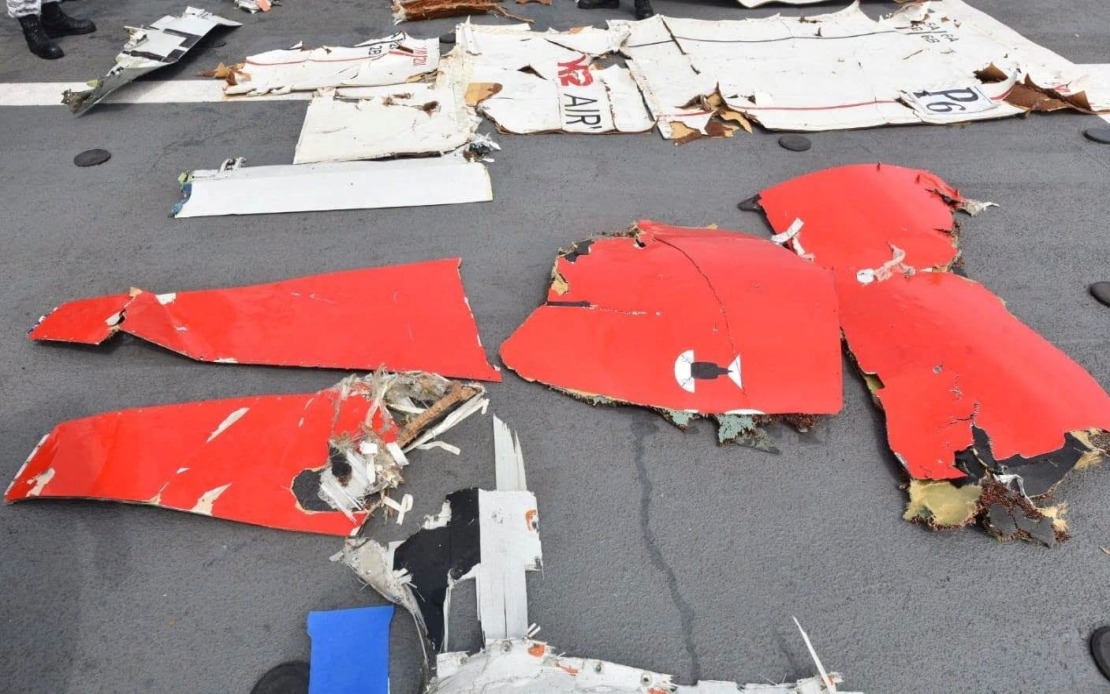
The Pakistani Navy has retrieved fragments of a cargo-carrying Boeing 737 from the Arabian Sea following an intensive 12-hour search operation, though investigators have yet to locate any sign of the five crew members aboard the aircraft. Naval units discovered the debris field near Amara, a coastal area situated west of Karachi, the Pakistani airport authority confirmed through a statement posted on social media platform X on Thursday. The discovery marks a significant development in the investigation into one of Pakistan's recent aviation incidents, though the absence of crew members raises troubling questions about the circumstances surrounding the aircraft's final moments.
The doomed aircraft, operated by K2 Airways, lost radio contact with air traffic control during the evening hours of Tuesday. According to accounts from the airport authority, the flight crew had transmitted reports of navigation system malfunctions moments before the aircraft experienced a rapid descent and disappeared from radar screens. The plane was en route from Sharjah in the United Arab Emirates to Karachi's international airport when the emergency unfolded, covering a commercial corridor frequently used for regional cargo operations. The swift loss of altitude, combined with the timing of the navigation warnings, suggests the crew may have confronted a critical technical emergency that developed faster than recovery procedures could address.
Conditions in the Arabian Sea have presented substantial obstacles to the recovery effort, with unusually turbulent waters stirred up by the onset of monsoon season complicating both search and rescue operations and the subsequent investigation work. The airport authority specifically cited rough seas as a hampering factor in locating crew members or additional wreckage that might provide clues to the accident sequence. Such maritime conditions are particularly challenging during monsoon months in the Arabian Sea region, where wave heights and currents can shift dramatically, potentially dispersing debris across wider geographical areas and making systematic searching significantly more difficult for naval personnel and rescue teams.
K2 Airways, the private Pakistani carrier operating the ill-fated flight, released a statement identifying the five crew members and emphasising the airline's cooperation with official investigators. The carrier, which commenced commercial operations in 2018, expressed sorrow for the incident and pledged full collaboration with the Pakistan Civil Aviation Authority and other relevant government agencies. The statement particularly noted the five personnel comprised two pilots, two flight engineers, and a loadmaster, a typical crew composition for cargo aircraft operations requiring both technical expertise and logistical management during loading and unloading procedures.
Prime Minister Shehbaz Sharif issued a statement on Wednesday offering condolences to the families of the missing crew members and expressing national sorrow regarding the aviation accident. The government's official response underscored the severity with which Pakistani authorities are treating the incident, signalling that investigations would proceed with appropriate priority and resources to establish the precise cause of the catastrophic event.
The aircraft itself represented an older generation of commercial aviation assets. The Boeing 737 first entered service in 1999 as a passenger-configured aircraft before subsequent conversion to cargo configuration, a common practice in the airline industry that extends the operational lifespan of aging airframes. The aircraft's age raises questions about maintenance protocols and whether any pre-existing technical issues may have contributed to the navigation failures reported by the crew. Regular maintenance records and service history documentation will form crucial components of the investigation.
The incident highlights persistent safety challenges within Pakistan's aviation sector, which has experienced several notable accidents over recent decades. Regional carriers, particularly those in the cargo business, operate under considerable financial pressure that sometimes compromises maintenance standards and crew training investments. For Malaysian and Southeast Asian readers, this incident serves as a reminder of the interconnected nature of regional aviation networks and the importance of rigorous safety oversight across all carriers utilising shared airspace and airports.
The Arabian Sea wreckage discovery and ongoing absence of crew members presents an unusual investigative scenario. In most modern aviation accidents, recovery of human remains or crew members occurs relatively quickly, particularly in regions with established maritime response infrastructure. The failure to locate any crew members despite discovering debris suggests either that bodies may have been dispersed widely by current patterns, or that the catastrophic nature of the accident may have resulted in remains sinking deeper than initial recovery efforts have reached.
The investigation team will now focus on recovering additional aircraft components that might illuminate the technical failures that precipitated the disaster. Flight data recorders, often colloquially termed black boxes, represent the highest priority for recovery, as these devices contain detailed information about aircraft systems performance, crew communications, and environmental conditions in the moments preceding the accident. Locating these recorders will prove essential to determining whether the navigation failures resulted from equipment malfunction, pilot error, atmospheric conditions, or some combination of factors.
For regional aviation stakeholders and safety regulators across Southeast Asia, this incident underscores the importance of maintaining rigorous compliance with international safety standards, particularly for carriers operating aging aircraft or those operating with limited financial resources. The Pakistan Civil Aviation Authority's comprehensive investigation will likely yield findings relevant to all regional operators managing similar aircraft types or operating under comparable operational pressures.

