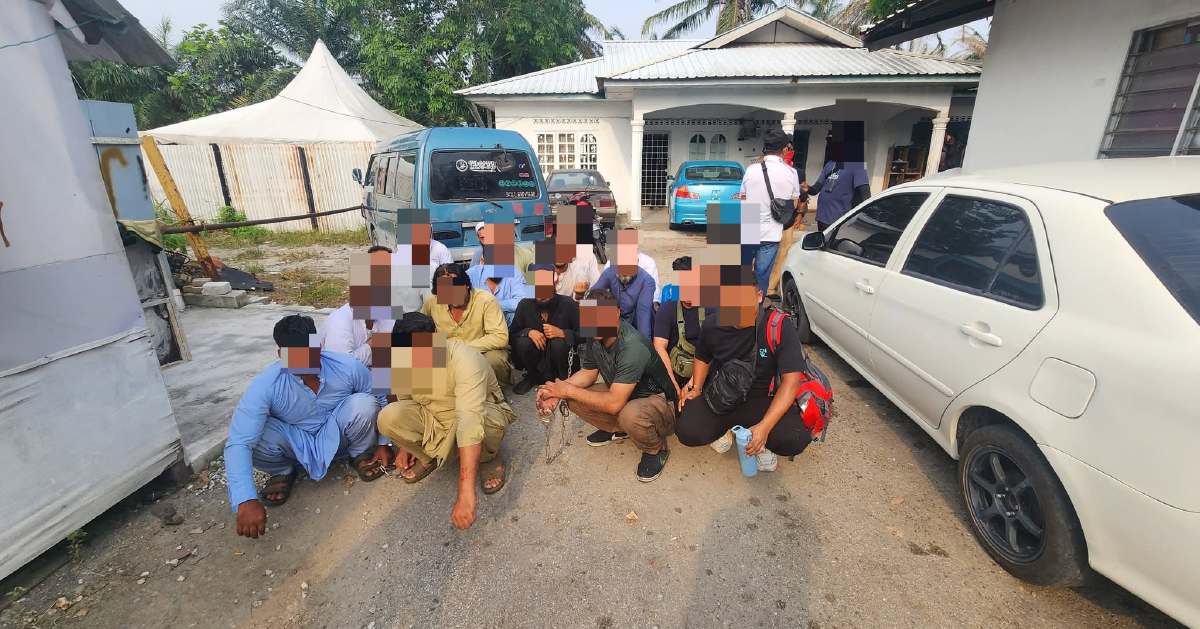
Authorities have delivered a significant blow to organised vehicle parts trafficking in the Klang Valley, with the arrest of 20 individuals implicated in a large-scale dismantling and resale operation. The Immigration Department led the enforcement action at a location on Jalan Kapar, securing multiple suspects and disrupting what investigators believe was a sophisticated smuggling network. At the centre of the operation stands a Pakistani national, whose alleged coordination of the entire scheme underscores the transnational nature of vehicle-related crime affecting Malaysia.
The dismantling of this syndicate represents a critical development in combating automotive parts trafficking, a pervasive problem that extends beyond simple theft. Such operations typically involve the systematic acquisition of vehicles—often through theft or fraudulent means—followed by their rapid disassembly into components. These parts are then funnelled into grey markets across Southeast Asia, where they command significant prices and feed demand from workshop operators and individual consumers seeking cheaper alternatives to legitimate supplies.
The Klang industrial corridor, with its dense network of workshops, warehouses, and logistical hubs, has long been a flashpoint for such criminal activities. The area's geographic position near Port Klang and its accessibility to major highways make it an ideal base for operations targeting vehicles destined for export or distribution throughout Malaysia and neighbouring countries. Previous enforcement actions in the region have similarly uncovered large-scale parts operations, suggesting an entrenched criminal infrastructure that continues to evolve despite regulatory efforts.
The involvement of foreign nationals as orchestrators rather than mere participants reveals how transnational criminal networks have capitalised on Malaysia's strategic location and porous internal supply chains. Pakistani nationals have previously featured in various smuggling and trafficking investigations across Malaysia, often leveraging established migration networks and diaspora connections to facilitate illicit commerce. The prominence of this alleged mastermind suggests sophisticated operational capacity, including knowledge of procurement methods, distribution channels, and mechanisms to evade detection.
Investigations into such syndicates typically reveal complex supply chains involving collusion with vehicle owners, insurance fraudsters, corrupt officials, and dishonest workshop proprietors. Some vehicles may be reported as accident write-offs before being covertly recovered and dismantled, while others are stolen outright. The syndicate's efficiency depends on rapid processing—minimising the window between acquisition and dispersal—and establishing relationships with buyers spanning multiple jurisdictions across Malaysia and the region.
The financial dimensions of such operations are substantial. A single vehicle's components can yield returns several times the residual value of the intact automobile, particularly when sourced from newer, high-demand models. Over weeks or months, a moderately sized operation can generate hundreds of thousands of ringgit, justifying the organisational investment and operational risk. For participants at lower levels—drivers, workshop staff, logistics handlers—the relatively accessible entry points and financial incentives create persistent recruitment challenges for authorities.
The broader implications for Malaysian law enforcement extend to supply chain integrity and consumer protection. Parts sourced from dismantled vehicles often lack proper documentation, safety certifications, or warranty provisions, exposing end-users to genuine safety hazards. In the automotive sector, brake components, electrical systems, and structural parts sourced from unvetted suppliers can create serious accident risks. Additionally, the use of stolen vehicle identification numbers (VINs) and falsified documentation enables the circulation of parts whose provenance cannot be verified, complicating regulatory oversight.
The Immigration Department's lead role in this operation reflects the cross-jurisdictional nature of such crimes, where border security, document fraud, and transnational coordination intersect. While the Royal Malaysia Police remain primary investigators for theft and property crimes, immigration authorities address the foreign national aspect and potential visa violations. Coordination between agencies—including the Malaysian Armed Forces, Customs Department, and local authorities—is typically essential for dismantling larger syndicates with distributed operations.
Successful prosecution of the arrested individuals will likely depend on gathering forensic evidence linking them to specific vehicles and parts inventories, establishing financial flows through banking records and payment systems, and securing testimonies from lower-level participants willing to cooperate. The alleged mastermind's detention and interrogation may yield intelligence about the network's broader structure, suppliers, and distribution partners operating elsewhere in Malaysia or the region.
Longer-term disruption of such syndicates requires addressing underlying vulnerabilities in vehicle registration, insurance claims processing, and parts trading regulations. Enhanced collaboration between authorities and the private sector—including vehicle manufacturers, insurers, and legitimate parts traders—can improve early detection of suspicious activities. Digital tracking systems, blockchain-based supply chain verification for high-value components, and harmonised regional intelligence-sharing protocols represent evolving defensive measures.
The Klang operation's success also signals to other potential syndicate operators that Malaysia's enforcement capabilities remain credible and that transnational criminal leadership cannot assume indefinite operational immunity. However, the persistence of such activities across years and jurisdictions suggests that while tactical victories like this arrest remain important, the structural incentives driving transnational vehicle parts trafficking require sustained strategic attention from Malaysian authorities and their regional counterparts.

