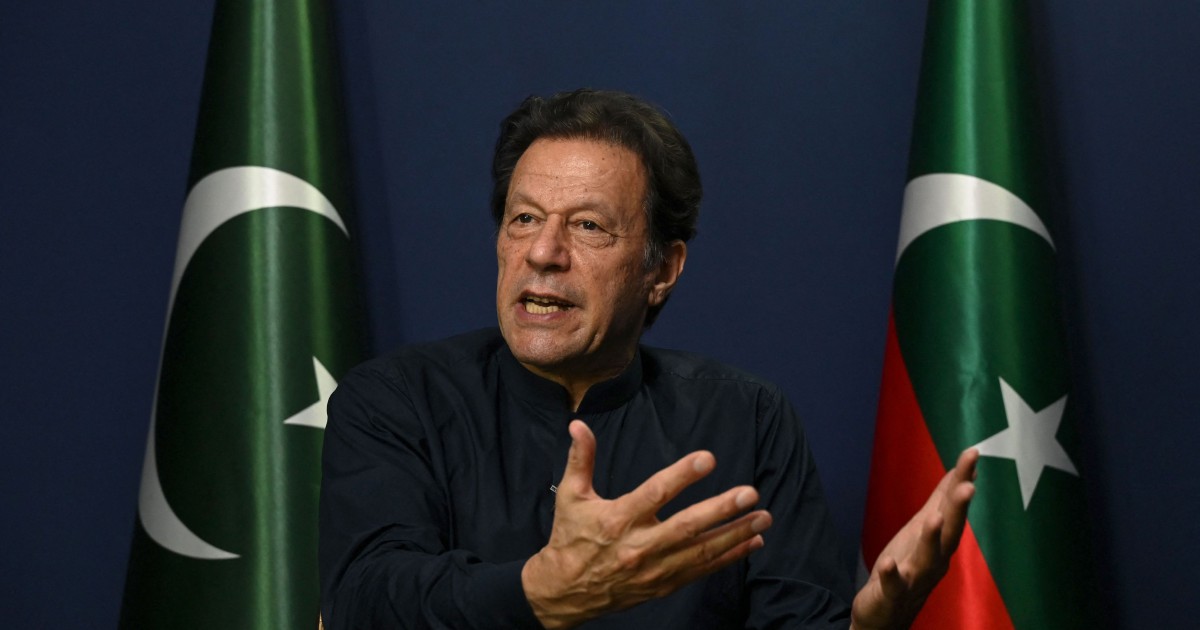
Pakistan's Supreme Court issued an order on Tuesday mandating that former Prime Minister Imran Khan be transferred from jail custody to a hospital facility, according to an announcement from his political party, the Pakistan Tehreek-e-Insaf. The judicial intervention marks a significant moment in the ongoing legal struggles of the former leader, whose detention has become a flashpoint in Pakistani politics since his arrest and subsequent incarceration.
The Supreme Court's decision responds directly to sustained advocacy by Khan's party and his family members, who have persistently raised alarm about his deteriorating health conditions while held in custody. These concerns had accumulated over an extended period, with political allies and relatives characterizing his jail environment as detrimental to his wellbeing. The court's order essentially acknowledges the merit of these health-related petitions, setting aside the previous arrangement that had kept Khan confined within the prison system despite medical questions.
Imran Khan's legal situation encapsulates the volatile intersection of politics, judiciary, and rule of law in Pakistan. The former cricket star-turned-politician has become a highly polarising figure, commanding fervent support among his base while facing significant legal challenges from Pakistan's institutional establishment. His imprisonment has sparked considerable debate about judicial independence and the political use of the criminal justice system, with supporters arguing that his detention reflects persecution rather than legitimate legal process.
The circumstances surrounding Khan's arrest and detention have drawn international attention and criticism from human rights observers. Various international bodies have expressed concern about the conditions under which he has been held and the nature of charges against him. His supporters maintain that the cases represent politically motivated prosecutions designed to remove him from the political arena, a charge denied by the government and relevant authorities who argue that Khan faces legitimate legal accountability for alleged offences.
The hospital transfer represents a partial victory for Khan's supporters, though his broader legal predicament remains unresolved. The order reflects judicial cognisance of humanitarian and health-related considerations, even if it does not address the fundamental question of whether his continued detention on substantive charges is appropriate. Pakistani legal experts have observed that Supreme Court intervention in such matters can signal the bench's concern about procedural fairness and basic human rights compliance.
From a Southeast Asian perspective, Pakistan's judicial handling of high-profile political figures carries implications for regional governance standards and the rule of law across South Asia. The case illustrates broader questions about how courts navigate the tension between democratic accountability and protection from persecution. For observers in Malaysia and neighbouring countries, Pakistan's experience raises pertinent questions about institutional checks and balances when powerful politicians face legal challenges.
The Pakistan Tehreek-e-Insaf party, which Khan founded and led, has mobilised substantially around his incarceration. The party has organised demonstrations and pursued multiple legal strategies to secure his release, framing his detention as an assault on democratic principles. This activism has kept Khan's case in the public consciousness and maintained political pressure on both the executive and judiciary.
Khan's background as a sportsman and anti-corruption campaigner before entering politics shaped his initial political appeal, presenting himself as a challenger to Pakistan's traditional dynastic political structures. His movement attracted younger voters and those disillusioned with established parties. However, his tenure as Prime Minister was relatively brief, lasting from 2018 until 2022, and marked by economic difficulties and mounting tensions with the military and judiciary.
The hospital transfer order does not necessarily signal broader leniency from the courts regarding Khan's legal status. Rather, it likely represents a pragmatic accommodation of medical necessity, which even authoritarian or politically motivated judicial systems typically permit to avoid accusations of inhumane treatment. The Supreme Court's intervention suggests at minimum that the judiciary recognises reputational costs to allowing serious health deterioration while someone remains in state custody.
Pakistan's broader institutional dynamics—involving complex relationships among the military, civilian government, judiciary, and political parties—create a context where judicial decisions often carry multiple layers of significance. A Supreme Court decision regarding Khan cannot be understood solely through the lens of medical accommodation but must be viewed within the framework of institutional positioning and political messaging.
The implications for Khan's supporters extend beyond immediate health relief. The hospital environment, while preferable to jail conditions, still represents a form of custody. Whether his legal cases proceed, face suspension, or encounter further obstacles remains undetermined. The Supreme Court order addresses immediate humanitarian concerns but leaves the trajectory of his prosecutions and ultimate legal fate dependent on further judicial determinations.
Looking forward, Khan's case will continue to test Pakistani institutions' ability to balance criminal accountability with democratic fairness. For Malaysia and other Southeast Asian democracies watching Pakistan's political and legal developments, the case serves as a study in how judicial systems respond when prominent political figures face incarceration, and the extent to which humanitarian considerations can influence state detention practices.

