The Palestinian Authority has issued a forceful statement rejecting what it characterises as coordinated attempts to restrict or eliminate the mandate of the United Nations Relief and Works Agency for Palestine Refugees in the Near East, an institution that has delivered humanitarian services to Palestinian communities for decades. The rejection comes as the Trump administration's newly formed Board of Peace signals a fundamental shift in American policy toward the aid-dependent territory, asserting that UNRWA has become incompatible with envisioned reconstruction efforts in Gaza.
Palestine's Foreign Ministry underscored the agency's multifaceted role across the Middle East, where it functions as the primary provider of educational services, healthcare facilities, social safety nets and emergency humanitarian assistance throughout the occupied Palestinian territories. These services extend across Gaza, the West Bank including East Jerusalem, and into refugee camps hosted by neighbouring countries such as Lebanon, Syria and Jordan, where generations of displaced Palestinians have constructed communities over the past seven decades. The ministry's statement emphasises that UNRWA's operational footprint is geographically vast and institutionally embedded within Palestinian civil society.
Critically, the Palestinian government asserts that UNRWA operates under explicit United Nations sanction and adheres to established frameworks of international law. This legal foundation provides the agency with particular immunities and privileges that distinguish it from conventional non-governmental organisations, allowing it to function independently across conflict zones and politically contested territories. The ministry's insistence on this point suggests deep concern that any dismantling of UNRWA could set precedents for weakening other UN-mandated institutions operating in disputed regions globally.
The Palestinian position reframes the debate fundamentally, arguing that humanitarian assistance, however substantial, cannot and should not substitute for what Palestinian officials term the "inalienable rights" of refugees as enshrined in United Nations General Assembly Resolution 194. This 1948 resolution, adopted in the immediate aftermath of Israel's establishment, asserts the right of Palestinian refugees to return to their homes or receive compensation. By invoking this resolution, Palestine signals that discussions about restructuring aid mechanisms are inseparable from deeper questions about refugee status, property rights and the conditions for eventual peace settlement.
In parallel, the Palestinian Foreign Ministry rejects what it perceives as linguistic and geographic fragmentation of Palestinian identity and territory. The explicit affirmation that Gaza constitutes "an integral part of the occupied State of Palestine" responds directly to rhetoric suggesting Gaza might develop as a separate entity with distinct governance and international relationships. This assertion of Palestinian unity across Gaza, the West Bank and diaspora communities represents a fundamental negotiating position: any settlement must preserve Palestinian territorial and political coherence rather than institutionalising fragmentation.
The Trump administration's Board of Peace, established in January as a vehicle for American involvement in Gaza's future, has taken a markedly different position. In a statement posted on the social media platform X, the board declared that "UNRWA has no place in the new Gaza," framing the agency as perpetuating dependency rather than enabling development. The board characterises its vision as turning "the page on the complex of perpetual aid dependency & conflict," suggesting that UNRWA's continued presence represents an obstacle to the normalisation and reconstruction the American administration seeks to facilitate.
This Board of Peace initiative represents phase two of Trump's comprehensive twenty-point plan for Gaza, a framework that received backing through a United Nations Security Council resolution adopted in November of the preceding year. The board itself began substantive work in February with its first Gaza-focused meeting held at the United States Institute of Peace in Washington, signalling serious institutional commitment to reshaping the territory's governance and development trajectory. The American engagement reflects broader regional interests, including normalisation between Israel and Arab states and the establishment of alternative governance structures in Palestinian territories.
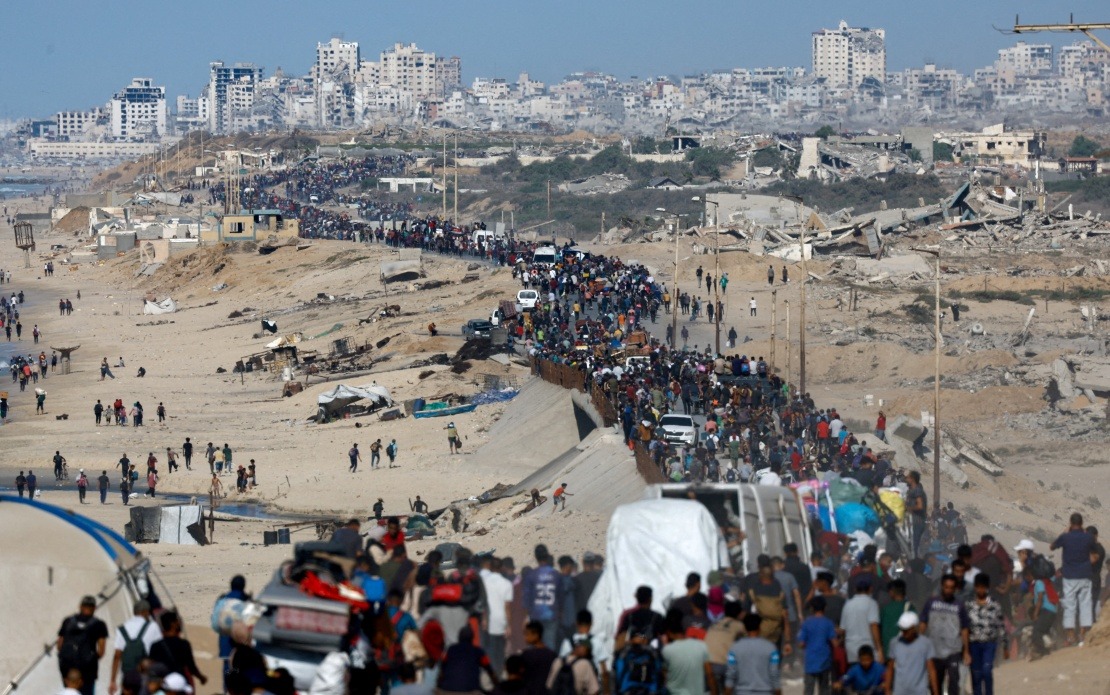
The tactical context underlying these policy shifts involves the devastating humanitarian consequences of the eighteen-month conflict in Gaza that commenced in October 2023. Palestinian health authorities document over 73,000 deaths and more than 173,000 injuries, the majority among women and children. These staggering figures underscore the magnitude of displacement, destruction and need that any governing authority in Gaza will confront. UNRWA currently employs over 12,000 staff members across Gaza and provides assistance to approximately 1.7 million registered refugees, making the agency effectively synonymous with Palestinian social infrastructure in the territory.
For Malaysian and Southeast Asian observers, this confrontation between Palestinian insistence on UNRWA's indispensability and American pressure to eliminate or fundamentally restructure the agency exemplifies broader tensions within the international system. The conflict reflects competing visions of humanitarian responsibility, state sovereignty and the mechanisms through which the global community addresses protracted displacement crises. Southeast Asia hosts substantial Palestinian diaspora communities and maintains considerable sympathy for Palestinian statehood aspirations, making developments in Gaza's governance and international support mechanisms matters of regional concern.
The Palestinian rejection of UNRWA's dismantling also resonates with principles of UN multilateralism that many Southeast Asian nations have historically championed. Attempts to disable UN-mandated institutions without addressing underlying political grievances risk establishing precedents that could affect UN operations in other disputed territories or conflict zones where Southeast Asian interests intersect. The principle that humanitarian agencies operate with independence and protection under international law represents a framework from which multiple nations benefit.
Looking forward, the confrontation between Palestinian objections and American pressure suggests that Gaza's reconstruction will remain contested rather than consensual. Any governance structure imposed without Palestinian consent and without adequate humanitarian infrastructure risks perpetuating instability rather than resolving the underlying conflict. The Board of Peace's assertion that UNRWA cannot participate in Gaza's future implies either the creation of entirely new institutional mechanisms to replace UNRWA's functions or a dramatic reduction in available services to civilian populations, both scenarios carrying substantial political and humanitarian risks.

