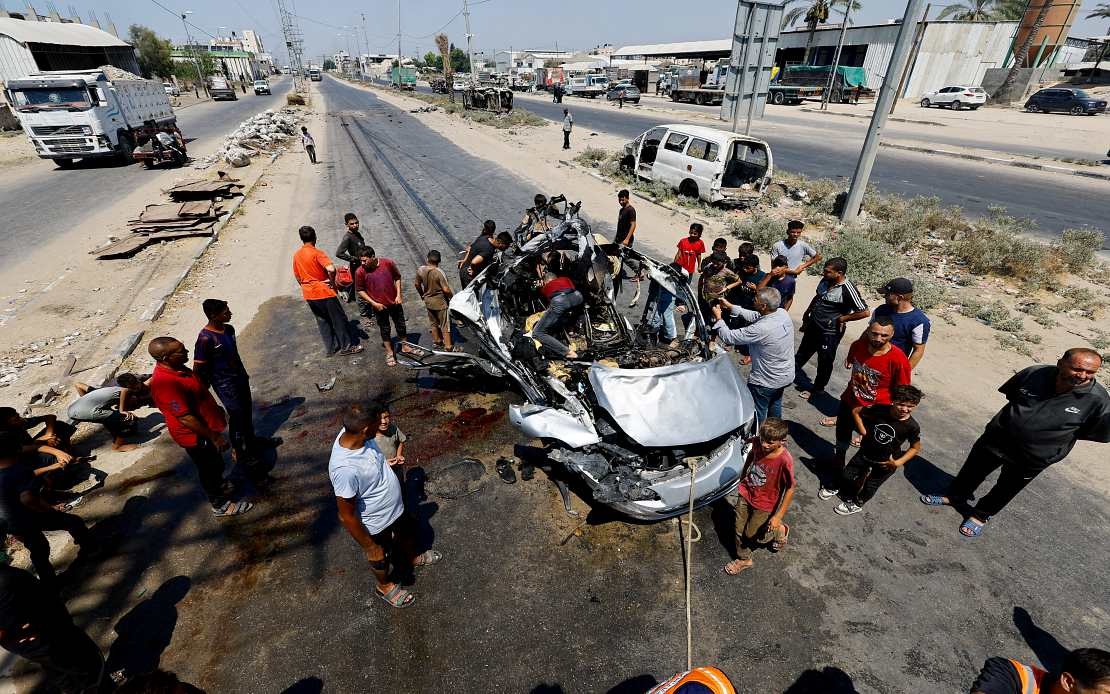
The Palestinian Authority's presidential office issued a sharp rebuke on Monday against Israeli military operations continuing despite the implementation of a second-phase ceasefire agreement, marking a significant deterioration in the fragile peace framework meant to contain the broader regional conflict. Speaking through presidential spokesperson Nabil Abu Rudeineh, Palestinian leadership articulated deep frustration with what they characterise as a fundamental disconnect between the diplomatic agreement and ground-level reality, where Palestinian communities remain under sustained military pressure.
The characterisation of the ceasefire as "an agreement on paper and death on the ground" underscores Palestinian grievances that the internationally-brokered accord has failed in its primary objective: delivering tangible protection and security to civilians. Rather than achieving a comprehensive halt to violence, Palestinian officials argue the agreement has become merely a symbolic gesture without corresponding enforcement mechanisms or genuine Israeli compliance. This distinction carries profound implications for how subsequent peace initiatives may be received by Palestinian stakeholders, who view diplomatic arrangements with mounting scepticism.
For Malaysian and Southeast Asian observers, the stalled ceasefire represents a cautionary tale about the limitations of diplomatic frameworks when enforcement mechanisms lack teeth. The situation mirrors other regional conflicts where paper agreements have preceded continued hostilities, raising questions about the structural weaknesses inherent in peace processes that rely on goodwill rather than verification and accountability systems. The Palestinian experience suggests that without robust international oversight and credible consequences for violations, ceasefire agreements risk becoming counterproductive, potentially delegitimising future peace efforts.
Palestinian leadership has specifically cited ongoing military operations targeting refugee camps and villages as evidence of systematic non-compliance. These operations, according to Palestinian officials, form part of a broader strategic objective to undermine Palestinian demographic presence and eliminate what they characterise as the refugee question—framing military actions as serving political objectives beyond immediate security considerations. The targeting of civilian population centres rather than military installations suggests to Palestinian analysts that the underlying conflict dynamics remain fundamentally unresolved.
The role of international institutions, particularly the United Nations Security Council, emerges as a central point of contention in Palestinian statements. Palestinian leadership has appealed directly to the Security Council to enforce compliance with ceasefire terms and compel Israel to halt operations across Gaza, the West Bank, and East Jerusalem. This appeal reflects Palestinian reliance on international law and multilateral mechanisms as pressure points, given the asymmetry in military capabilities between the Israeli state and Palestinian entities. However, the historical track record of Security Council intervention in Israeli-Palestinian matters—frequently stalled by vetoes or diluted resolutions—suggests limited prospects for the urgent enforcement Palestinians are demanding.
The broader regional stability implications of continued hostilities have not escaped Palestinian analysts. Officials argue that indefinite military operations and occupation create structural conditions incompatible with long-term regional security and prosperity. This framing positions Palestinian grievances within a wider regional interest framework, potentially resonating with neighbouring states and international partners concerned about perpetual conflict dynamics destabilising the eastern Mediterranean and broader Middle Eastern geopolitics. The argument that occupation itself precludes regional stability challenges Israel's security narrative and posits an alternative framework centred on political resolution.
The issue of impunity—the protection from accountability that Israeli military and political leadership ostensibly enjoy—constitutes another analytical layer in Palestinian complaints. Officials argue that absence of meaningful consequences for alleged international law violations incentivises further transgressions and undermines the deterrent value of international legal frameworks. This echoes broader debates within developing nations regarding the application of international humanitarian law, particularly when powerful states escape accountability for actions that would trigger investigation and prosecution if committed by weaker actors.
Palestinian demands coalesce around several interconnected requirements: cessation of aggression, implementation of ceasefire phases, provision of international protection mechanisms, and establishment of conditions enabling a negotiated political settlement. The Palestinian vision, as articulated through official channels, envisions an independent Palestinian state with East Jerusalem as capital, anchored in international law, regional peace initiatives, and recognised UN resolutions. This represents a maximalist position unlikely to find immediate Israeli acceptance, suggesting that the current impasse may prove durable absent significant external pressure or internal political shifts.
The invocation of the Arab Peace Initiative signals Palestinian efforts to mobilise regional consensus and institutional support. This 2002 Saudi-led proposal, endorsed by Arab states, offers a framework for normalised relations conditioned on Israeli territorial concessions and Palestinian statehood. Palestinian reliance on this initiative rather than bilateral negotiation reflects reduced faith in direct Israeli-Palestinian diplomacy and preference for external mediation with Arab backing.
For Southeast Asian regional dynamics, the Palestinian ceasefire collapse carries implications for nonaligned movement positioning and developing-world solidarity narratives. Malaysia and other ASEAN nations have historically supported Palestinian causes within international forums, and continued Israeli military operations may intensify pressure on these states to take more vocal diplomatic stances. The situation tests whether regional powers will escalate advocacy at the UN and multilateral bodies or maintain cautious diplomatic distance.
The immediate trajectory appears toward continued stalemate unless Security Council action materialises or new diplomatic initiatives gain traction. Palestinian officials have essentially exhausted immediate recourse options beyond international appeals, placing responsibility on external actors to broker compliance or broker alternative arrangements. The credibility of international peace frameworks faces testing, with consequences extending beyond Israeli-Palestinian dynamics to regional stability and the broader efficacy of UN-centred conflict resolution mechanisms that developing nations depend upon for security architecture.

