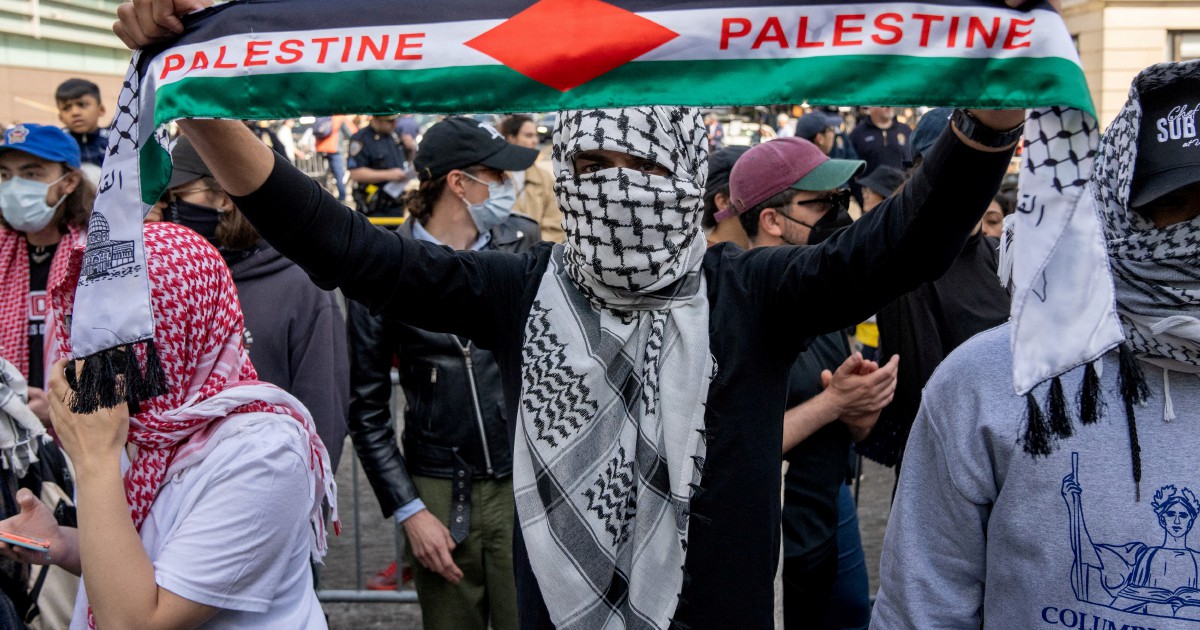
A group of Palestinian students and staff members have initiated formal legal proceedings against Columbia University, filing suit in New York courts and contending that the institution has engaged in discriminatory practices targeting the Palestinian community on campus. The complaint, brought by current and former members of the university community, alleges that this treatment has persisted since late 2023, a period marked by significant escalation in Middle Eastern tensions and their reverberations across American educational institutions.
The lawsuit represents the latest in a series of legal challenges and formal complaints that have swept through prominent American universities over the past eighteen months. Columbia University, located in Manhattan and among the nation's most prestigious institutions, has become a focal point for debates surrounding free speech, campus safety, and institutional responses to student activism related to international conflicts. The filing underscores the tension between protecting student expression and addressing concerns from various campus communities.
For Malaysian readers and Southeast Asian observers, this case illuminates how American universities navigate complex questions about institutional neutrality and community protection in an era of heightened geopolitical awareness among younger generations. Many regional universities face similar pressures as student bodies become increasingly engaged with global political movements, raising questions about how educational institutions should balance competing demands for support, safety, and inclusivity.
The complaint filed in New York's court system details allegations spanning several dimensions of campus life and institutional response. The plaintiffs contend that discriminatory treatment has manifested in multiple forms, affecting both the academic experience and the broader campus environment for Palestinian students and staff members. The specifics of these allegations suggest patterns that extend beyond isolated incidents, pointing instead to what the complainants characterize as systemic disparities in how the university has treated Palestinian community members relative to other student and staff populations.
Columbia University's handling of student activism and campus tensions has drawn considerable scrutiny from civil rights organizations, student groups, and media outlets across the political spectrum. The university's administration has faced competing pressures to address safety concerns raised by Jewish students and staff while simultaneously protecting the rights of Palestinian students to express solidarity with Palestinian causes. This balancing act has proven exceedingly difficult, with critics on various sides contending that the institution has failed to adequately protect their respective communities.
The filing of this lawsuit comes as American universities grapple with unprecedented challenges in managing deeply polarized campus environments. Educational institutions have historically served as forums for diverse viewpoints and robust debate, yet the past eighteen months have tested institutional commitments to these principles while confronting new questions about how universities can protect vulnerable student populations from harassment or discrimination. The Columbia case will likely provide legal precedent relevant to other similar complaints currently pending or anticipated at other universities.
For Southeast Asian observers, the litigation raises questions about how global conflicts increasingly shape the campus experiences of international students. Many Southeast Asian universities host students with family connections to the Middle East, and similar tensions have begun emerging at regional institutions. The Columbia case suggests that universities worldwide may need to develop more sophisticated frameworks for addressing political tensions without compromising either free expression or community safety.
The timing of this suit is significant, occurring as the initial shock and activism of late 2023 and early 2024 have evolved into more sustained institutional reckoning with campus climate issues. The plaintiffs' decision to pursue legal remedies indicates a shift from purely advocacy-based organizing toward formal legal channels, suggesting that informal institutional responses have not adequately addressed their concerns. This escalation reflects both frustration with university leadership and confidence that the American legal system provides viable remedies for their grievances.
Columbia University's response to the lawsuit will be carefully watched by higher education administrators across the United States and internationally. The university's legal defense, whatever form it takes, will likely either reinforce or challenge claims about institutional discrimination, with implications for how other universities approach similar issues. The case will also test existing legal frameworks around institutional liability for discrimination and the university's obligations to protect different student communities simultaneously.
The broader context includes mounting pressure on American universities from multiple directions. Some critics argue that institutions have been insufficiently protective of Palestinian student expression and solidarity activism, while others contend that universities have inadequately safeguarded Jewish students from antisemitism and hostility. Navigating between these competing demands has proven extraordinarily challenging for institutional leaders attempting to maintain institutional cohesion while upholding commitments to diversity and inclusion.
For Malaysian academic institutions potentially facing similar pressures, the Columbia case offers instructive lessons about the importance of clear, transparent, and equitable policies governing student activism and community relations. It suggests that universities benefit from proactive engagement with student communities and clear institutional standards for acceptable conduct, applied consistently across all student groups. The litigation also underscores the potential consequences of perceived institutional inequity, demonstrating that student communities increasingly possess the legal sophistication and resources to challenge university decisions through formal legal channels.
As the case proceeds through New York courts, it will likely generate substantial media attention and serve as a bellwether for how American courts assess university obligations to different student communities. The outcome will influence not only Columbia's policies but potentially campus practices across American higher education and, by extension, international universities facing similar challenges around political polarization and community protection.

