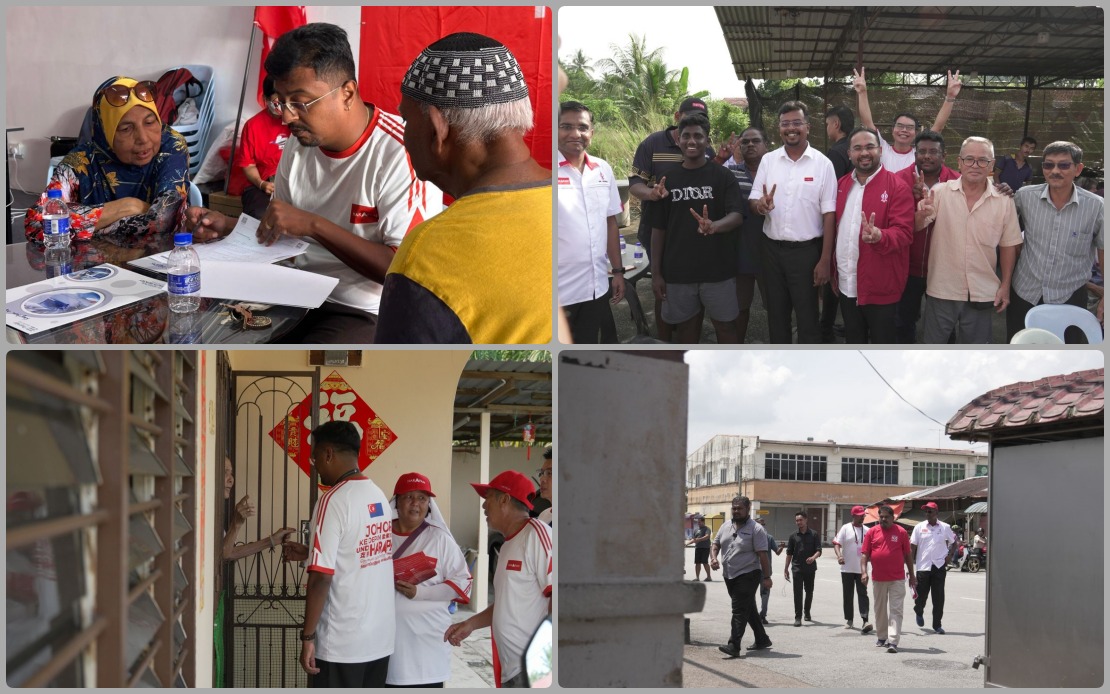
Pakatan Harapan's candidate for the Paloh state assembly seat, Dr. A. Ruban, was admitted to hospital in Batu Pahat on July 7 for treatment of a slipped disc that has forced him off the campaign trail just days before the Johor state election. The medical emergency underscores the physical demands placed on political candidates during intensive electoral campaigns, particularly in Malaysia's humid climate and congested public schedules.
Dr. Ruban's campaign manager, Abdul Majid Abd Aziz, disclosed that the candidate experienced acute pain that severely restricted his mobility throughout the morning, necessitating immediate hospitalisation. The condition, while not life-threatening, required urgent intervention at a medical facility capable of managing spinal complications, forcing the PH machinery to adapt its ground operations in the competitive Paloh constituency.
The hospitality stems from a pre-existing spinal vulnerability that Dr. Ruban has battled for years. Abdul Majid revealed that the candidate had previously undergone surgery to address chronic back problems, but the condition deteriorated during the gruelling final phase of campaigning. Medical professionals attribute the relapse to the cumulative stress of constant field engagements, community walkabouts, and the relentless schedule typical of state-level electoral contests.
Campaign fatigue emerged as a significant contributing factor to the health crisis. The intensity of modern electoral campaigning requires candidates to maintain punishing daily schedules, traversing constituencies on foot, attending multiple events, and sustaining high energy levels despite Malaysia's challenging tropical climate. For candidates with pre-existing medical conditions, such demands can rapidly deteriorate their health status, as evidenced in Dr. Ruban's case.
Despite the medical setback, Abdul Majid conveyed optimism about the candidate's recovery trajectory. Hospital physicians indicated that Dr. Ruban's condition remained non-critical, suggesting discharge could occur within one or two days—potentially allowing limited reintroduction to campaign activities before the July 11 polling date. This timeline, while tight, offered the possibility of some final community engagement before voters cast their ballots.
The PH campaign organisation moved swiftly to ensure continuity despite their candidate's incapacity. Abdul Majid pledged that party machinery would maintain aggressive ground presence in Paloh, ensuring that Dr. Ruban's policy platform and electoral messaging would reach constituents through surrogate campaigners and party workers. This delegation strategy is commonplace when candidates face unexpected health crises mid-campaign.
The Paloh constituency presents a fiercely contested battleground featuring four distinct candidates vying for voter support. Beyond Dr. Ruban representing the ruling coalition's opposition, the race includes D. Jeevakumar fielded by Perikatan Nasional, independent challenger G. Kamaleswaren, and incumbent Lee Ting Han representing Barisan Nasional. This multi-cornered configuration means that Dr. Ruban's campaign disruption could reallocate opposition voter preferences toward alternative candidates, potentially reshaping the electoral calculus in this marginal seat.
The incident reflects broader challenges within Malaysian electoral politics regarding candidate welfare and campaign intensity. Unlike many developed democracies where electoral regulations impose campaign duration limits and schedule restrictions, Malaysian candidates frequently endure months of sustained public engagement. Medical professionals and electoral observers have raised concerns about the long-term health implications of such demanding schedules, particularly for older candidates or those with underlying conditions.
Dr. Ruban's hospitalisation arrives during the final countdown to the Johor state election, which encompasses the 16th iteration of the state assembly poll. Early voting had already commenced on July 7, with main polling scheduled for July 11, leaving minimal window for recovery and campaign rehabilitation. The timing compounds the political challenge, as the final week before polling traditionally represents the most intensive engagement period.
For PH, managing candidate health crises during elections tests organisational resilience and demonstrates party discipline to voters. The commitment to maintaining campaign momentum despite Dr. Ruban's absence signals confidence in both the candidate's recovery prospects and the robustness of party infrastructure. However, the extended absence of any candidate raises questions about message consistency and direct voter contact—elements difficult to replicate through surrogates alone.
Malaysia's political ecosystem increasingly confronts questions about sustainable campaign practices and candidate well-being. As electoral competition intensifies across states, the expectation for relentless public presence has become normalised, yet few parties implement safeguards protecting candidate health. Dr. Ruban's situation exemplifies how campaign demands can precipitate medical emergencies, suggesting potential value in developing industry standards for reasonable campaign schedules and health monitoring protocols.
The broader implications extend beyond individual candidate welfare. Electoral management bodies and political parties face mounting pressure to balance competitive imperatives against responsible governance of campaign environments. While Malaysian politics remains intensely competitive, incorporating health-conscious campaign frameworks could improve overall electoral quality and demonstrate party commitment to sustainable democratic practices that prioritise human welfare alongside electoral victory.

