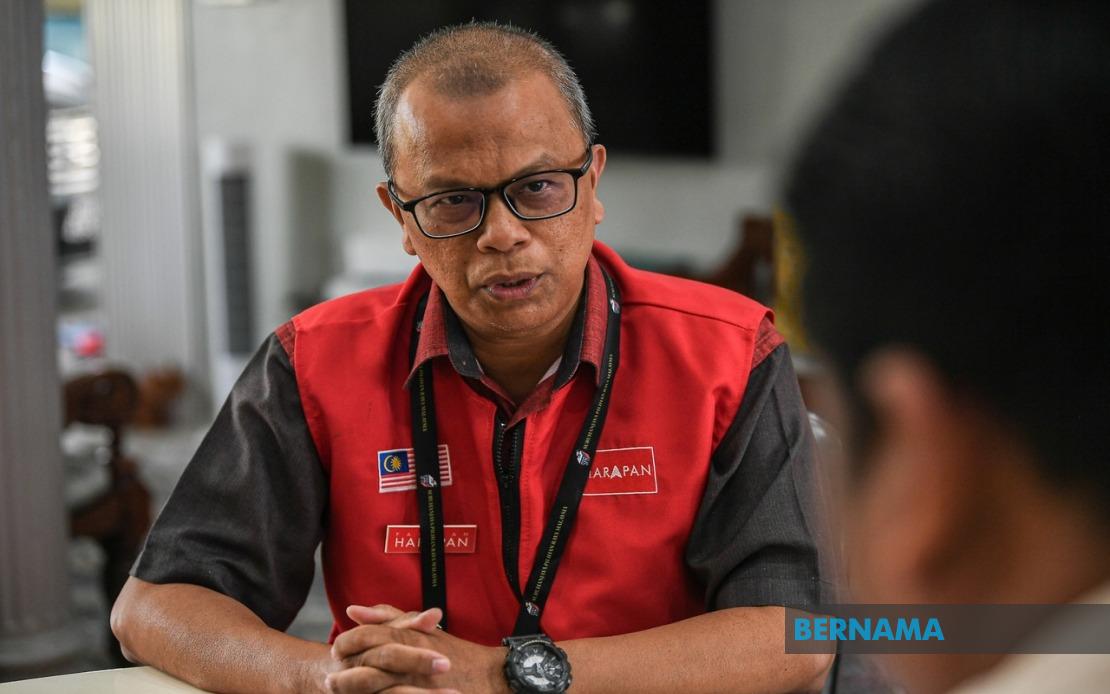
The Panti state seat in Kota Tinggi district holds considerable underdeveloped potential that could transform the constituency's economic landscape, according to Pakatan Harapan candidate Ahmad Daniel Sharudin as he makes his final push ahead of Saturday's Johor state election. The 54-year-old civil engineer believes that unlocking the area's natural attractions through sustainable eco-tourism development would generate prosperity for local businesses and residents while preserving the environment for future generations. His vision centers on positioning Panti as a premier destination alongside the waterfalls that have already established Kota Tinggi's reputation as a tourism hotspot.
At the heart of Ahmad Daniel's development strategy lies the recognition that Panti possesses distinctive geographical assets that remain largely overlooked by tourists and investors. The rapids at Kampung Temenin represent the cornerstone of his tourism agenda, offering natural attractions comparable to other regional destinations yet requiring infrastructure improvements and strategic marketing. Unlike the highly developed waterfall circuits elsewhere in the district, these rapids represent an opportunity to create a differentiated offering that appeals to both domestic and international visitors seeking authentic experiences. Ahmad Daniel's engineering background informs his commitment to upgrading facilities while maintaining ecological integrity, ensuring that development does not degrade the natural features that make the location attractive.
Beyond tourism infrastructure, Ahmad Daniel frames eco-tourism development as a solution to a more pressing underlying challenge: the absence of meaningful employment opportunities that keeps young people trapped in cycles of limited economic mobility. The constituency experiences significant youth outmigration, with residents seeking work across district boundaries and even crossing into Singapore where wage differentials and job availability prove more compelling. By cultivating a viable tourism sector, Ahmad Daniel argues that complementary industries would naturally flourish, including homestays, food service establishments, and professional tour guide services. This multiplier effect would create entry-level positions suitable for youth while simultaneously enabling entrepreneurship among community members with limited capital, addressing both unemployment and underemployment in a single strategic intervention.
The candidate's broader electoral platform extends beyond tourism to encompass housing affordability, industrial employment creation, and aging infrastructure renewal. Ahmad Daniel presents these priorities as interconnected rather than standalone initiatives, suggesting that addressing one dimension of constituency development necessarily facilitates progress across others. His positioning as state Amanah's Syariah and Dakwah Bureau director alongside his role as Tenggara Amanah division chief provides him with organizational credibility and party resources. He emphasizes that alignment with the current federal government administration enhances his capacity to mobilize resources and secure bureaucratic cooperation necessary for implementing ambitious development plans, contrasting his access to federal channels with potential constraints facing opposition candidates.
The practical realities of campaigning in a geographically expansive constituency have shaped Ahmad Daniel's outreach strategy. With only four days remaining before polling day at the time of his statements, his team had completed face-to-face engagement across approximately eighty percent of the Panti electoral division. The vast physical distances involved create inevitable limitations on traditional door-to-door campaigning, forcing prioritization of areas with higher voter concentrations. Rather than treating this constraint as a fatal weakness, Ahmad Daniel has pivoted toward digital platforms as the mechanism for reaching remaining voters across all demographic segments. This adaptation reflects broader campaign trends throughout Southeast Asia where social media increasingly determines electoral outcomes, particularly among younger voters whose participation remains crucial in determining seat outcomes.
Ahmad Daniel confronts a three-way contest in Panti alongside Dr Muhammad Naqib Md Ghazali representing Barisan Nasional and Alias Rasman from Perikatan Nasional. The multi-candidate field fragments opposition support while potentially benefiting the incumbent or frontrunner depending on local voting patterns and strategic coordination among opposition factions. In the broader context of the 16th Johor state election, Ahmad Daniel's campaign represents Pakatan Harapan's attempt to retain and expand its presence in a state where electoral fortunes have fluctuated significantly in recent years. With 172 candidates contesting 56 state seats before 2.7 million eligible voters, the Johor election functions as a crucial barometer of national political sentiment and coalition strength heading toward potential federal elections.
The emphasis on eco-tourism development in Panti reflects broader Southeast Asian trends toward sustainable economic models that balance growth with environmental preservation. Malaysia's positioning as a regional tourism hub increasingly depends on destinations offering authentic, well-managed natural experiences rather than mass tourism infrastructure. For Johor specifically, which faces intensifying competition from neighboring Selangor and federal territories for tourist arrivals, distinctive offerings become essential for capturing market share. Panti's underdeveloped status paradoxically represents an advantage if development proceeds strategically, as constituencies with pristine ecosystems can command premium positioning in the tourism marketplace compared to heavily commercialized alternatives.
The employment generation argument carries particular resonance in Malaysian electoral contexts where youth unemployment and underemployment remain persistent policy concerns. Panti's experience of outmigration to Singapore reflects broader regional economic imbalances that create pressure on constituencies with limited private sector dynamism. Ahmad Daniel's strategy of building employment through tourism and allied industries represents an alternative to traditional manufacturing-based development, appealing to constituencies where large-scale industrial investment has proven elusive. This approach acknowledges changing labor market realities where service sector skills increasingly predominate while respecting local preferences for work within or proximate to home communities.
The candidacy of Ahmad Daniel also reflects evolving configurations within Malaysian coalition politics, where smaller parties like Amanah maintain significant local presence and influence despite limited parliamentary representation. Amanah's concentration in specific constituencies provides disproportionate leverage within coalition negotiations, giving its local candidates like Ahmad Daniel meaningful platform access and campaign resources. The party's positioning on civil society issues and religious ethics differentiates it from larger coalition partners while maintaining ideological compatibility necessary for maintaining political alliances. For voters concerned about specific issue areas—environmental stewardship, anti-corruption governance, social welfare expansion—Amanah-aligned candidates offer alternatives to both Barisan Nasional and Perikatan Nasional despite their slighter electoral prospects.
The timing of the Johor election amid broader national political realignment creates heightened stakes for all competing factions. Pakatan Harapan's efforts to rebuild its position in Johor following 2022 losses carry implications for federal coalition viability and parliamentary mathematics should elections be called. Ahmad Daniel's campaign in Panti, though locally focused, represents a microcosm of broader coalition strategies emphasizing economic delivery, environmental stewardship, and youth opportunity. The outcome in constituencies like Panti will help determine whether Pakatan Harapan can reclaim lost ground in the state or whether opposition coalitions have permanently shifted Johor's electoral alignment. For Malaysian political observers and Southeast Asian analysts tracking regional democratic trajectories, the Johor election provides crucial evidence regarding voter priorities and coalition durability as nations throughout the region navigate complex political transitions.

