Paris Couture Week has long served as the fashion calendar's most exclusive spectacle, drawing the industry's elite to showcase and celebrate the art of handcrafted, bespoke garments. This season's gatherings proved no exception to that tradition, yet the events unfolded under decidedly challenging meteorological conditions. A severe heatwave gripped the French capital as the shows commenced, transforming what is typically an exercise in layered luxury into a masterclass in adaptive dressing. The temperature surge created an unexpected tension between the inherent demands of couture—which often emphasises drama, elaborate construction, and substantial fabrics—and the practical need to remain comfortable in sweltering conditions. The result offered genuine insights into how today's most visible fashion figures navigate the intersection of professional image and personal practicality.
The broader fashion calendar had already provided warning signs. Paris menswear week, which precedes the couture presentations by several weeks, had already experienced similarly oppressive weather conditions, yet the heat intensity only escalated as the women's couture schedule arrived. Industry observers noted that temperatures reached levels unusual even for the typically warm late-summer period in Paris. This confluence of timing meant that designers, stylists, and attendees had relatively little opportunity to adjust their strategies or rotate through different wardrobe preparations. Instead, those gracing the front rows needed to make immediate sartorial decisions that would withstand both the physical discomfort and the intense scrutiny of the fashion press and social media observers simultaneously documenting every outfit choice.
Some attendees opted for unconventional solutions that demonstrated creative problem-solving. Songwriter Ejae garnered attention for her practical yet sophisticated choice to carry a simple black folding fan, an accessory that functioned both as a genuine cooling device and as a complementary styling element that enhanced rather than detracted from her overall presentation. This approach reflected a growing willingness among fashion-forward figures to prioritise functional solutions without viewing them as compromises to their aesthetic vision. The choice suggested a subtle but significant shift in how contemporary celebrities are willing to approach high-fashion events, where visible practical measures are increasingly acceptable if executed with sufficient style consciousness.
For many attendees, the dominant strategy involved fundamentally rethinking silhouette and construction. Women gravitating toward the season's shows frequently selected designs featuring exposed shoulders and necklines, a choice driven less by any deliberate attempt at provocation and more by straightforward thermodynamic logic. Tan Sri Michelle Yeoh exemplified this approach, arriving in an understated black design that maintained elegance and sophistication while strategically eliminating unnecessary fabric coverage. The decision to embrace collarless, sleeveless, and otherwise minimal-coverage designs became widespread across the front rows, transforming what might have been coincidental into a discernible trend reflecting the season's specific environmental circumstances.
The sundress and its sophisticated variations emerged as perhaps the most effective template for navigating the dual imperatives of high-fashion attendance and genuine comfort. These garments, particularly when executed in the refined constructions characteristic of couture houses, offered attendees a graceful silhouette while ensuring adequate air circulation and breathability. Priyanka Chopra's selection of a scalloped gown demonstrated how this category of dressing could capture the spirit of warm-weather elegance without appearing casual or underdressed for one of fashion's most formal occasions. The choice underscored an important reality about contemporary couture: the most sophisticated solutions often emerge not from resistance to environmental constraints but from thoughtful engagement with them.
Fabric selection became extraordinarily consequential in this context. Designers and stylists gravitating toward lightweight textiles and natural fibres made strategic statements about their priorities and values. Silk and silk-adjacent materials proved particularly popular among those seeking to maintain a sense of luxury and refinement while ensuring adequate temperature regulation. These fabrics possess inherent qualities that allow them to drape elegantly, catch light beautifully, and function effectively in warm conditions—making them ideal for an occasion where guests needed to look composed and elevated despite physical discomfort. The prevalence of these textile choices across multiple attendees and designers suggested a collective recognition of their particular utility in the season's specific context.
Mensware presentations featured equally adaptable approaches to dressing within the heat's constraints. Bad Bunny and Hudson Williams were among prominent male attendees who embraced oversized proportions and distinctly relaxed tailoring that eschewed traditional formality without sacrificing visual impact. Many men's looks featured considerably less layering than might typically appear at couture events, with several attendees opting to forgo undershirts entirely beneath their outer garments. Lighter colour palettes dominated male attendees' choices as well, reflecting the same thermodynamic logic that influenced women's fashion decisions. These collective choices suggested that contemporary masculinity in high-fashion contexts increasingly permits and even celebrates comfort-oriented styling choices without requiring attendees to compromise on aspirational appearance.
Hemline lengths served as another notably adaptive element across the week's presentations. Shorter hemlines, which might have seemed incongruous at formal couture events, became increasingly common as attendees recognised their practical benefits for ventilation and mobility. These choices reflected a broader recalibration of what constitutes appropriate dressing for prestigious fashion occasions, with functionality and genuinely wearable solutions gaining acceptance alongside purely aesthetic considerations. The shift represented not a departure from couture's fundamental values but rather an evolution in how those values are expressed and prioritised.
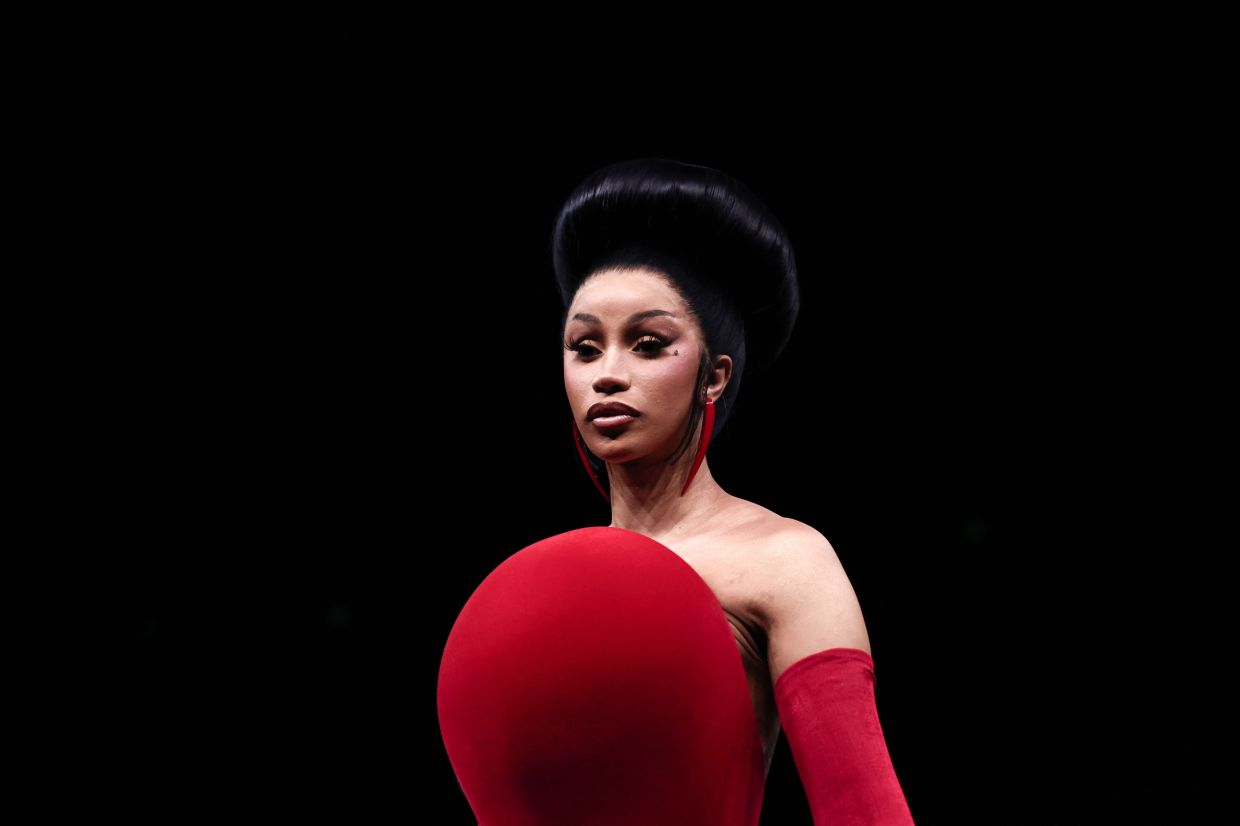
Rappet Cardi B provided perhaps the week's most notable counterpoint to this trend toward practical adaptation. Her selection of a highly structured, exceptionally fitted sculptural look represented a deliberate commitment to fashion drama and avant-garde statement-making regardless of environmental circumstances. The boldness of this choice—essentially rejecting the implicit consensus around comfort-prioritisation—underscored an important truth: even within the season's dominant aesthetic directions, individual agency and artistic vision continued to drive certain decisions. Cardi B's approach emphasised that truly significant fashion moments sometimes require resistance to prevailing sensibilities and willingness to endure discomfort in service of visual impact.
The broader narrative emerging from Paris Couture Week under intense heat conditions reveals sophisticated evolution in contemporary fashion thinking. Rather than viewing environmental challenges as obstacles to be resented or overcome through sheer determination, attendees largely embraced adaptation as an opportunity for creative problem-solving. This mentality—balancing genuine elegance with practical reality, luxury with wearability, tradition with innovation—potentially signals meaningful changes in how high fashion functions in an era of increasingly unpredictable climate patterns and greater cultural acceptance of comfort-conscious styling. For Southeast Asian observers accustomed to managing tropical climates and high humidity, these lessons from Paris offered validation: sophisticated dressing and environmental awareness need not stand in opposition to each other.

