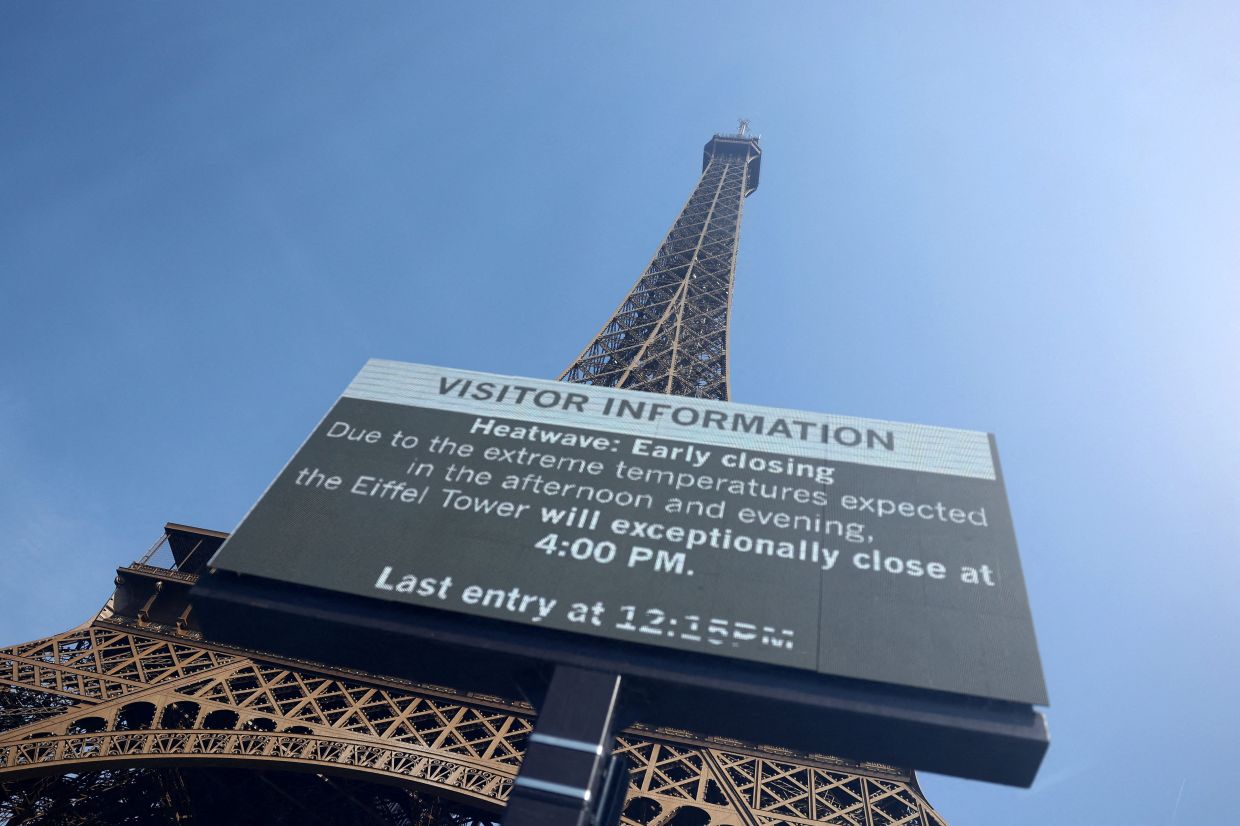
France experienced its most intense heatwave in decades this week, with consequences that extended far beyond meteorological records. The extreme temperatures forced significant disruptions to the tourism sector, with iconic Parisian landmarks including the Eiffel Tower and the Louvre Museum announcing unexpected early closures. The impact rippled through the travel plans of thousands of international visitors who had invested considerable time and money into experiencing Europe's most visited city, only to discover that the very attractions they came to see had become inaccessible or uninviting.
On June 23, France recorded its hottest day since temperature measurements began in 1947, a milestone that underscored the severity of the meteorological event gripping the nation. The Eiffel Tower, which ordinarily welcomes approximately seven million visitors annually and extends its hours well past midnight during peak season, made the exceptional decision to close at 4 p.m. that day. Tower operators indicated that abbreviated operating hours would likely persist in the coming days as indoor temperatures continued to soar beyond safe and comfortable levels. For a monument that epitomizes Parisian tourism, such closures represented a rarity that disrupted the holiday expectations of countless travellers.
Spanish nurse Maite Blazques from Madrid epitomized the predicament facing numerous families. She had spent months setting aside funds to bring her six-year-old son to Paris, carefully planning an itinerary that included quintessential experiences such as exploring the historic Marais district on foot, enjoying a leisurely river cruise along the Seine, and ascending to the Eiffel Tower's upper levels. The extreme heat made adherence to her original schedule impossible, forcing her to substantially reconfigure her entire holiday around accessible indoor venues and modified activities. Her disappointment was palpable as she reflected on the necessity of abandoning activities that had motivated the trip in the first place.
American visitor Tamara Dancer faced her own holiday disruptions when her afternoon guided tour was unexpectedly cancelled on Tuesday, joining numerous other tourists whose carefully arranged excursions fell victim to the heat emergency. The cancellations cascaded through the tourism infrastructure, affecting not only individual attractions but entire tour operators who found themselves unable to safely conduct their standard offerings. For tourists who had paid premium prices for guided experiences, these cancellations represented not merely inconveniences but financial losses and missed opportunities that had been anticipated for months.
Those who ventured outdoors encountered a city transformed into an inhospitable environment. Tourists armed themselves with umbrellas, wide-brimmed hats, and portable fans in desperate attempts to navigate pavements that appeared to radiate heat with nearly palpable intensity. John Beeler, a 45-year-old American engineer, described the experience as genuinely miserable, noting that the oppressive conditions permeated not only the streets but extended into the subway system and even their rental accommodation. His wife shared his disappointment, prompting them to abandon their plans and relocate to a hotel with functional air conditioning, a luxury not universally available across Paris's accommodation options.
Drake Winners, a 66-year-old retiree from London, encapsulated a fundamental challenge facing Paris during extreme heat events. He recognized that authentic urban exploration depends upon pedestrian movement and street-level engagement, activities rendered genuinely dangerous or at minimum profoundly uncomfortable when ambient temperatures exceed physiological tolerance thresholds. Rather than persisting with his intended walking tours, Winners gravitated toward museums and churches where climate control systems provided refuge from the oppressive outdoor environment. This adaptive response, while preserving his ability to experience cultural attractions, fundamentally altered the nature of his Parisian encounter.
The Louvre Museum, the world's most visited art institution with approximately nine million annual visitors, similarly confronted operational challenges posed by the extreme conditions. The sprawling palace, developed over centuries through successive French monarchs and presidents, lacked adequate climate adaptation infrastructure to maintain comfortable conditions throughout its vast galleries during peak heat events. Museum management acknowledged that the building remained fundamentally unsuited to the climate realities emerging from global warming patterns. Beyond temperature difficulties, the Louvre had already endured a tumultuous preceding year encompassing a spectacular US$100 million jewellery heist, significant water damage from leaks, and numerous maintenance complications that further strained operational capacity.
The heatwave's impact extended throughout France, with more than half of mainland territory remaining under the national weather service's highest alert classification. Tourism authorities across the country issued warnings and advisories designed to discourage non-essential visits during the crisis period. Mont Saint-Michel, the architecturally spectacular island fortress in Normandy and France's most visited tourist destination outside the Paris metropolitan region, explicitly recommended that visitors postpone their excursions until conditions normalized. Such recommendations, while necessary from public health and safety perspectives, represented an unprecedented disruption to tourist flows that constitute a cornerstone of France's economy.
For Malaysia and Southeast Asia, the Paris crisis offers instructive perspective on climate resilience challenges facing popular tourist destinations. As global temperatures continue rising, cities and nations dependent upon tourism revenue face mounting pressure to adapt infrastructure and service delivery to extreme heat conditions. The Paris experience demonstrates that even wealthy, developed nations with sophisticated infrastructure encounter difficulties managing the operational implications of record temperatures. For Malaysian cities and attractions, many of which already experience tropical heat exceeding Parisian summer temperatures, the strategic imperative for climate adaptation becomes increasingly urgent. Investment in cooling systems, revised operational protocols during heat extremes, and contingency planning for tourist disruptions should constitute priorities for destinations seeking to maintain competitiveness and visitor satisfaction as climate patterns continue shifting.

