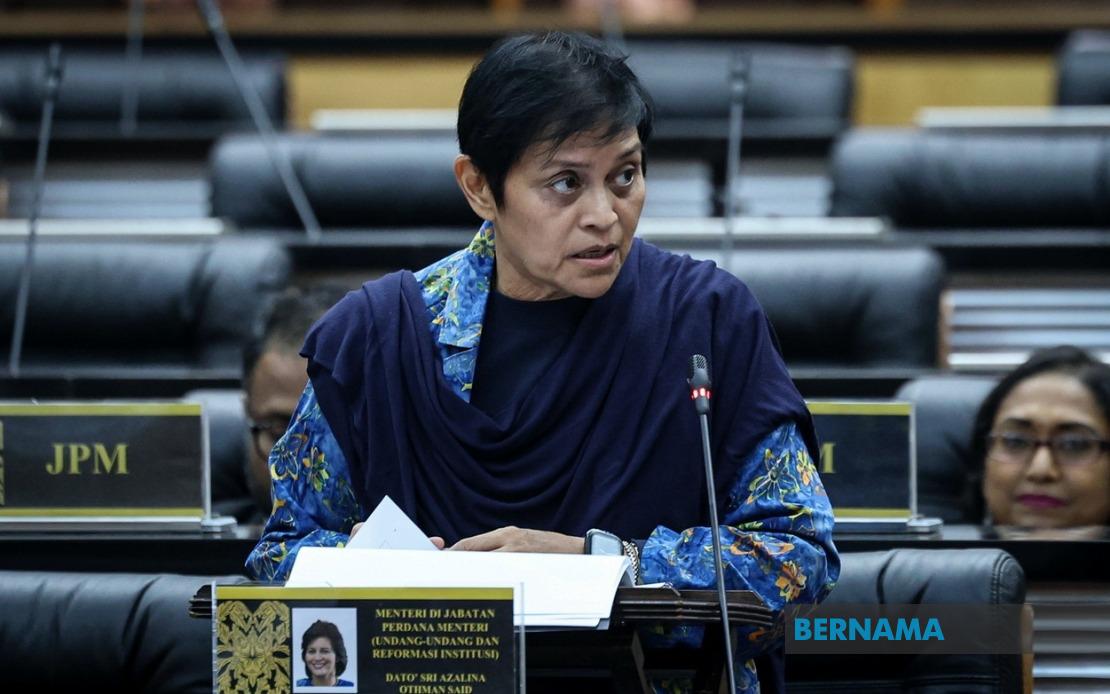
Parliament has moved forward with legislative reforms aimed at modernising Malaysia's witness protection system, with the Witness Protection (Amendment) Bill 2026 tabled for its first reading in the Dewan Rakyat on July 13. The measure, presented by Datuk Seri Azalina Othman Said, Minister in the Prime Minister's Department (Law and Institutional Reform), represents a significant step toward fortifying safeguards for those cooperating with law enforcement and the judiciary. The minister indicated that the Bill would advance to its second reading during the current parliamentary session, positioning it for potential passage before year-end.
At its foundation, the proposed legislation seeks to address practical gaps that have long affected vulnerable witnesses—particularly minors and individuals with diminished legal capacity. Under current law, the Witness Protection Act 2009 has limited mechanisms for protecting those who cannot independently apply for the programme's benefits. The amendment therefore permits parents or guardians to petition for enrolment on behalf of witnesses under eighteen years of age or those otherwise lacking legal capacity to make autonomous decisions about their protection. This change acknowledges the reality that many critical witnesses, including child victims and persons with cognitive or developmental conditions, require institutional advocates to secure their safety.
The Bill introduces two substantial new provisions to Act 696, designated Sections 10A and 10B, that establish clearer contractual foundations for the relationship between the state and protected witnesses. Section 10A requires all programme participants—or authorised representatives acting in their interest—to execute written agreements with designated government officers. These agreements would comprehensively outline the scope and nature of protection provided, the specific obligations incumbent upon participants, and ancillary terms governing the arrangement. By formalising these relationships in writing, the legislation aims to eliminate ambiguity about expectations on both sides, reduce disputes over services rendered, and create enforceable records should disagreements arise.
A parallel provision, Section 10B, ensures continuity for those already enrolled in witness protection schemes. Recognising that the amendments represent a transition rather than a wholesale replacement, the clause preserves the validity of agreements executed before the law's coming into force. Existing participants and the government retain their respective rights and entitlements under the amended statute, preventing any retroactive loss of protection or services. This safeguard is particularly important for long-term programme members whose circumstances and threat assessments have been evaluated under the existing framework and who might otherwise face disruption during the legislative transition.
Perhaps the most substantive addition addresses the psychological dimensions of witness protection, a dimension increasingly recognised in contemporary jurisprudence and law enforcement practice. Clause 4 expands the definition of support services available to programme participants by explicitly incorporating psychological assistance and counselling within the ambit of state-funded care. Witnesses who testify against organised crime syndicates, human traffickers, or violent offenders frequently experience trauma, anxiety, depression, and post-traumatic stress. By institutionalising psychological support as a core component of the protection regime rather than a discretionary extra, the amendment signals that Malaysia's state system recognises testimony often exacts an emotional and mental health toll deserving formal intervention.
The inclusion of mental health services aligns Malaysia with international best practices observed in comparable jurisdictions. Countries such as Australia, Canada, and several European nations have long incorporated counselling and psychological assessment into their witness protection infrastructure, recognising that the effectiveness of a witness's testimony may itself depend partly on their psychological stability and capacity to engage coherently with legal processes. For Malaysian courts and prosecutors, this expansion potentially strengthens the quality and resilience of evidence presented by protected witnesses, as trauma-informed support can help individuals better articulate their experiences and withstand cross-examination.
From a broader institutional perspective, these amendments reflect a maturation of Malaysia's approach to criminal justice cooperation. The formal, written-agreement framework removes ambiguity that might otherwise deter potential witnesses from coming forward—individuals who might hesitate to enter an ill-defined or seemingly ad-hoc protection scheme. When citizens understand precisely what the state offers and what responsibilities they assume, institutional trust increases. This is particularly critical in cases involving organised crime, corruption, or human rights abuses, where witnesses face genuine peril and require confidence that the government has made binding, enforceable commitments to their safety.
The amendment's provisions regarding vulnerable witnesses—minors and those lacking legal capacity—address a longstanding challenge in witness protection regimes globally. Child victims and witnesses have historically been underrepresented in protective programmes partly because they lacked the legal standing to self-petition. By empowering guardians and parents to apply on their behalf, the Bill removes a procedural barrier that may have inadvertently left vulnerable persons exposed. This is particularly significant in Malaysia given the prevalence of cases involving child trafficking, sexual exploitation, and gang violence, domains in which child witnesses often possess crucial evidence.
The tabling of this Bill also reflects evolving international expectations regarding Malaysia's criminal justice system. Malaysia is party to various United Nations conventions and regional agreements addressing witness protection and human trafficking, frameworks that increasingly emphasise holistic, trauma-informed approaches. Domestic legislative upgrades like this amendment signal Malaysia's commitment to aligning its statutory framework with international standards, an important consideration for bilateral legal cooperation and mutual legal assistance with trading and security partners.
Implementation will require coordination among multiple agencies—the Attorney General's Chambers, the police force, the judiciary, and newly engaged mental health professionals. Training and resource allocation will be necessary to ensure designated officers can properly execute written agreements and that psychological support services are accessible to programme participants nationwide. Urban centres such as Kuala Lumpur, George Town, and Johor Bahru may absorb these changes more readily than rural areas, necessitating a phased or regionally tailored rollout.
Looking ahead, the Bill's passage would represent tangible legislative progress on judicial reform, a priority area for the government. Strengthening witness protection directly enhances the quality and deterrent effect of criminal prosecutions, benefiting the rule of law and public safety. For those considering whether to testify in high-stakes cases, the expanded protections and explicit psychological support could prove decisive in their willingness to come forward, ultimately empowering courts and law enforcement to pursue complex criminal networks more effectively.

