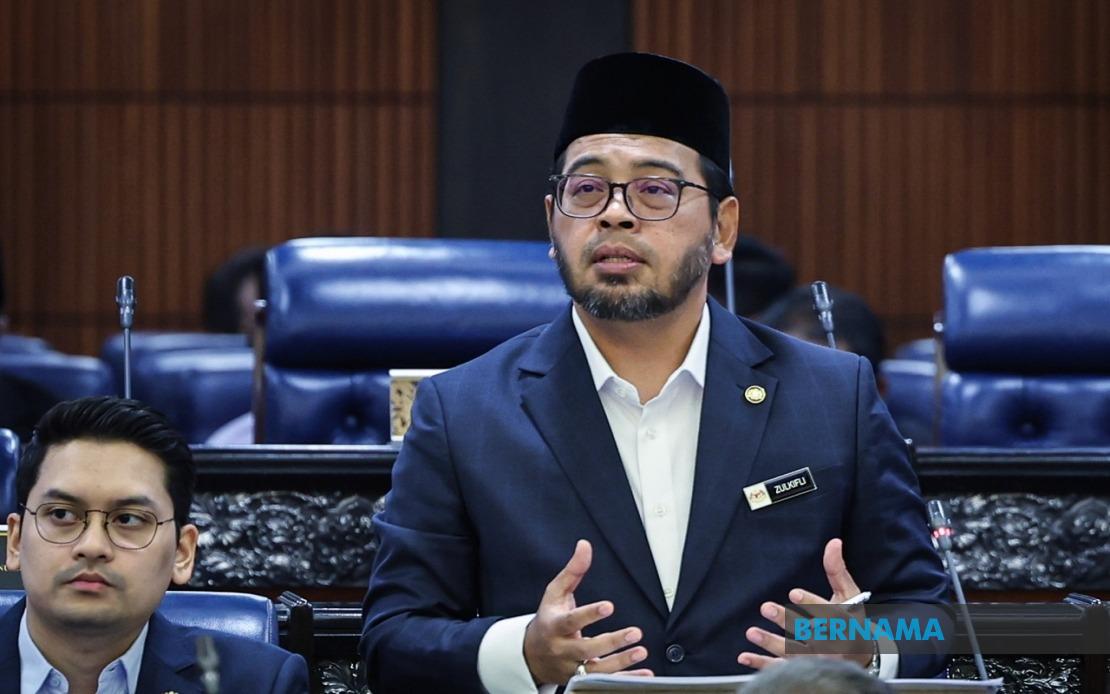
The special Dewan Rakyat sitting on August 11 revealed deep concern among parliamentarians about the state of Tabung Haji, the Islamic financial institution responsible for managing haj affairs for more than 10 million Malaysian Muslims. Over ten hours of continuous debate, legislators from across the political spectrum emphasised the need for systemic overhaul, rigorous accountability measures, and stronger institutional safeguards to restore public confidence in an organisation that had suffered catastrophic financial setbacks.
The scale of financial mismanagement became starkly evident when Minister of Finance II Datuk Seri Amir Hamzah Azizan detailed the scope of losses incurred through TH's investment portfolio. Nearly RM13 billion in total losses involved 14 problematic investments, with seven recording complete losses. This figure represents one of the most significant financial crises affecting a government-linked institution in recent Malaysian history, with far-reaching implications for the Muslim community's ability to fulfil their religious obligations affordably.
The government's intervention to rescue TH from financial collapse underscores the institutional stakes involved. The federal government absorbed RM10.2 billion through a bailout mechanism involving Urusharta Jamaah Sdn Bhd in 2018, while TH itself bore an additional RM2.6 billion in impairment losses between 2018 and 2025 for investments that remained on its books. These figures demonstrate the magnitude of poor investment decisions made during the period covered by the Royal Commission of Inquiry, which examined governance failures between 2014 and 2020.
One particularly egregious case involved Al-Rawda Real Estates Development & Project Management Co Ltd, to which TH remitted 1.4 billion Saudi riyals, approximately RM1.5 billion, purportedly to secure long-term leases for four hotels in the holy cities of Madinah and Makkah. The arrangement collapsed catastrophically when the intermediary failed to meet rental payment obligations to TH, forcing the institution to write off RM1 billion in 2024. This incident crystallises the concerns raised repeatedly throughout the parliamentary debate about inadequate due diligence, insufficient investment oversight, and the absence of robust governance controls that should have prevented such exposure.
Minister in the Prime Minister's Department (Religious Affairs) Dr Zulkifli Hasan presented the government's reform narrative, highlighting recovery measures implemented since 2018 that have ostensibly stabilised TH's financial condition and improved governance frameworks. He emphasised that these reforms have enabled the institution to maintain the haj pilgrimage fee at RM33,300 across three consecutive seasons from 2024 to 2026, preventing the cost burden from escalating further for Malaysian Muslims seeking to perform the fifth pillar of Islam. However, maintaining affordability whilst recovering from massive losses required sustained government support, raising questions about the long-term sustainability of the current fee structure.
The debate revealed a fundamental governance philosophy that TH's leadership acknowledged but had apparently failed to implement adequately. Dr Zulkifli stressed that institutional strength cannot rest upon the competence or integrity of individual leaders, but must be anchored in transparent systems, clear processes, robust checks and balances, and comprehensive controls that protect depositor interests regardless of personnel changes. This observation reflects hard-won lessons about institutional vulnerability when governance depends excessively on key personalities rather than systematic safeguards—a recurring pattern in corporate failures globally.
Parliamentarians across the political spectrum emphasised the necessity for thorough and transparent investigations into the misconduct and governance breaches documented in the Royal Commission's 25 recommendations. The government has already initiated investigations that have resulted in the detention of several individuals suspected of involvement in bribery, abuse of power, and governance violations. However, MPs stressed that these investigations must be pursued with rigour, visibility, and adherence to due process to demonstrate that no individual, regardless of rank or political connections, remains above accountability for mismanagement of funds belonging to millions of ordinary Muslims.
The proposed establishment of a multi-agency task force to identify and investigate investments at risk of future losses represents an attempt to create institutional vigilance that was manifestly absent during the period when the questionable investments were approved and executed. This proposal acknowledges that TH's internal investment management processes proved inadequate and that external oversight mechanisms are necessary to prevent recurrence of similar fiascos. The scope and composition of this task force will be crucial in determining whether it functions as a genuine safeguard or merely as a bureaucratic appendage.
Amending the Tabung Haji Act 1995 featured prominently in parliamentary discourse as essential to modernising the legal framework governing the institution. The original legislation predates significant changes in financial markets, investment complexity, and corporate governance standards. Updated legal provisions could impose stricter requirements for investment approval processes, enhance disclosure obligations, strengthen the independence of board oversight mechanisms, and create clearer accountability pathways for senior management. As of July 30, TH had reportedly implemented 75 per cent of the Royal Commission's recommendations, but legislative amendments would institutionalise improvements and prevent backsliding under future administrations.
The debate also addressed a notable absence: several opposition MPs declined to participate in the sitting, choosing instead to absent themselves entirely. Government MPs and supportive commentators criticised this boycott as failing to fulfil parliamentary responsibilities as checks and balances on executive authority. With over 10 million TH depositors' interests at stake—representing a significant proportion of Malaysia's Muslim population—the expectation emerged that all elected representatives should engage constructively with accountability mechanisms, regardless of partisan considerations. This tension reflects broader challenges in Malaysian parliamentary culture regarding the balance between partisan opposition and bipartisan commitment to protecting public institutional integrity.
The Royal Commission's investigation, released publicly on July 29 after a strategic delay intended to allow TH time for preliminary reforms, documented systemic weaknesses spanning governance structures, investment decision-making processes, and board oversight mechanisms. That the report could be released only after such advance preparation suggests the severity of deficiencies uncovered. The government's reasoning that early release would have further damaged public confidence revealed anxiety about depositor behaviour—Malaysian Muslims might have rushed to withdraw savings had the full scope of losses become public knowledge before remedial measures commenced.
For Malaysian depositors and the broader Muslim community, the parliamentary debate represented both accountability process and implicit promise of future protection. The extraordinary length of proceedings—over ten hours of uninterrupted examination—demonstrated serious engagement with a matter affecting millions of ordinary people's ability to fulfil religious obligations. Whether subsequent legislative amendments, enhanced oversight mechanisms, and prosecutions of culpable individuals will genuinely prevent similar institutional failures remains to be demonstrated through concrete implementation rather than rhetorical commitment.
The TH crisis exemplifies vulnerabilities in government-linked institutions that manage public assets entrusted to them for specific purposes. As Malaysia contemplates strengthening governance frameworks more broadly, the lessons from Tabung Haji's near-collapse—inadequate investment controls, insufficient board independence, political interference, and absence of transparent accountability mechanisms—demand serious application across the institutional landscape. The parliamentary debate's emphasis on systems rather than personalities suggests recognition that sustainable reform requires structural transformation rather than personnel changes alone.

