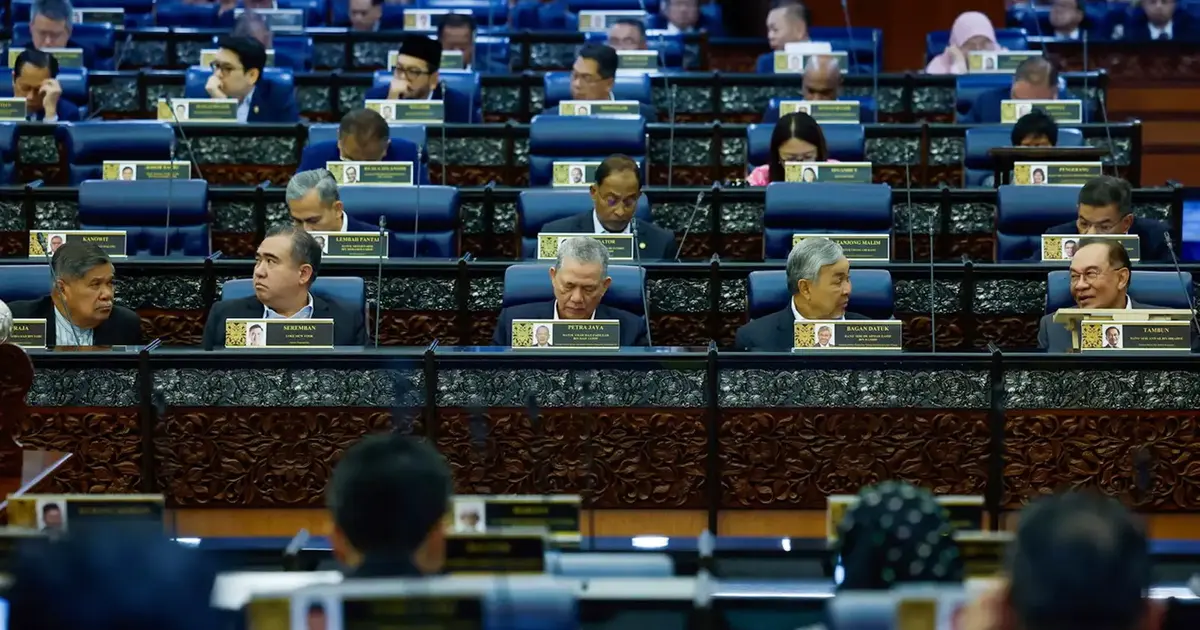
Concerns about the stability of Malaysia's current political arrangement have been addressed by a top PKR figure, who stressed that the government bloc would remain numerically viable even if DAP were to relinquish its ministerial portfolios. Saifuddin Shafi Muhammad, PKR's deputy secretary-general, offered this reassurance while addressing broader questions about coalition cohesion following recent political tensions.
The statement carries significance in the context of Malaysia's often-fragile parliamentary mathematics, where the government's majority depends on maintaining adequate support across multiple political parties. The Pakatan Harapan coalition, which forms the backbone of the current administration, has seen its internal dynamics tested repeatedly since its formation. DAP's role within this coalition has frequently drawn scrutiny, particularly from Malay-Muslim political constituencies that view the party's predominantly Chinese-backed membership with suspicion.
Saifuddin's clarification suggests that DAP members would continue supporting the government from the backbench if required, preserving the administration's parliamentary majority without necessitating fresh elections. This distinction matters considerably, as dissolution of Parliament would trigger a general election—a costly and disruptive process that could fundamentally alter Malaysia's political landscape. By emphasising that ministerial participation is separate from legislative support, PKR appears to be constructing a narrative that allows DAP flexibility in government roles whilst maintaining coalition viability.
The timing of such statements reflects broader anxieties within Malaysian politics about the fragility of multiethnic coalitions. DAP's presence in government has remained contentious among certain constituencies, with periodic calls for the party's exclusion emerging from rival political quarters. These pressures occasionally translate into threats to withdraw support, creating uncertainty about whether the current arrangement can endure until the next scheduled election. Saifuddin's comments directly counter narratives suggesting that any ministerial reshuffling involving DAP would destabilise the entire government.
Historically, Malaysian governments have demonstrated remarkable flexibility in managing coalition arrangements during their tenure. Ministers have been removed, reallocated, or added without triggering parliamentary dissolution, provided that the underlying numerical majority remains intact. The PKR leadership appears confident that this precedent protects the administration even if DAP were forced to surrender government posts due to external pressure or internal coalition negotiation. Such arrangements, whilst politically awkward, are constitutionally permissible and have been utilised multiple times across Malaysia's electoral history.
For Malaysia's business community and international observers, such clarifications offer reassurance regarding governmental continuity. Constant speculation about parliamentary dissolution creates uncertainty that affects investor confidence and policy implementation. By establishing clear statements about coalition stability, PKR signals that operational governance can proceed without interruption, even amidst internal political jostling. This messaging proves particularly valuable during periods when competing narratives about coalition durability circulate through Malaysian media and political circles.
The statement also reveals internal coalition dynamics that remain relevant to Southeast Asian politics more broadly. Regional governments increasingly rely on multiparty coalitions to maintain parliamentary majorities, a trend visible across Thailand, Indonesia, and the Philippines. Malaysia's experience navigating such arrangements offers instructive lessons about coalition management, compromise, and the distinction between ministerial participation and legislative support. Saifuddin's comments essentially articulate a political survival strategy that allows coalitions to weather individual party withdrawals without triggering systemic collapse.
DAP's specific position within Malaysian politics amplifies the significance of such reassurances. As a predominantly non-Malay political force operating within a system where Malay-Muslim political sensitivities carry substantial weight, DAP's governance role requires constant political justification. Periodic suggestions that the party's exclusion from ministerial positions would stabilise the government reflect these underlying tensions. By clarifying that DAP's parliamentary support remains independent of ministerial allocation, PKR effectively insulates the government against pressure campaigns targeting specific parties' portfolio allocations.
The broader context of Malaysian coalition politics reveals a system that has grown increasingly sophisticated in managing diversity and competing interests. Governments that survive political turbulence typically develop redundant support structures—multiple pathways through which parliamentary majorities can be maintained even as individual components shift. Saifuddin's remarks indicate that the current administration operates with such flexibility built into its foundations. This resilience, paradoxically, sometimes creates complacency among coalition members who assume their participation remains indispensable, occasionally leading to fresh political crises.
Moving forward, such statements establish benchmarks against which future political developments will be measured. If coalition tensions escalate and DAP faces genuine pressure to withdraw from government, Saifuddin's comments will be recalled as either prophetic or naive, depending on how political actors respond to crisis moments. Malaysian politics frequently unfolds through cycles of stability and turbulence, with clear statements from senior figures often serving as markers of confidence that either prove justified or become quickly superseded by unexpected developments. The PKR official's confidence in the coalition's survival capacity reflects current assessments whilst acknowledging inherent uncertainties in multiparty governance.

