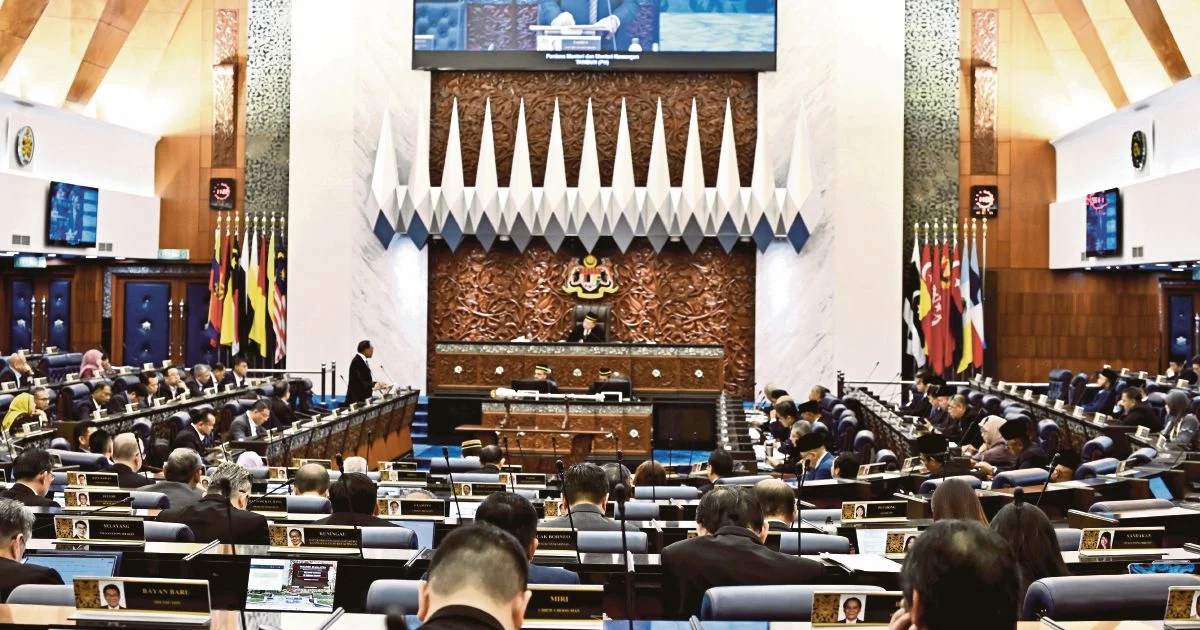
Barely an hour into the day's parliamentary proceedings, the Dewan Rakyat descended into a tense confrontation between opposition and government benches, with accusations and counter-accusations flying across the chamber as lawmakers grappled with questions about leadership legitimacy and coalition unity. The incident underscored the fragility of Malaysia's political landscape, where coalition arrangements remain subject to the shifting allegiances and grievances of member parties.
The flashpoint centred on the constitutional status and recognition of the opposition leader, a matter that triggered immediate resistance from government benches and set the tone for what became a protracted and acrimonious exchange. The disagreement highlighted deeper tensions within the ruling coalition, particularly between PAS and Bersatu—two parties that ostensibly stand together in government but whose relationship appears strained beneath the surface. Such public spats are rarely accidental; they often reflect genuine friction over ministerial appointments, policy direction, or influence within the broader coalition framework.
Takiyuddin, representing the opposition camp, seized on allegations that PAS had engaged in what could be characterised as intimidation or pressure tactics against Bersatu, a smaller coalition partner struggling to maintain its political relevance. The accusation resonates with observers who have noted the asymmetry in bargaining power between the more established PAS and the fledgling Bersatu, which has experienced considerable haemorrhaging of members and parliamentary support since its formation. By raising the matter in full public view, Takiyuddin attempted to exploit existing divisions and amplify concerns about whether Bersatu members feel genuinely respected within the government structure.
For Malaysian political analysts, such eruptions serve as valuable barometers of coalition health. When member parties begin publicly accusing each other of bullying behaviour or unfair treatment, it signals that behind-the-scenes negotiations and grievance mechanisms have broken down. The incident suggests that tensions between PAS and Bersatu may have reached a threshold where restraint has been abandoned in favour of direct confrontation, even in the formal setting of parliament where decorum is nominally expected.
The government MP who confronted Takiyuddin likely sought to defend both the integrity of the ruling coalition and PAS's reputation, recognising that public accusations of bullying could undermine confidence in the partnership. This defensive posture itself reveals anxiety about the sustainability of current arrangements. When a government backbencher feels compelled to leap to the defence of a coalition partner in the parliamentary chamber, it indicates that external criticism has touched a nerve and that internal stability is being questioned.
From a Malaysian perspective, such parliamentary skirmishes matter beyond their immediate theatrical value. They provide insight into whether the government can maintain cohesion on substantive matters of policy and legislation. If PAS and Bersatu cannot resolve their differences through private channels and instead resort to public recriminations, questions inevitably arise about their capacity to cooperate on critical issues affecting the nation. Parliament is supposed to be a forum for scrutinising government, yet when government parties themselves become vehicles for internal power struggles, the institution's effectiveness diminishes.
Bersatu's position in this dynamic deserves particular scrutiny. The party has struggled since its inception, initially inheriting a significant parliamentary contingent but subsequently losing members to other coalitions and suffering attrition in state-level politics. In such circumstances, a larger and more institutionally established party like PAS can easily dominate decision-making processes, marginalising smaller partners. Whether the allegations of bullying carry substance or represent rhetorical exaggeration, they point to genuine concerns about whether all coalition members are treated with proportionate respect and influence.
The timing of the exchange—occurring early in the parliamentary sitting—suggests that passions were running high even before proceedings commenced. This hints at pre-existing tensions that had accumulated rather than a spontaneous outbreak of conflict. In Malaysia's parliamentary system, such episodes often serve as proxies for deeper structural problems that the ruling coalition has yet to address satisfactorily. The fact that these tensions erupted in the chamber rather than being resolved through party leadership channels indicates a breakdown in coalition discipline.
For Southeast Asian observers, Malaysia's coalition politics offers a microcosm of the challenges facing multi-ethnic democracies where coalition arrangements are necessary to build parliamentary majorities. The tension between PAS and Bersatu reflects broader questions about how smaller parties can maintain meaningful influence within larger coalitions without being completely subsumed. The public airing of grievances, while occasionally heated and disruptive, also demonstrates a functioning parliamentary system where such disputes are articulated openly rather than festering behind closed doors.
Moving forward, whether the government can contain such flare-ups and restore working relationships between coalition partners will be crucial. The fact that such exchanges occur suggests that Malaysia's current political configuration, whatever its stability in numerical terms, contains significant fault lines that require active management. As legislators resume their work following this heated interlude, the underlying tensions between government and opposition will persist, with coalition members needing to demonstrate that internal disagreements need not paralyse the machinery of government.