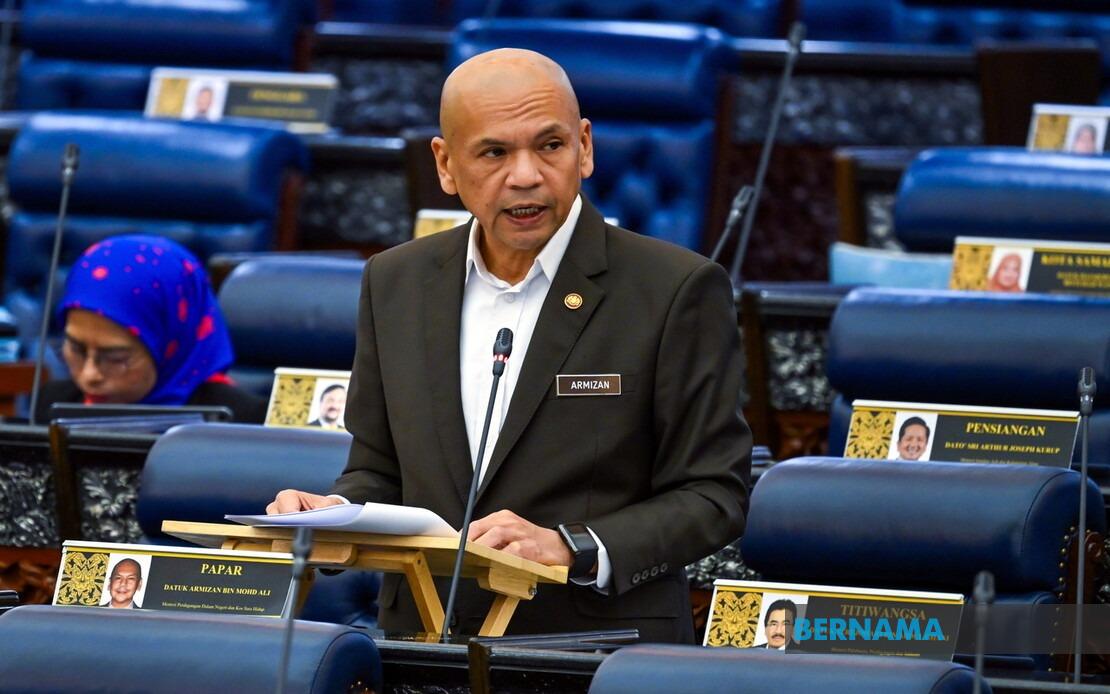
Parliament has endorsed sweeping reforms to Malaysia's competition law framework by passing the Competition Commission (Amendment) Bill 2026, equipping the Malaysia Competition Commission with substantially reinforced powers to investigate and sanction anti-competitive conduct. The legislation secured overwhelming support through a voice vote, after deliberation involving lawmakers from government and opposition benches, signalling broad consensus on the need to modernise competition enforcement in an environment where cartel activities have grown increasingly sophisticated.
The bill encompasses 34 distinct amendments designed to address longstanding operational constraints faced by MyCC. Domestic Trade and Cost of Living Minister Datuk Armizan Mohd Ali framed the reforms as essential to maintaining fair and transparent market competition, particularly given the evolving complexity of cartels and other market distortions. The amendments specifically target conduct regulated under Sections 4 and 10 of the Competition Act, including price fixing, market allocation, production manipulation, bid rigging, and exploitative abuse of market dominance.
A critical expansion involves MyCC's investigative reach. The commission will now possess formal authority to demand information disclosure during market review processes—a tool previously hampered by difficulties in extracting data from government agencies, commercial enterprises, and other stakeholders reluctant to cooperate. This enhancement addresses a practical enforcement gap that had constrained the regulator's capacity to assess market concentration, competitive dynamics, and systemic vulnerabilities across key economic sectors.
Internal governance structures have also been refined through new delegated authority provisions under Section 17A. By formally permitting MyCC leadership to distribute powers and responsibilities across the organisation, the bill acknowledges that expanding regulatory scope requires commensurate administrative flexibility. Without such delegation frameworks, operational efficiency risks deterioration as the commission assumes more complex compliance and investigative functions.
Amongst the most contentious proposals was the delegation to MyCC officers of direct penalty-setting authority. Opposition members expressed genuine concern that concentrating enforcement discretion could invite arbitrary or disproportionate sanctions absent robust procedural safeguards. Chong Zhemin, representing Kampar for the Pakatan Harapan coalition, articulated this concern thoughtfully, advocating that penalty regimes distinguish meaningfully between deliberate cartel conspiracies by large corporations and inadvertent breaches by micro-enterprises lacking legal sophistication. His intervention reflects recognition that overzealous enforcement could chill legitimate business activity and impose excessive burdens on Malaysia's small and medium enterprise sector, which underpins economic resilience and employment.
The calibration of financial penalties carries particular significance for deterrence effectiveness. Chong warned that penalties pitched too modestly risk becoming mere operating costs that large corporations factor into business calculations, thereby losing their preventive function. Conversely, penalties that ignore the culpability distinction between calculated monopolistic schemes and technical violations risk damaging economic dynamism. The implicit tension—between deterring serious wrongdoing and protecting vulnerable market participants—requires implementation guidelines that balance severity with proportionality, a challenge the amended legislation appears to delegate largely to MyCC administrative discretion.
Regional enforcement disparities surfaced prominently during parliamentary debate. Isnaraissah Munirah Majilis representing Kota Belud for Warisan, along with lawmakers from Rompin and Kalabakan, advocated establishing a dedicated MyCC office in Sabah to address competition violations endemic to Borneo's resource-intensive economy. This geographic gap reflects a practical reality: East Malaysian businesses operating across complex supply chains in extractive industries, plantation sectors, and federal contracting face extended investigation delays when all enforcement authority remains concentrated in Peninsular Malaysia. Establishing regional capacity would accelerate case resolution, improve complaint accessibility, and signal that competition protection extends uniformly across Malaysian territory.
The amendments arrive at a juncture when competition enforcement has gained prominence in Malaysian economic policy discourse. Rising inflation, concentrated retail and telecommunications markets, and consumer frustration with pricing opacity have elevated public interest in anti-monopoly action. MyCC's enhanced investigative and penalty tools address stakeholder expectations for visible enforcement action, though the agency faces resource constraints that formal authority expansion cannot automatically remedy. The bill empowers MyCC legally but does not address budgetary or personnel adequacy—potential implementation challenges.
International context matters here. Malaysia competes for investment and trade integration within an increasingly interconnected Southeast Asia and global economy. Robust, transparent competition enforcement signals to multinationals and trading partners that Malaysia maintains professional regulatory institutions capable of protecting market integrity without arbitrary political interference. Conversely, perception that MyCC officers wield unaccountable penalty power could deter foreign business activity and invite criticism from trading partners concerned about regulatory predictability.
The legislation reflects Parliament's judgment that MyCC requires modernised authority to fulfil its statutory mandate amid evolving anti-competitive tactics. Cartels have shifted toward sophisticated digital coordination and opacity mechanisms; traditional investigation methods prove inadequate. Expanding information-gathering authority acknowledges this reality. However, the amendments essentially transfer significant enforcement discretion from judicial oversight toward administrative determination, a shift that requires exceptional care in implementation guidelines and internal quality control.
Moving forward, successful amendment implementation will hinge on MyCC resource allocation, training rigour, and transparent penalty-setting standards. The bill provides the legal architecture, but institutional capacity and procedural discipline must follow. Parliamentary oversight mechanisms and periodic legislative review should monitor whether expanded powers produce equitable enforcement serving all market participants—large corporations, small businesses, and consumers alike—or whether penalties concentrate disproportionately on vulnerable segments.

