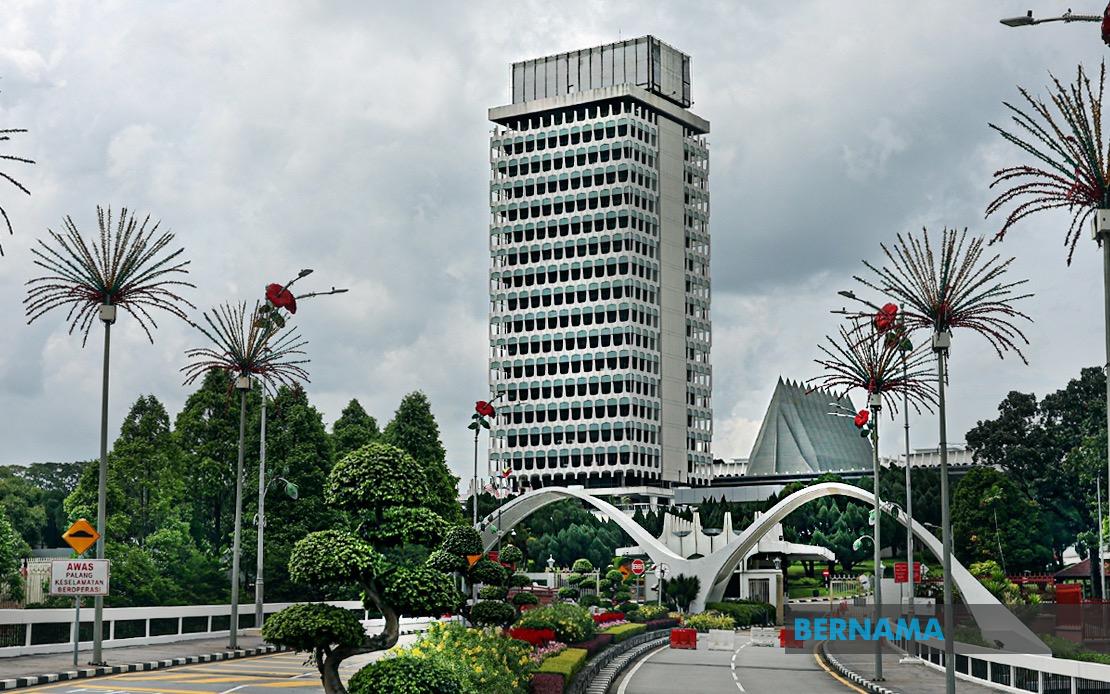
Parliament's second week of sitting brought significant developments on fiscal federalism and digital governance, with Prime Minister Datuk Seri Anwar Ibrahim using Ministers' Question Time to address longstanding concerns about the equitable distribution of federal funds among Malaysia's states. Anwar's statement that the vast majority of states benefit from federal allocations surpassing their tax contributions carries particular weight for less developed regions and has implications for how Kuala Lumpur justifies its resource-sharing model to increasingly vocal state governments seeking greater financial autonomy.
The Prime Minister's assertion that allocation decisions rest on development requirements and population welfare rather than political considerations represents an important clarification in an era when state-federal relations have grown more contested. This explanation directly counters narratives from certain quarters that wealthier or politically aligned states receive preferential treatment, a perception that has periodically destabilised coalition politics during budget negotiations. By framing the allocation system as needs-based, Anwar has attempted to depoliticise what remains a fundamentally political process across Malaysia's federal structure.
A practical clarification emerged regarding state requests for additional funding tied to project modifications or Notices of Change. The Prime Minister indicated that such requests require formal renegotiation before the federal government commits fresh allocations or extends new loans. This procedural stance reflects government efforts to impose fiscal discipline and prevent ad hoc supplementary demands that could strain federal finances, particularly relevant given Malaysia's ongoing debt management challenges. State administrations will need to factor this requirement into their planning cycles and financial forecasting.
Anwar also reiterated restrictions on policy announcements during election periods, citing Section 24B of the Election Offences Act 1954. This reminder signals the government's intention to enforce electoral code provisions strictly, a stance that takes on heightened significance as Malaysia approaches its next general election. The restriction prevents incumbent administrations from leveraging campaign periods to announce popular spending measures, thereby attempting to level the political playing field between government and opposition.
Parliament's legislative agenda advanced substantially with passage of the Sexual Offences Against Children (Amendment) Bill 2026, which strengthens protections for vulnerable minors in an era of evolving digital threats. Concurrent approval of the Cybercrime Bill 2026 introduces comprehensive offences and penalties specifically addressing deepfakes and non-consensual sharing of intimate images obtained through technological manipulation. These interconnected laws reflect growing parliamentary consensus that Malaysia's legal framework must evolve to address threats that transcend traditional criminal categories, particularly those enabled by artificial intelligence and sophisticated digital tools.
The Employment Insurance System received legislative attention through amendments to its enabling legislation, underscoring government commitment to enhancing worker protections during economic uncertainty. This development resonates across Southeast Asia, where labour market instability and gig economy growth have created new vulnerabilities for workers lacking traditional employment arrangements. Malaysia's refinement of its employment insurance architecture may signal a regional trend toward expanded social protection mechanisms.
Minister in the Prime Minister's Department Datuk Seri Azalina Othman Said outlined a modernisation agenda for Malaysia's contract law framework, with particular emphasis on recognising third-party rights and updating commercial agency provisions to accommodate artificial intelligence deployment. The completion of a comprehensive Study of Contract Law Reform in Malaysia and presentation of draft legislation to parliament indicates that reform implementation may accelerate within the coming parliamentary sessions. This modernisation effort positions Malaysia's commercial law alongside evolving international practices, important for maintaining competitiveness in attracting foreign investment and fostering domestic commercial activity.
Domestic economic management featured prominently in parliamentary discussions, with Economy Minister Akmal Nasrullah Mohd Nasir detailing daily monitoring protocols for essential goods and price stability measures. Coordination with Petronas and industry stakeholders reflects recognition that energy security and commodity price stability require collaborative approaches extending beyond government machinery. For Malaysian consumers and businesses facing inflationary pressures, these commitments represent governmental acknowledgment of bread-and-butter concerns that directly affect household purchasing power and business profitability.
Education received significant parliamentary attention through announcement of the MADANI Book Voucher programme 2026, targeting over 2.2 million students with RM221.6 million in allocated resources. The e-voucher mechanism, worth RM100 per student with redemption running until October 31, demonstrates government intent to support reading habits and educational access across socioeconomic divides. This programme carries particular relevance for students in underserved communities where physical bookshop access remains limited, though questions about vendor participation and rural accessibility warrant ongoing scrutiny.
Digital governance advancement featured through Communications Minister Datuk Fahmi Fadzil's discussion of the Online Safety Act 2025's regulatory framework, including new provisions addressing private messaging features. The government's exploration of agentic artificial intelligence technology for complaint management represents a pragmatic response to the volume of digital safety reports exceeding human processing capacity. Encouraging social media platforms to deploy AI detection systems reflects recognition that technological solutions must counter technology-enabled harms, though questions persist regarding algorithmic bias and content moderation transparency in the Malaysian context.
The regulatory developments outlined during parliament's second week collectively advance Malaysia's institutional capacity to govern digital spaces while balancing innovation imperatives against safety and rights protection. From contract law modernisation to cybercrime provisions addressing deepfakes, the legislative agenda reflects parliamentary understanding that Malaysia's legal framework must evolve in tandem with technological change. These decisions will substantially shape how digital commerce, communication, and content creation function within Malaysian society over the coming years.
Parliament's sixteen-day sitting, extending from June 22 to July 16, continues to address legislation and policy questions positioned at the intersection of technology governance, social protection, and fiscal management. The outcomes emerging from this parliamentary session will establish templates for how Malaysia addresses comparable challenges in subsequent years, making the current sitting's deliberations consequential not merely for immediate policy implementation but for establishing precedent and institutional practice in evolving governance domains.

