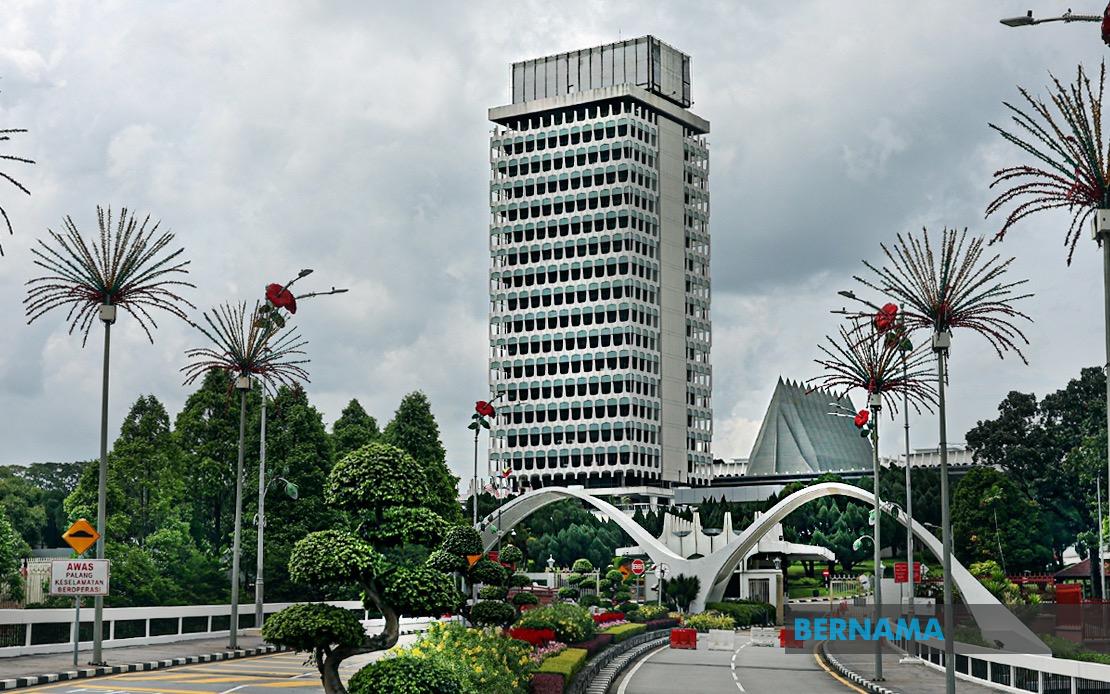
The Dewan Rakyat reconvened on June 24 for a legislative session extending through July 16, with three substantial policy matters positioned for parliamentary scrutiny during Question Time. The agenda reflects growing concerns about resource management, market competition, and digital regulation—issues that resonate across Malaysia's urbanised and increasingly connected population. Each topic signals the government's acknowledgement of persistent challenges requiring legislative or administrative attention.
Water scarcity and infrastructure gaps in Johor will dominate early discussions. Suhaizan Kaiat, the Pulai Member of Parliament representing Pakatan Harapan, will press the Energy Transition and Water Transformation Minister for clarity on the government's comprehensive strategy to augment the state's water resource capacity. The inquiry specifically targets infrastructure expansion, encompassing new dam construction, upgrading of water treatment plants, and integration of recycled water systems into the supply network. This line of questioning underscores persistent anxiety about Johor's ability to meet accelerating water demand as the state experiences continued industrial and demographic growth. The southern economic corridor has attracted significant investment in manufacturing and logistics, straining existing water infrastructure that was designed for lower consumption levels.
Johor's water predicament carries implications beyond the state itself. As a crucial economic engine supplying water to Singapore through longstanding agreements and serving as a regional industrial hub, any supply shortfall cascades through Southeast Asia's supply chains. The rising demand reflects both economic success and demographic pressure, yet infrastructure development has struggled to keep pace. Recycled water deployment, while increasingly viable through modern treatment technologies, remains politically sensitive and requires public confidence built through transparent communication about quality standards and safety measures.
Parallel concerns about market competition in the housing sector emerged as Datuk Seri Ismail Abd. Muttalib, the Maran member from Perikatan Nasional, plans to interrogate the Domestic Trade and Cost of Living Minister about strengthening the Malaysia Competition Commission's investigative capacity. His questions target two interconnected problems: MyCC's ability to scrutinise housing price offers and bundled packages, and the effectiveness of investigations into potential anti-competitive conduct including suspected price-fixing and market manipulation. These concerns reflect widespread public frustration with residential property pricing, particularly in metropolitan areas where first-time buyers struggle with affordability despite economic growth.
The housing market's competitiveness directly affects household financial wellbeing across Malaysia. When developers coordinate pricing, limit market transparency, or engage in exclusive distribution agreements, consumers bear the cost through artificially elevated prices. MyCC's mandate requires independence and adequate resources to investigate such conduct, yet enforcement in the property sector has historically faced challenges related to jurisdictional boundaries and proof requirements. Strengthening the commission's statutory powers and technical capacity could yield meaningful market improvements, though industry stakeholders may resist enhanced scrutiny.
Digital governance and youth protection converge in the third parliamentary inquiry. Syahredzan Johan, representing Bangi for Pakatan Harapan, will question the Communications Minister regarding the implementation framework for age verification on social media platforms. His specific focus addresses two complementary safeguarding mechanisms: the purpose and scope of age verification systems, and the data governance protocols applied to licensed service providers. The inquiry explicitly demands assurances that service providers access only necessary and proportionate personal information and that collected data is systematically deleted once the verification purpose concludes.
This line of questioning reflects Malaysia's evolving digital regulation approach, sitting at the intersection of child protection and privacy rights. Age verification technologies remain technically imperfect and raise significant privacy concerns if deployed without rigorous data minimisation principles. The communications minister must articulate both the protective objectives underlying age verification mandates and the institutional safeguards preventing mission creep or data exploitation. Malaysia's regulatory framework must balance protecting vulnerable younger users from harmful content against respecting the privacy expectations of all citizens.
The parliamentary session's 16-day duration provides sufficient opportunity for substantive debate beyond these headline questions. Multiple supplementary queries typically emerge when ministers respond, allowing deeper exploration of implementation timelines, budget allocation, and enforcement mechanisms. The extended sitting also permits consideration of government bills and private member's motions, potentially addressing other pressing governance matters including regulatory reforms, sectoral development, or fiscal policy adjustments.
These three parliamentary inquiries collectively address infrastructure adequacy, market fairness, and digital governance—domains where government action directly shapes citizen experience and economic competitiveness. Water security underpins industrial production and household welfare; competition enforcement affects consumer purchasing power and market entry opportunities; digital regulation balances innovation freedoms against protection of vulnerable populations. Parliamentary scrutiny through Question Time provides essential accountability mechanisms, though implementation ultimately depends on ministerial commitment and institutional capacity.
The parliamentary record of these exchanges will inform public understanding of government priorities and performance. Citizens, industry stakeholders, and civil society organisations monitor parliamentary debates to assess whether elected representatives effectively represent constituent interests and whether ministers demonstrate sufficient grasp of complex policy challenges. These June sessions establish policy direction for implementation over ensuing months, making the quality of parliamentary engagement consequential for governance outcomes across Malaysia's diverse communities.