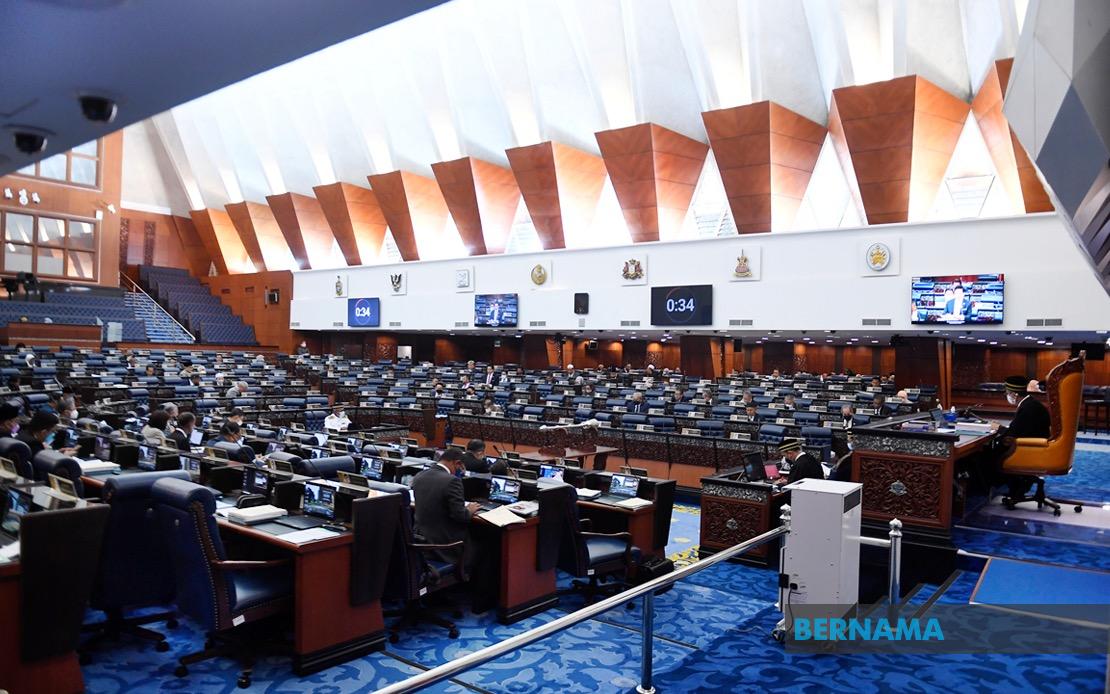
Parliament reconvened for a sitting dominated by questions about whether the Federal Government is treating all states equitably in its distribution of development allocations. The session highlighted growing concerns that some state governments receive insufficient funding relative to the revenue they generate for the national coffers, suggesting a fundamental imbalance in how federal resources flow to regional administrations.
Doris Sophia Brodi from GPS representing Sri Aman will press the Prime Minister directly on these disparities, seeking clarification on whether the current allocation mechanism properly reflects each state's needs and contributions. Her question touches on a persistent tension in Malaysian federalism: the relationship between centralized fiscal power and regional economic autonomy. The inquiry carries particular weight given that many state governments argue they shoulder significant service delivery responsibilities without commensurate financial support from Putrajaya.
The government's MADANI framework has pledged improvements to the allocation system, though specifics on how these enhancements will address identified inequities remain vague. This parliamentary exchange offers an opportunity to move beyond rhetorical commitments and establish concrete metrics for fairness. For Malaysian states hoping to expand infrastructure and services, the outcome of this discussion could have material consequences in how federal budgets are constructed in future years.
Another critical issue taking centre stage involves election conduct rules. Dr Shahidan Kassim from PN will question whether the prohibition on announcing government projects and allocations after nominations close remains enforceable, particularly with Johor, Melaka, and Negeri Sembilan heading toward state elections. This ban exists to prevent the ruling coalition from manipulating electoral outcomes through last-minute announcements of popular development schemes, a practice that had plagued previous campaigns.
The timing of his inquiry is strategic: state elections in three significant peninsular states create pressure to know what enforcement mechanisms will actually prevent violations of this rule. Candidates and political operatives frequently test the boundaries of campaign regulations, and without visible, credible enforcement, the spirit of the prohibition collapses regardless of its technical existence. Clarifying both the rule's status and how authorities will monitor compliance could restore confidence that elections are conducted on reasonably level ground.
Beyond electoral governance, Parliament will address the spread of artificial intelligence-generated disinformation. Ismail Sabri Yaakob will ask the Communications Minister how the government plans to equip citizens with media literacy skills to resist deepfake videos and manipulated visual content circulating on social media platforms. As AI technology becomes more sophisticated and accessible, the capacity to create convincing false videos of political figures, officials, and public personalities grows exponentially. Malaysia, like neighbouring Southeast Asian democracies, faces the challenge of maintaining public trust in genuine information amid increasingly plausible synthetic media.
The government's response should outline not just educational initiatives but also practical labelling and verification systems that social media platforms will implement. Malaysian regulators have authority to demand such measures, and the parliamentary session offers a forum to establish expectations for how technology companies will facilitate media literacy rather than enabling its subversion.
The energy sector's readiness for future demand will also come under scrutiny. Chong Zhemin will seek assurances that Malaysia's electricity infrastructure can support the explosive growth of data centres and artificial intelligence facilities, industries that consume enormous quantities of power. As multinational technology companies evaluate locations for regional operations, a credible answer about grid capacity and long-term supply stability becomes a competitive advantage for attracting investment.
Social welfare programmes feature prominently in the day's questions. Awang Hashim will examine whether the mySalam health insurance scheme effectively reaches and benefits the B40 lowest-income group it targets, while Mumtaz Md Nawi will assess whether talent retention initiatives successfully encourage women returning to the workforce after career breaks. These inquiries test whether government social spending translates into meaningful outcomes or merely represents budgetary allocations that fail to change lives substantively.
Syahredzan Johan's question about MADANI Book Voucher redemption rates probes the success of a cultural initiative designed to promote reading among young people. Low redemption rates would suggest either inadequate promotion, incompatible design with actual reading habits, or insufficient funding to make the vouchers attractive relative to other uses of household resources.
Iskandar Dzulkarnain's inquiry into the Program Jualan Rahmah MADANI affordable goods initiative seeks current implementation figures and asks whether the government will increase the programme's frequency statewide. This grassroots effort directly addresses cost-of-living pressures that continue to strain household budgets across Malaysia, and expansion or reduced frequency could meaningfully improve accessibility to subsidized goods for struggling families.
Following these oral questions, Parliament will resume debate on the Sexual Offences Against Children Amendment Bill 2026, legislation dealing with child protection in a modern context. The session will also progress consideration of Dewan Negara amendments to the Employment Insurance System bill and examination of the proposed Cyber Crime Bill 2026, legislation regulating digital offences in a rapidly evolving technological landscape.
Collectively, today's parliamentary sitting reflects the practical challenges occupying Malaysian governance: ensuring equitable federalism, preserving election integrity, managing technological disruption to information ecosystems, planning infrastructure for emerging industries, and delivering tangible welfare outcomes that improve living standards for vulnerable populations. The responses from government ministers will reveal both the seriousness with which these issues are treated and the coherence of approaches across different policy domains.

