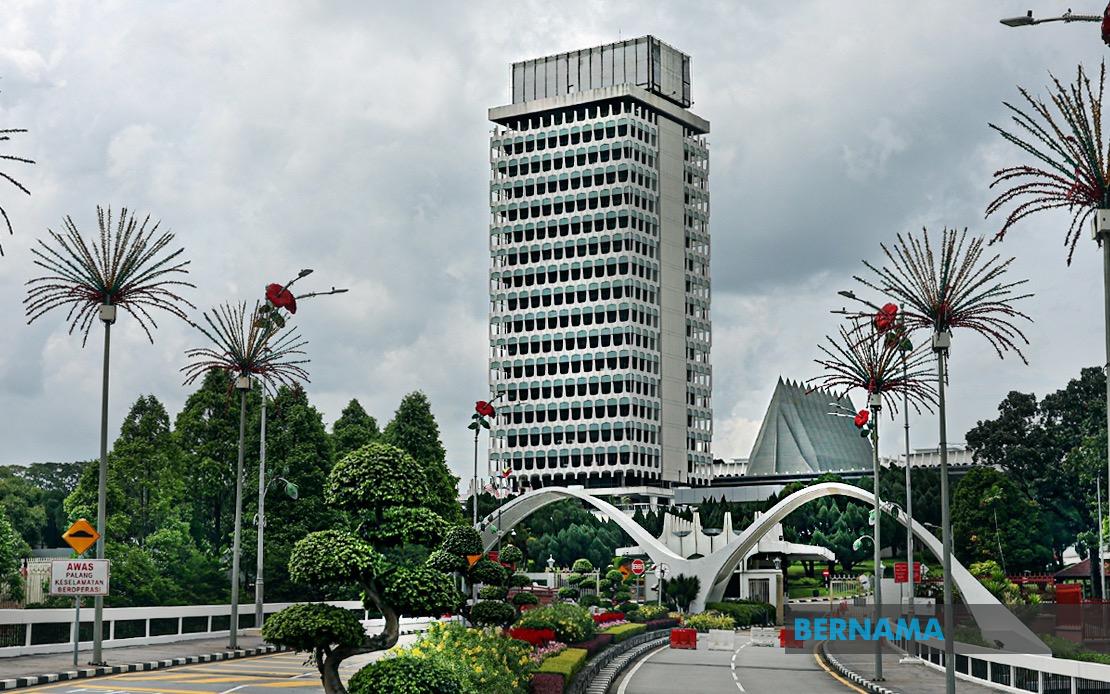
The Malaysian Parliament is turning its attention today to the economic and security challenges posed by the ongoing West Asian conflict, with lawmakers seeking clarity on how geopolitical turbulence is reshaping Malaysia's tourism landscape and threatening border stability. Two critical parliamentary questions reflect mounting concerns about the nation's ability to maintain tourism growth and safeguard its maritime frontiers, particularly in strategically sensitive areas.
The tourism impact inquiry will be led by Dr Ahmad Fakhruddin Fakhrurazi, the Kuala Kedah representative from Perikatan Nasional, who will press the Tourism, Arts and Culture Minister to quantify the effects of Middle Eastern instability on visitor numbers. His question specifically targets three crucial source markets—the Middle East itself, Europe, and the broader West Asian region—suggesting that Malaysia recognises these regions as vital contributors to its tourism revenue. The query signals parliamentary anxiety about whether the government has adequately assessed the scale of the downturn and whether current recovery strategies are sufficiently robust to counter prolonged regional uncertainty.
Malaysia's tourism sector has long depended on steady flows from affluent markets, particularly Gulf states and European nations, making it vulnerable to external shocks that discourage international travel. The West Asian conflict has created a cascade of challenges: heightened travel advisories, airline route disruptions, and a general reluctance among international tourists to venture to Southeast Asia if regional instability persists. For Malaysia, which has invested heavily in positioning itself as a premier Asian destination, the contraction in these high-value segments threatens not merely arrival numbers but the quality and profitability of tourism spend.
Government strategy to sustain tourism momentum will also come under scrutiny. The parliamentary question implies that the administration must articulate a coherent recovery plan beyond conventional marketing, potentially encompassing diplomatic outreach to reassure key source markets, product diversification to attract alternative visitor segments, and possibly targeted pricing or incentive schemes to reignite demand from hesitant travellers. The timing of this parliamentary focus is significant given that tourism recovery remains central to Malaysia's post-pandemic economic revival agenda.
Parallel to tourism concerns, the parliament will examine pressing security vulnerabilities in Langkawi, a district that occupies a precarious geographic position near the Malaysia-Thailand border. Datuk Mohd Suhaimi Abdullah, the Langkawi representative from Perikatan Nasional, will interrogate the Home Ministry on whether security agencies possess adequate resources and personnel to combat migrant smuggling, illicit goods trafficking, and unauthorised incursions into Malaysian territorial waters. This question reflects genuine anxiety about law enforcement capacity in a district where geography creates natural corridors for organised criminal networks.
Langkawi's strategic vulnerability stems from its location along established maritime smuggling routes and its proximity to Thailand, through which irregular migrants transit toward Malaysia. The question specifically requests the Home Minister to address whether the current asset deployment and personnel strength suffice for these enforcement challenges, implying that existing resources may be stretched thin or inadequately coordinated. The parliamentary query also probes whether the ministry plans to deploy unmanned aerial vehicles (UAVs) for border surveillance—a technological solution that could enhance detection and response capabilities without massive increases in personnel.
The introduction of drone technology into border security represents a modernisation imperative that many developing nations are grappling with, balancing effectiveness against cost and expertise requirements. For Malaysia, which faces complex transnational security challenges across maritime and land borders, UAVs could provide persistent surveillance coverage, particularly in remote areas where human patrols are logistically difficult. The parliamentary reference to previous applications for drone deployment suggests this is not a new proposal but rather a stalled initiative requiring renewed governmental commitment.
Beyond tourism and border security, the parliament will examine human-wildlife conflict mitigation in the context of environmental conservation budgets. Manndzri Nasib, the Tenggara representative from Barisan Nasional, will quiz the Natural Resources and Environmental Sustainability Minister on whether recently allocated Ecological Fiscal Transfer funds and community programmes administered by PERHILITAN have effectively reduced human-elephant conflicts. This query highlights the growing tension between conservation objectives and livelihood protection for communities adjacent to wildlife habitats, a perennial challenge across Southeast Asia where elephants regularly raid agricultural lands.
The parliamentary interest in Electric Fencing for Elephants (SPEG) technology indicates growing recognition that wildlife management requires innovative approaches beyond traditional methods. The question seeks information about the ministry's coordination strategy with relevant agencies to expand SPEG deployment, suggesting that current coverage is insufficient and that systematic expansion would require multi-agency collaboration and sustained funding. For rural communities in elephant corridors, such technology can substantially reduce crop losses and human casualties, making it a pragmatic conservation tool that balances human and animal welfare.
Housing affordability will also feature prominently, with Datuk Willie anak Mongin from GPS raising the chronic challenge of unsold affordable homes. His inquiry into inventory levels by state and price category, coupled with home ownership rates among young adults under 35, underscores Parliament's concern that government housing initiatives may be misaligned with actual market demand and affordability thresholds. This demographic group faces particular challenges in accumulating capital for down payments whilst competing for limited affordable stock, a problem that parliamentary scrutiny may pressure the Housing Ministry to address through policy innovation.
The current 16-day parliamentary session, extending to July 16, will also see the tabling of two substantive bills for second reading: the Sexual Offences against Children (Amendment) Bill 2026 and the Employment Insurance System (Amendment) Bill 2025. The child protection legislation reflects international pressure and domestic recognition that Malaysia must strengthen safeguards against sexual exploitation of minors, whilst the employment insurance amendment suggests the government is recalibrating worker protections in response to evolving labour market conditions and economic pressures. Together, these legislative initiatives and parliamentary questions represent a broad-based parliamentary agenda addressing tourism resilience, border security, environmental governance, housing policy, child protection, and worker welfare—spanning economic, security, and social domains that collectively shape Malaysia's development trajectory.

