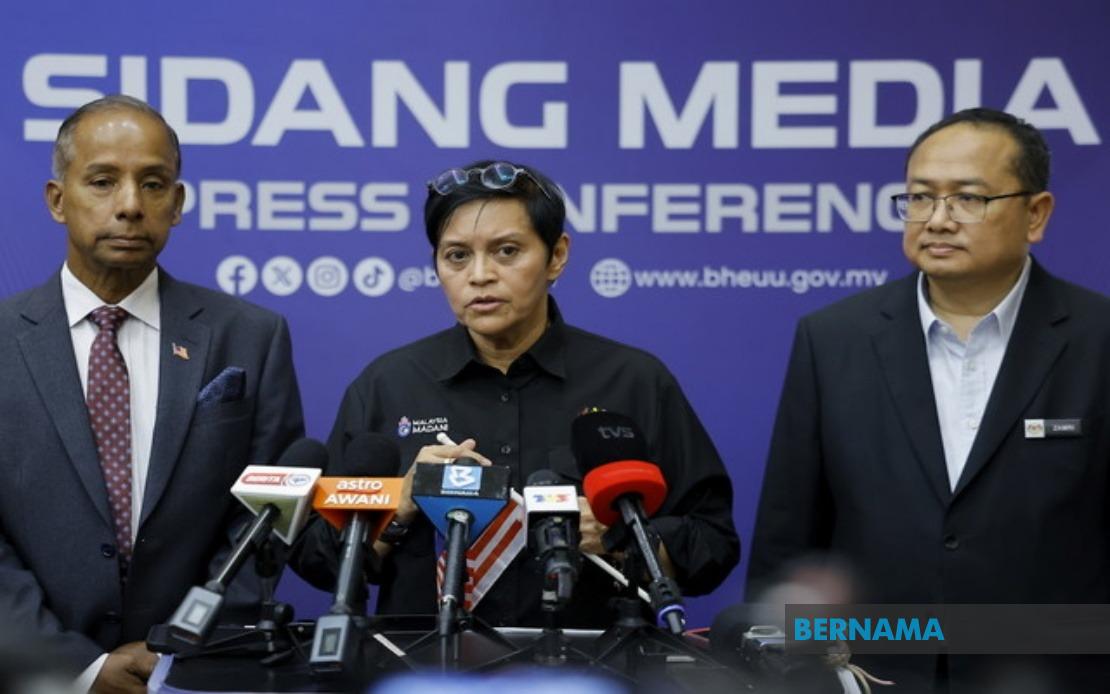
A Parliamentary Select Committee will begin its examination of the Freedom of Information Bill 2026 as part of a broader push to ensure comprehensive legislative review before the measure reaches the full parliament. Minister in the Prime Minister's Department (Law and Institutional Reform) Datuk Seri Azalina Othman Said, who leads the committee, indicated that the inaugural meeting would concentrate on establishing the framework and scope for the committee's work, with recommendations expected before the next parliamentary sitting.
The decision to route the Bill through committee represents a significant procedural step in Malaysia's transparency agenda. Rather than proceeding directly to parliamentary debate, the government has opted for a more deliberative approach that incorporates input from diverse stakeholders. This strategy reflects growing recognition that legislation governing public access to information requires careful calibration to balance transparency objectives with legitimate confidentiality concerns. The committee's bipartisan composition signals an intention to build broader consensus around the Bill's provisions.
Stakeholder engagement will form a crucial element of the committee's work. Azalina acknowledged that numerous organisations, ranging from non-governmental bodies to professional associations, have submitted observations on the proposed legislation. A recurring theme in these submissions concerns the scope of the Bill itself, with many stakeholders arguing that the current draft remains insufficiently broad. This tension between those seeking expansive freedom of information protections and those advocating a more measured approach will likely dominate committee deliberations.
The underlying Bill seeks to establish a formal mechanism through which Malaysian citizens aged 18 and above can submit written requests for access to information held by public authorities. This foundational principle represents a significant institutional development, as Malaysia currently lacks comprehensive freedom of information legislation comparable to statutes in other democracies. The creation of such a framework would establish clear procedures and timelines for information requests, potentially reducing ad-hoc bureaucratic discretion in determining what may be disclosed.
However, the Bill's current formulation preserves substantial exemptions that temper its practical reach. According to the draft made available on Parliament's portal, the legislation maintains the application of existing secrecy laws, particularly the Official Secrets Act 1972. Information classified under that statute would remain protected from disclosure, as would materials whose release is prohibited or restricted under other legislation. These carve-outs mean that sensitive government information would continue shielded from public view, even under an ostensibly pro-transparency framework.
The tension between aspiration and constraint reflects genuine policy challenges inherent in freedom of information design. Governments must balance citizen rights to access information against legitimate needs to protect national security, ongoing investigations, personal privacy, and commercial sensitivities. The question for the Select Committee will be whether the current Bill strikes the appropriate equilibrium or whether the balance tips too heavily toward governmental non-disclosure. Malaysia's experience as a developing nation with distinct security concerns will inform how the committee evaluates these tradeoffs.
For Malaysian governance, the Bill's introduction marks a watershed moment in administrative transparency. Currently, citizens lack a statutory entitlement to government information, relying instead on ministerial discretion, freedom of information initiatives implemented through administrative guidelines, and occasional parliamentary questions. A formal Bill would establish enforceable rights backed by procedures for appeals and complaints. This institutional innovation could enhance democratic accountability and public understanding of government decision-making across numerous policy domains.
The committee's work also carries implications for Southeast Asia's broader governance landscape. Regional movements toward transparency and open government have accelerated in recent years, with neighbouring jurisdictions implementing or strengthening information access regimes. Thailand, Indonesia, and the Philippines all operate freedom of information frameworks that Malaysia observers may study for lessons learned. The Select Committee's recommendations could position Malaysia alongside regional leaders in governmental transparency or alternatively highlight persistent regional disparities in public access to state information.
Azalina's public commitment to evaluating the Bill's breadth suggests the committee will seriously engage with stakeholder critiques rather than merely rubber-stamping existing text. Her indication that concerns about scope will receive explicit attention signals receptiveness to potentially expanding the Bill's reach. Whether the committee ultimately recommends broadening exemptions, narrowing them, or maintaining existing parameters will significantly influence the legislation's practical utility once enacted.
The timeline for the committee's work remains compressed, with recommendations needed before the next parliamentary sitting. This schedule necessitates focused, efficient proceedings that nonetheless allow adequate time for genuine stakeholder consultation. The committee faces pressure to move expeditiously while avoiding the appearance of rushing through consideration of legislation fundamentally affecting government transparency and administrative accountability.
Beyond the immediate legislative context, the Bill represents part of Malaysia's broader modernisation agenda under the current government. Institutional reform initiatives, including this transparency measure, reflect commitments to enhanced governance standards and citizen engagement. Whether the Freedom of Information Bill 2026 ultimately delivers meaningful access improvements or provides primarily symbolic transparency will depend substantially on the Select Committee's recommendations and parliament's receptiveness to those findings.

