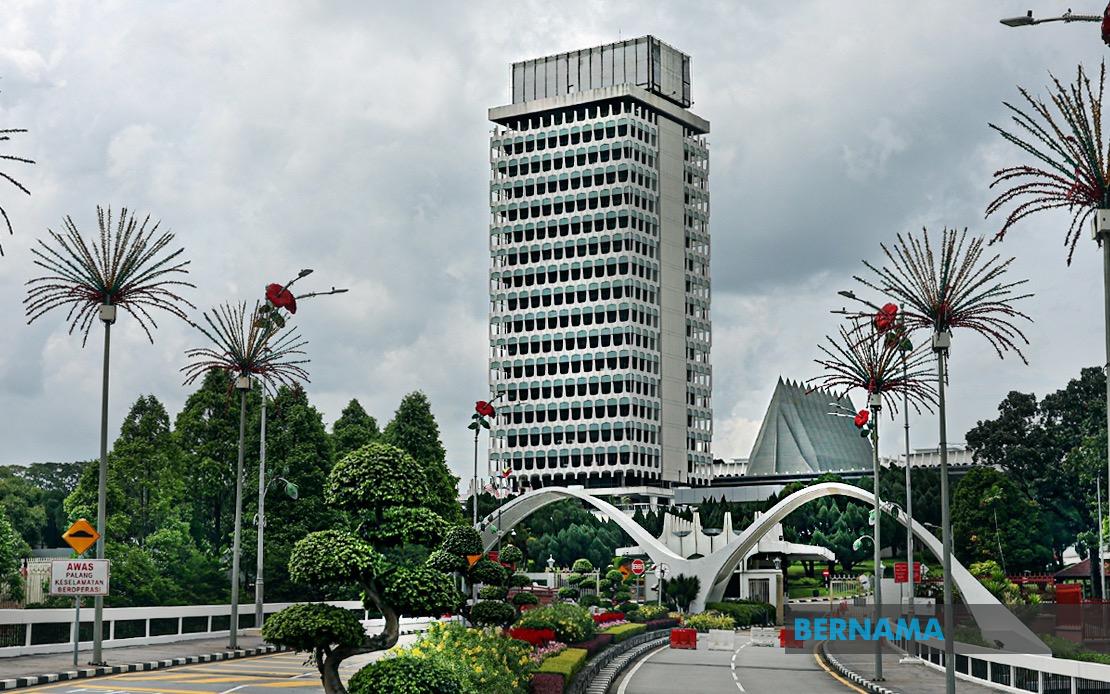
The first week of Parliament's current sitting has produced a modest legislative output, with lawmakers passing just one piece of substantive legislation despite a packed agenda that reflects the government's priorities across multiple sectors. The Road Transport (Amendment) Bill 2026 emerged as the sole successful passage during the opening days of the Second Meeting of the Fifth Session of the 15th Parliament, which began on June 22 and will run until July 16. The narrow result underscores the deliberative pace of Malaysia's legislative process, even as pressing national concerns demand parliamentary attention.
Transport Minister Anthony Loke characterised the Road Transport amendment as addressing a significant enforcement gap that has long hampered efforts to crack down on illegal street racing. The introduction of Section 42A fundamentally alters the legal framework by permitting authorities to take enforcement action against unlawful racing activities without first requiring evidence of an accident, injury, or death. This represents a departure from the previous requirement that officers prove elements of actual danger or documented consequences before proceeding with prosecution, a threshold that effectively created a loophole allowing dangerous conduct to persist unpunished. By shifting the burden of proof and lowering the evidentiary bar, the amendment targets one of the more visible public safety problems affecting Malaysian communities, where illegal racing has claimed lives and disrupted neighbourhoods.
The ministry has signalled further legislative action on road safety matters to come later this year, with plans to amend the Road Transport Act (Act 333) once more to establish a victim compensation scheme. This proposed mechanism would provide financial restitution to accident victims and their bereaved families in cases where injuries or deaths result from drivers impaired by alcohol or drug use, standing as an additional layer of accountability beyond existing penalties of fines and imprisonment. Such a compensation framework reflects evolving international standards that recognise both punishment and reparation as legitimate policy tools, particularly for victims whose lives are derailed by the recklessness of others.
Meanwhile, legislative progress elsewhere has stalled. The Prison (Amendment) Bill 2026, designed to introduce electronic monitoring capabilities and formalise the role of volunteers in prisoner rehabilitation initiatives, has been shelved pending further deliberation by the Parliamentary Select Committee. This postponement suggests ongoing internal debate about implementation mechanisms and resource requirements for electronic monitoring systems, matters that typically require considerable technical and budgetary planning. For Malaysian observers tracking criminal justice reform, the delay signals that modernising the penal system remains a multi-staged process rather than a swift overhaul.
Parliament tabled four additional bills for first reading during the week, signalling the government's intention to modernise Malaysia's legal framework across several domains. The Sexual Offences Against Children (Amendment) Act 2026, Competition (Amendment) Bill 2026, and Competition Commission (Amendment) Bill 2026 join the Cybercrime Act 2026, which proposes to repeal the Computer Crimes Act 1997. The cybercrime legislation notably represents a wholesale replacement of a quarter-century-old statute, suggesting the government recognises that technology-driven threats to security and privacy have evolved beyond what older legislation can adequately address. These bills advance through the parliamentary machinery relatively slowly, however, allowing time for stakeholder consultation and expert input before substantive debate occurs.
On the parliamentary operational front, Speaker Tan Sri Johari Abdul confirmed that Larut Member of Parliament Datuk Seri Hamzah Zainudin has been reinstated as opposition leader effective June 18. This restoration of formal leadership reflects the political dynamics within Parliament and clarifies the opposition's representative for purposes of procedural engagement and question time. Additionally, the Speaker acknowledged the creation of two casual vacancies arising from the May 18 resignations of Datuk Seri Rafizi Ramli from Pandan and Nik Nazmi Nik Ahmad from Setiawangsa, with the Election Commission duly notified to proceed with by-elections as constitutionally required.
Minister's Question Time, traditionally allocated for Tuesday and Thursday sessions and reserved for Prime Minister Datuk Seri Anwar Ibrahim, operated differently this week owing to other executive demands on the Prime Minister's schedule. Ministers representing their respective portfolios fielded parliamentary inquiries instead, a pragmatic accommodation that nonetheless reduces the distinctive accountability mechanism that Prime Minister's Question Time is designed to provide. The flexibility demonstrates how practical governance demands occasionally reshape parliamentary procedure, though it also illustrates the tension between the Prime Minister's multiple roles as both chief executive and accountable legislator.
Unemployment emerged as a dominant concern during the week's debates, with Human Resources Minister Datuk Seri R. Ramanan presenting data indicating that 42,807 workers faced retrenchment between January and June 12. Company closures and workforce downsizing were identified as the principal drivers of these job losses, painting a picture of structural labour market adjustment. However, Economy Minister Akmal Nasrullah Mohd Nasir offered a counterbalance, noting that retrenchments had declined by 20 percent in June compared to May, while the labour force participation rate remained stable at 70.9 percent. This divergence in emphasis between ministers—one highlighting vulnerability, the other emphasising resilience—reflects the legitimate complexity of interpreting labour market signals during periods of adjustment.
Border security received focused attention with Home Minister Datuk Seri Saifuddin Nasution Ismail announcing government approval of RM22 million in funding to equip the Malaysia Border Control and Protection Agency with firearms and supporting equipment. This investment signals recognition of the resource intensity required to maintain effective frontier governance, particularly given Malaysia's extensive maritime boundaries and land borders. For the region and beyond, border modernisation matters insofar as it affects the free movement of legitimate commerce and persons while enhancing security.
Online safety and digital protection featured prominently in parliamentary discussion, reflecting the profound integration of internet access into Malaysian life. Communications Minister Datuk Fahmi Fadzil outlined the Child Protection Code and Risk Mitigation Code, which took effect June 1 and mandate that social media platforms implement age-verification systems to shield young users from harmful content. Non-compliance carries penalties reaching RM10 million under the Online Safety Act 2025, a significant deterrent designed to push platforms toward protective measures. For parents and child advocates across Malaysia and Southeast Asia, this legislative focus represents an acknowledgment that technological change has outpaced traditional safeguarding mechanisms.
On energy and commodities policy, the Ministry of Plantation and Commodities indicated it is examining the feasibility of rolling out B50 biodiesel—a fuel blend with 50 percent biodiesel content—in response to global supply disruptions affecting petroleum markets. The evaluation centres on whether existing blending infrastructure can accommodate such a shift without prohibitive capital expenditure, a practical constraint that often determines whether ambitious sustainability goals become tangible policy rather than aspirational rhetoric. For Malaysia, a significant palm oil producer, biodiesel policy carries dimensions beyond pure energy economics, touching on agricultural policy, environmental management, and trade relationships.
The modest legislative passage rate during Parliament's opening week reflects both the complexity of modern governance and the committee-driven nature of contemporary parliamentary practice. With 16 days remaining in the sitting extending to July 16, significant additional business awaits. The postponement of prison reform legislation, the tabling of multiple bills for first reading only, and the emphasis on Parliamentary Select Committee reports all suggest that Parliament's value inheres not merely in rapid bill passage but in thorough deliberation. For Malaysian voters and stakeholders monitoring their elected representatives, this first week demonstrates a legislature grappling with the full complexity of contemporary policymaking while maintaining established procedures, even if that deliberative process sometimes feels slow relative to perceived urgency.

