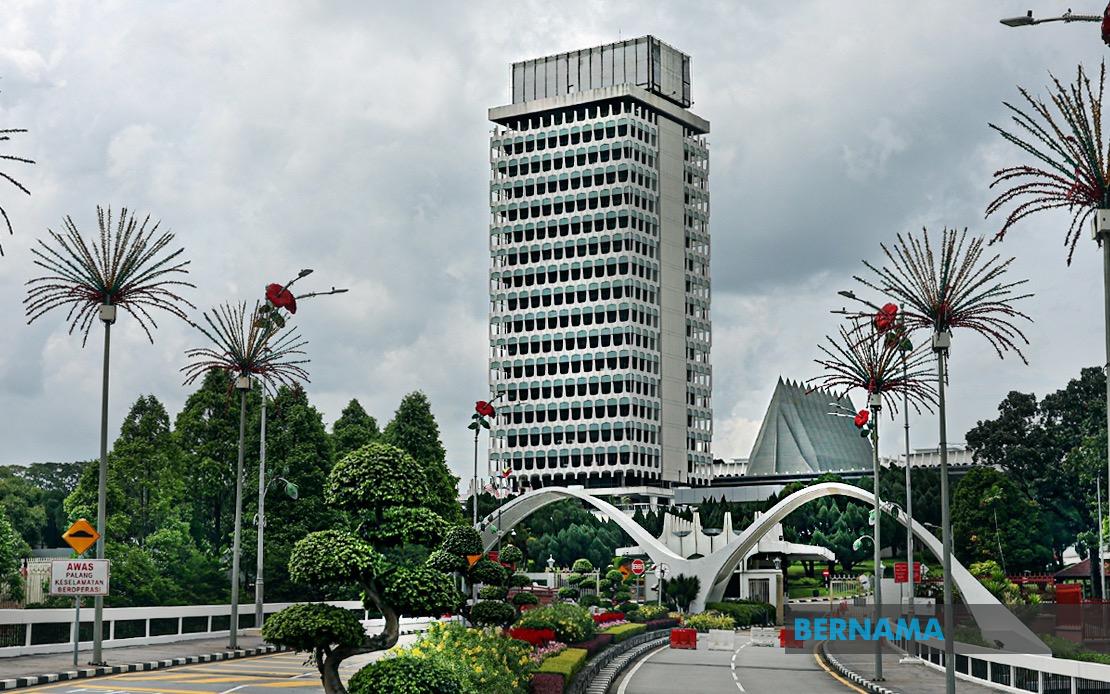
Malaysia's parliament concluded a substantive third week of proceedings focused on strengthening regulatory frameworks across multiple sectors, with lawmakers advancing critical legislation addressing competition law and agricultural governance while navigating contentious issues surrounding media freedom and national debt obligations. The sitting, which continues through July 16, demonstrated the government's legislative agenda spanning economic competition, food security, and public accountability, whilst highlighting persistent tensions over press regulation and the lingering financial consequences of the 1Malaysia Development Berhad scandal.
Two competition-related bills dominated the chamber's legislative output, with both the Competition (Amendment) Bill 2026 and the Competition Commission (Amendment) Bill 2026 progressing to passage. These measures reflect policymakers' recognition that Malaysia's economic competition framework requires modernisation to address emerging challenges in the digital marketplace, where traditional enforcement mechanisms often struggle to keep pace with innovative business models and cross-border commercial arrangements that characterise Southeast Asia's increasingly interconnected digital economy.
The Control of Padi and Rice (Amendment) Bill 2026, introduced for first reading on Tuesday, signals the government's determination to overhaul regulation of a sector long plagued by supply chain inefficiencies and commercial malpractice. The proposed legislation substantially elevates penalties, with maximum fines climbing to RM1 million, reflecting the state's view that stronger deterrents are necessary to eliminate corruption and fraud affecting one of Malaysia's strategically significant industries. For Malaysian consumers and agricultural stakeholders, these reforms carry direct implications for rice prices and availability, matters of considerable sensitivity given food security concerns across the region.
Parliamentary attention also centred on the Human Rights Commission of Malaysia's 2024 annual report, which triggered substantive debate among MPs about the nation's human rights trajectory. The subsequent motion generated various recommendations from lawmakers across the chamber, underscoring parliament's role as a forum for broader governance scrutiny beyond legislative mechanics. With eleven government ministries completing winding-up statements and responses, the debate touched fundamental questions about institutional accountability and public welfare frameworks spanning health, security, and social development.
Prime Minister Datuk Seri Anwar Ibrahim used his ministerial question time to address concerns about micro, small and medium enterprises, a sector employing millions of Malaysians and constituting the backbone of numerous local economies. He committed to streamlining financial institution procedures for processing MSME loan applications, recognising that capital access barriers frequently constrain business expansion and employment generation in smaller communities across the peninsula and East Malaysia.
The session also witnessed direct parliamentary interrogation of Malaysia's declining position in the 2024 World Press Freedom Index. Rather than treating the criticism dismissively, Anwar acknowledged international assessment methodology while defending government actions taken against certain media organisations. His explanation hinged on distinguishing between legitimate content regulation—targeting material concerning religion, race and the royal institution, alongside potential national security threats—and any broader suppression of legitimate journalism or political debate.
Anwar's announcement of a new referral mechanism through the Malaysian Media Council represents a procedural adjustment responding to concerns that journalists faced excessive legal jeopardy from unvetted complaints. By requiring complaints against recognised media practitioners to pass through MMM channels before triggering enforcement actions, the government seeks to establish buffer institutions between law enforcement and editorial decision-making. This development carries significance for press functionality across Southeast Asia, where regulatory overreach frequently constrains investigative reporting on matters of public interest.
Parliament's Special Select Committees presented recommendations addressing two pressing national concerns. The Health Committee's focus on organ donation and transplantation frameworks reflects Malaysia's need to expand donor networks amid chronic shortages limiting life-saving procedures. Simultaneously, the Women, Children and Community Development Committee's documentation of escalating abuse and violence cases over the 2020-2026 period revealed alarming trends that demand comprehensive policy responses spanning law enforcement, social services, and community intervention.
Defence and security discussions touched on technical procurement decisions, including deliberations over replacing the Naval Strike Missile system for the Littoral Combat Ships fleet. While such discussions typically receive limited public attention, they carry strategic implications for Malaysia's maritime defence capabilities and industrial relationships within defence industries serving Southeast Asian naval forces. The chamber also addressed vape product seizures involving suspected synthetic substances, reflecting growing policy attention to emerging drug delivery mechanisms challenging law enforcement and public health authorities.
Healthcare digitalisation emerged as a modernisation priority, with parliament examining accelerated system upgrades at public medical facilities. This discussion acknowledges that Malaysia's healthcare delivery effectiveness increasingly depends on robust digital infrastructure supporting patient records, appointment scheduling, and clinical coordination across the sprawling public health system serving diverse populations from major urban centres to remote communities.
The revelation that government liabilities stemming from 1Malaysia Development Berhad total RM51.4 billion, combining settled and outstanding obligations, underscores the enduring fiscal footprint of Southeast Asia's most notorious sovereign wealth fund collapse. Deputy Finance Minister Liew Chin Tong's disclosure reminded lawmakers and the broader Malaysian public that the 1MDB episode continues draining resources from developmental spending decades after the initial scheme's unravelling. This figure carries profound implications for competing budgetary priorities, illustrating how historical governance failures constrain contemporary policy flexibility.
Parliamentary Speaker Tan Sri Dr Johari Abdul's health reminder to MPs, prompted by a lawmaker's hospitalisation at the National Heart Institute, injected a personal dimension into proceedings. His exhortation that members prioritise regular medical screenings acknowledged the physical demands of parliamentary work whilst highlighting broader public health messaging about preventive care—a theme resonating across Malaysian society as lifestyle diseases increasingly burden both individuals and healthcare systems.
With one week remaining before the Second Meeting of the Fifth Session concludes on July 16, parliament's substantive agenda demonstrates the legislature's engagement with diverse challenges confronting contemporary Malaysia. The combination of competition reform, agricultural regulation, human rights accountability, press freedom debate, and financial reckoning reflects a parliament grappling with modernisation imperatives, governance integrity, and economic competitiveness within an increasingly complex regional environment demanding sophisticated institutional responses.

