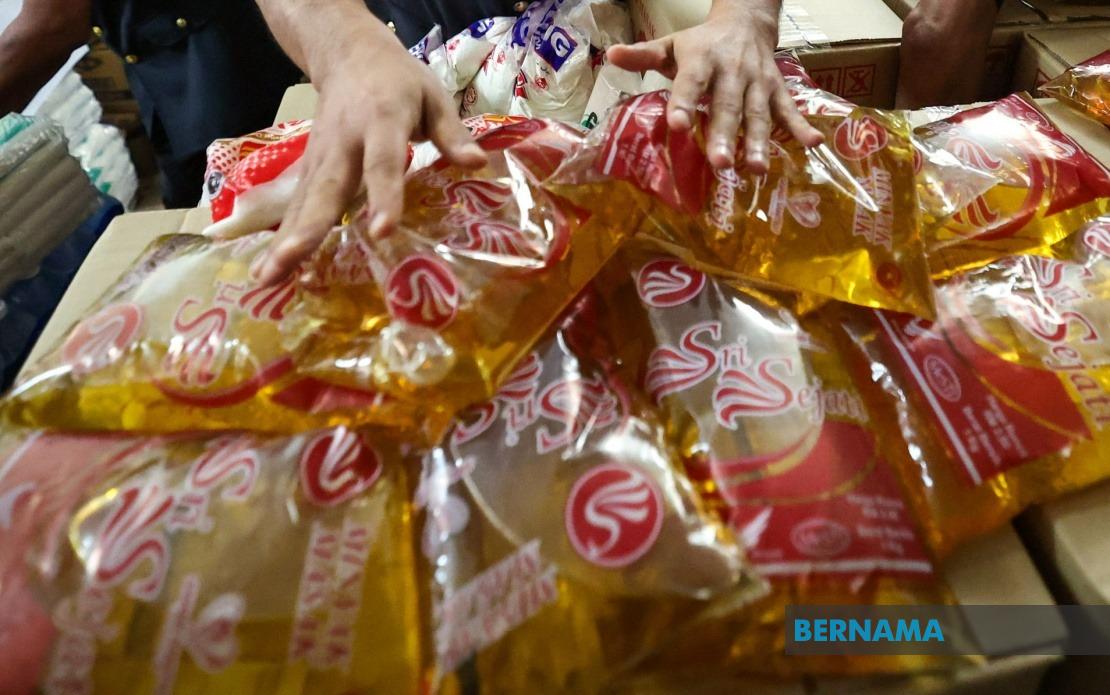
Malaysia's parliamentary watchdog has called for sweeping changes to the country's troubled cooking oil subsidy programme, highlighting how bloated supply quotas and weak monitoring have allowed billions of ringgit in public funds to slip away from intended recipients. The Public Accounts Committee delivered eight formal recommendations this week following an exhaustive investigation into the Ministry of Domestic Trade and Cost of Living's management of cooking oil price controls, exposing fundamental structural failures in a scheme designed to keep essential food affordable for ordinary Malaysians.
At the heart of the problem lies a stark mismatch between supply and actual demand. The Cooking Oil Price Stabilisation Scheme currently maintains a monthly quota of 60,000 metric tonnes, yet the committee's investigation established that genuine domestic consumption by Malaysian households ranges between merely 19,000 and 30,000 metric tonnes monthly. This oversupply by as much as 68 per cent has created conditions ripe for diversion and waste. The surplus capacity has become a conduit for unintended beneficiaries, including foreign nationals and commercial operators who should never qualify for subsidised cooking oil, fundamentally undermining the scheme's purpose of supporting ordinary consumers.
The financial toll on the public purse has been staggering. Between 2019 and February 2025, the government has disbursed RM10.879 billion in cooking oil subsidies, yet the committee's investigation found that this massive outlay failed to reach its target beneficiaries effectively. The absence of any targeted distribution mechanism meant that one-kilogramme packets of subsidised cooking oil became a commodity available to virtually anyone, stripping away any capacity to limit assistance to those genuinely in need. This indiscriminate approach transformed a welfare programme into an open subsidy with minimal gatekeeping, allowing those with no genuine claim on government assistance to drain resources meant for vulnerable households.
The PAC's recommendation to reduce the monthly quota by 60,000 metric tonnes would realign supply with realistic consumption patterns, though such a drastic cut would require careful sequencing to avoid market disruption. More immediately, the committee has flagged the subsidy rate of RM600 per metric tonne paid to packaging companies as unjustifiably generous. Investigation revealed that actual operating costs for repackers are substantially lower than this reimbursement, yet the ministry has allowed this inflated margin to persist without rigorous justification. Rationalising this rate downwards would trim unnecessary government expenditure whilst maintaining viable operations for legitimate packaging businesses.
Quality control failures have compounded the waste problem at the margins. The investigation discovered that two of nine packaging companies involved in the programme still lack halal certification from the Malaysian Islamic Development Department, a particularly troubling gap given that JAKIM has substantially streamlined its certification processes in recent years. More concerning still, the committee found no standardised operating procedures for managing spoiled or damaged cooking oil stocks at the packaging company level. This administrative vacuum has allowed the government to continue subsidising oil that will never reach consumers, effectively paying to dispose of deteriorated product. The PAC has recommended that subsidy payments be tied exclusively to undamaged stocks, creating a financial incentive for proper handling and storage throughout the supply chain.
Retailer-level monitoring has proven equally inadequate, permitting widespread abuse of the control price ceiling. The committee documented how conditional sales, stock hoarding, and illegal sales above the official RM2.50 price have become increasingly common market practices. Without consistent enforcement and point-of-sale verification, the government's price guarantees ring hollow. Consumers in certain areas or at particular retailers face either unavailable subsidised oil or pressure to purchase at illegal markups, negating the policy's intended benefit. The PAC's broader recommendation for a transition to fully digital targeting through the enhanced eCOSS system would introduce traceability at the consumer level, making it far harder for retailers to circumvent pricing and allocation rules.
The concentration of market power among foreign companies presents another structural vulnerability. The investigation revealed that international firms control 67 per cent of the refining quota, whilst government-linked companies such as FGV and SD Guthrie manage only 10.6 per cent, with the remainder distributed among small local players. This heavy reliance on foreign suppliers constrains domestic policy flexibility and has raised questions about whether Malaysia is unnecessarily depending on overseas companies for a strategic commodity. The PAC has proposed that the government study redistribution of refining quotas to favour competitive local firms, both to reduce foreign dominance and to keep more of the value chain within Malaysia's economy.
The committee's core recommendation—to accelerate the transition from bulk subsidies to digitally targeted assistance—addresses the root cause of the current system's failures. The existing scheme treats cooking oil like a universal public good, available to all at an artificially low price. A genuinely targeted approach would verify eligibility at the point of purchase, restricting subsidies to citizens and households that genuinely require support. The eCOSS digital platform would enable real-time monitoring of consumption patterns, flagging suspicious purchasing behaviour and preventing hoarding. Such transparency would also facilitate faster identification and correction of leakage points, allowing the government to adjust policy in response to concrete evidence rather than annual audits.
Implementing these reforms will require sustained political will and coordination across multiple agencies. KPDN must redesign the subsidy mechanism and rationalize packaging company reimbursement rates, likely meeting resistance from commercial beneficiaries of the current generous arrangements. JAKIM must complete halal certification for all remaining packaging companies and maintain rigorous standards. Retailers and consumers will need to adapt to digital verification systems, though the prospect of genuinely affordable cooking oil should prove popular. The Home Ministry and enforcement agencies will require resources to police illegal sales and hoarding at the retail level, particularly in areas where informal markets still dominate.
The PAC's investigation underscores a recurring challenge in Malaysia's social policy architecture: well-intentioned subsidies can become vehicles for waste and elite capture without robust targeting mechanisms and enforcement. The cooking oil scheme demonstrates how the absence of clear eligibility criteria transforms a programme into an open subsidy that bleeds the Treasury without meaningfully assisting the poor. For Malaysian policymakers, the committee's findings carry broader implications about how the country should structure assistance programmes across food, fuel, and utilities. A transition toward digitally verified, means-tested support would cost less and reach intended beneficiaries more effectively—a model with applications far beyond cooking oil.

