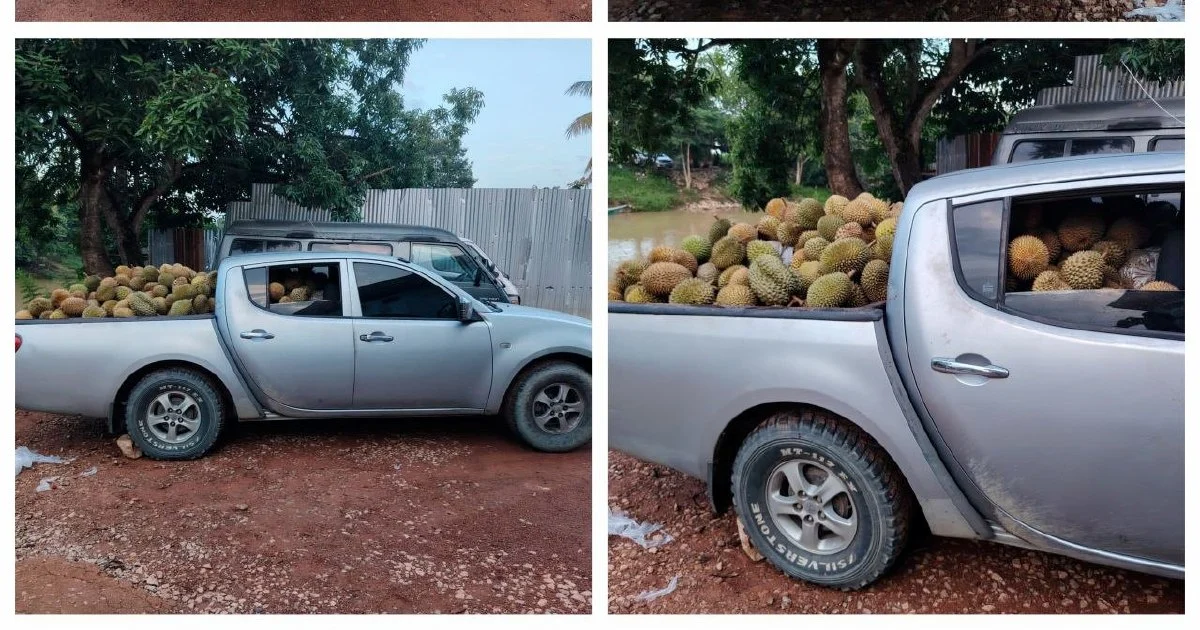
A 22-year-old part-time driver's modest employment arrangement unravelled dramatically when authorities intercepted him with 700 kilograms of suspected smuggled durians in Rantau Panjang overnight. What appeared to be straightforward supplementary income earning between RM60 and RM70 daily transformed into a serious criminal matter as enforcement officials uncovered the contraband consignment.
The arrest underscores the vulnerability of young workers recruited into illegal cross-border trading networks. Part-time drivers operating in border regions often represent the visible frontline of smuggling operations, typically earning minimal compensation while bearing disproportionate legal risk. This case exemplifies how individuals seeking casual employment may inadvertently become entangled in organised contraband schemes, with limited awareness of the commodities they transport or the legal consequences involved.
Rantau Panjang, situated in Kelantan along Malaysia's northern border, remains a strategic location for agricultural smuggling operations. The proximity to Thailand facilitates the movement of durians and other produce across jurisdictional boundaries, creating persistent enforcement challenges. Local authorities routinely conduct interception operations at key transit points, yet the volume and frequency of smuggling attempts continue to strain resources and detection capabilities.
The seizure of 700 kilograms represents a substantial quantity that would generate considerable profit within black market distribution networks. While individual smugglers earn pittance for transportation services, the cumulative value of intercepted shipments reflects the significant economic incentive driving these operations. This profit differential—between what drivers receive and what criminal networks gain through distribution—reveals the exploitative nature of smuggling recruitment patterns.
Durian smuggling carries particular significance for Malaysia's agricultural sector and trade relationships. As a high-value commodity with protected cultivation standards domestically, illegal durian imports undermine local producers' market competitiveness and circumvent quarantine protocols designed to maintain product quality and prevent pest infiltration. Malaysian durian exports command premium prices internationally, making local supply protection economically critical.
Border enforcement operations targeting agricultural contraband require coordination between multiple agencies including customs authorities, agricultural quarantine officials, and police units. The successful interception indicates effective intelligence gathering or intelligence-led operations, though the continued frequency of smuggling attempts suggests that interdiction efforts alone cannot address underlying demand. Economic incentives driving production and distribution networks persist despite enforcement activities.
The legal consequences facing young smuggling operatives typically prove severe relative to their compensation. Charges under customs legislation and agricultural protection statutes can result in substantial fines and imprisonment periods far exceeding any earnings received from transportation duties. This disproportionate punishment structure, combined with limited legal awareness among recruits, often traps vulnerable individuals within criminal frameworks.
Southeast Asia's broader durian trade reflects complex dynamics between licit and illicit commerce. Thailand and Malaysia maintain competing cultivation bases, and price fluctuations across jurisdictions create arbitrage opportunities that motivate smuggling. The premium durian commands in Malaysian markets, combined with seasonal supply constraints, establishes economic conditions favourable to cross-border illicit trading regardless of enforcement intensity.
The arrest raises questions regarding recruitment and supervision mechanisms employed by smuggling networks. Operatives earning RM60-70 daily represent easily replaceable workforce elements, suggesting that criminal organisations maintain redundant transportation capacity to absorb periodic enforcement disruptions. This structural resilience enables continued operations despite routine interdictions.
For Malaysian consumers and producers alike, agricultural smuggling represents an ongoing regulatory challenge requiring sustained attention beyond headline-generating seizures. Systematic enforcement, combined with demand reduction strategies and regional cooperation frameworks, represents the comprehensive approach necessary to address persistent contraband movements across borders. Individual arrests serve as visible enforcement demonstrations while underlying commercial pressures continue motivating illegal trade.
The incident also highlights employment vulnerabilities in border communities where legitimate income opportunities remain limited. Young workers accepting minimal-wage driving roles often lack alternatives within formal employment sectors, creating susceptibility to recruitment into illegal activities. Addressing smuggling systematically requires complementary economic development initiatives alongside enforcement operations.
Stakeholders including agricultural producers, trade authorities, and law enforcement agencies continue examining operational strategies to enhance detection capabilities while disrupting distribution networks operating downstream from interception points. The persistence of smuggling despite consistent seizures indicates that enforcement must evolve alongside criminal adaptation.

