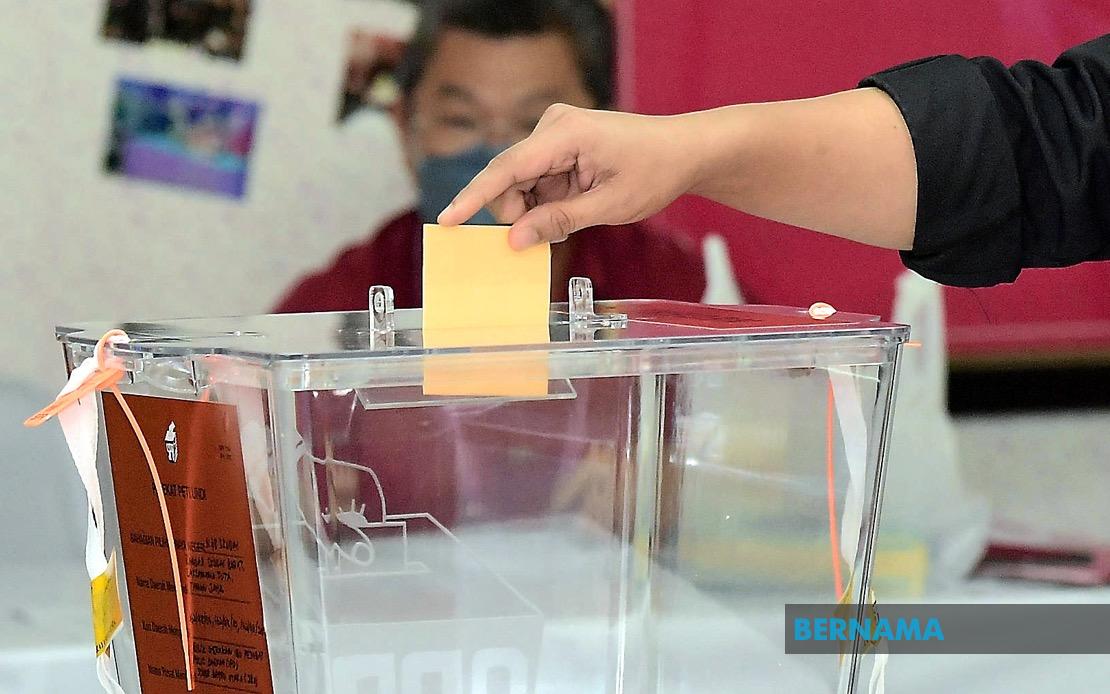
The Johor state election concluded with a decisive outcome that reshaped the political landscape in Malaysia's southern stronghold, prompting varied responses from the competing coalitions. Barisan Nasional's triumph, anchored by Menteri Besar Datuk Onn Hafiz Ghazi, delivered the ruling coalition a comfortable parliamentary cushion with 29 seats out of the 56 contested in the state assembly, effectively granting them a fresh mandate to govern the prosperous and strategically important state for the next five years.
In the aftermath of the polling, Johor PAS commissioner Datuk Dr Mahfodz Mohamed issued a measured statement acknowledging the electorate's democratic choice and extending congratulations to the victorious BN administration. His remarks underscored a disciplined acceptance of electoral outcomes, emphasising that the Islamic party's presence within the Perikatan Nasional coalition framework remained unwavering despite the mixed results across the state's constituencies. The commissioner's language reflected the political maturity expected within established coalitions when individual component parties fall short of their electoral ambitions, framing the loss as a temporary setback rather than a fundamental crisis.
PAS signalled its intention to remain focused on longer-term organisational objectives, channelling energy toward preparation for the sixteenth general election scheduled for 2025 or 2026. The party's statement articulated a commitment spanning three foundational pillars—the advancement of Islamic principles, the protection of racial interests, and the welfare of ordinary Malaysians—suggesting that the Johor election outcome would not precipitate any substantial shift in the party's ideological or strategic positioning. This consistency reflects PAS's entrenched position in the Perikatan Nasional framework, where it maintains considerable organisational infrastructure and grassroots networks despite periodic electoral fluctuations.
Bersatu, the political vehicle centred on former Prime Minister Mahathir Mohamad and currently shepherded by party secretary-general Datuk Seri Mohamed Azmin Ali, adopted a more introspective approach following the election. Rather than accepting the results with equanimity, the party announced it would undertake comprehensive analysis of its performance across individual constituencies and demographic segments. This methodical review process signals that Bersatu leadership recognises underlying vulnerabilities in its electoral machinery or messaging that require attention before the next major contest. Such exercises typically involve dissecting campaign mechanics, voter feedback, and regional performance variations to identify correctable deficiencies.
The most candid acknowledgment of electoral disappointment came from Parti Bersama Malaysia, the fledgling opposition-aligned party led by Datuk Seri Rafizi Ramli. The organisation, which had contested its inaugural state election campaign merely 52 days after formal registration, experienced a complete shutout across all 15 candidate fieldings, with every nominee forfeiting their election deposits by failing to reach the statutory minimum vote threshold. Rafizi's Facebook statement characterised this result with remarkable pragmatism, framing the losses as instructive experiences for a nascent political entity still establishing organisational foundations and voter recognition.
Bersama's approach exemplified how newer political entities necessarily navigate electoral debuts, where demographic penetration remains limited and brand recognition among voters remains nascent compared to established parties operating decades of accumulated institutional advantages. The party's commitment to studying campaign methodologies and voter engagement strategies demonstrated awareness that early electoral disappointments need not presage permanent irrelevance, provided leadership can extract meaningful lessons and execute corrective measures before subsequent contests. Rafizi's personal political history, marked by transitions between multiple parties and organisational structures, likely informed this philosophical approach to temporary setback.
The broader electoral landscape revealed through Johor's voting produced a relatively sparse showing for opposition-aligned coalitions. Pakatan Harapan, the federally-ruling coalition that had drawn significant support in previous elections, managed only two seats across the entire state, suggesting substantial erosion of voter confidence or organisational capacity in what many observers regarded as a more conservative-leaning state with traditional BN sympathies. Neither MUDA, Parti Orang Asli Malaysia, Parti Sosialis Malaysia, nor independent candidates secured any seats, underscoring the considerable organisational advantages inherent to mature, well-resourced coalition structures when competing in state-level contests.
For Malaysian political observers, the Johor outcome carries significance extending beyond state-level governance implications. The election functioned as a weathervane indicating broader voter sentiment and coalition strength ahead of the next general election, which constitutional rules require be held by mid-2026 at the latest. The decisive BN victory suggests that ruling coalition confidence heading into that contest enjoys substantial foundation, particularly given that Johor represents a bellwether state whose voting patterns frequently presage national trends. Conversely, opposition coalition fragmentation and the poor showing by alternative political entities suggest continued difficulty in coalescing anti-establishment sentiment into coherent, electorally competitive organisational structures.
The responses from defeated coalition components reveal important distinctions in political culture and strategic thinking within Malaysia's competitive landscape. Established parties like PAS, despite electoral setbacks within their Perikatan Nasional framework, maintained discipline by honouring coalition arrangements and reaffirming longer-term strategic commitments. Bersatu's analytical approach suggested an understanding that detailed performance reviews precede meaningful organisational reformation. Bersama's philosophical acceptance of its inaugural losses demonstrated the learning curve inherent to newly-registered political movements entering high-stakes electoral competition.
For Southeast Asian contexts more broadly, the Johor election illustrated enduring tensions between coalitional stability and electoral competitiveness. Malaysia's coalition-based system, where component parties sacrifice autonomy for collective advantages, periodically produces disappointing results for individual participants. Yet the studied acceptance of such outcomes—at least among established coalition members—prevents the cascade of recriminations and fragmentation that might otherwise destabilise governance arrangements. Whether newer political entrants like Bersama can maintain comparable discipline while rebuilding organisational capacity will remain significant for Malaysian politics throughout the next electoral cycle.

