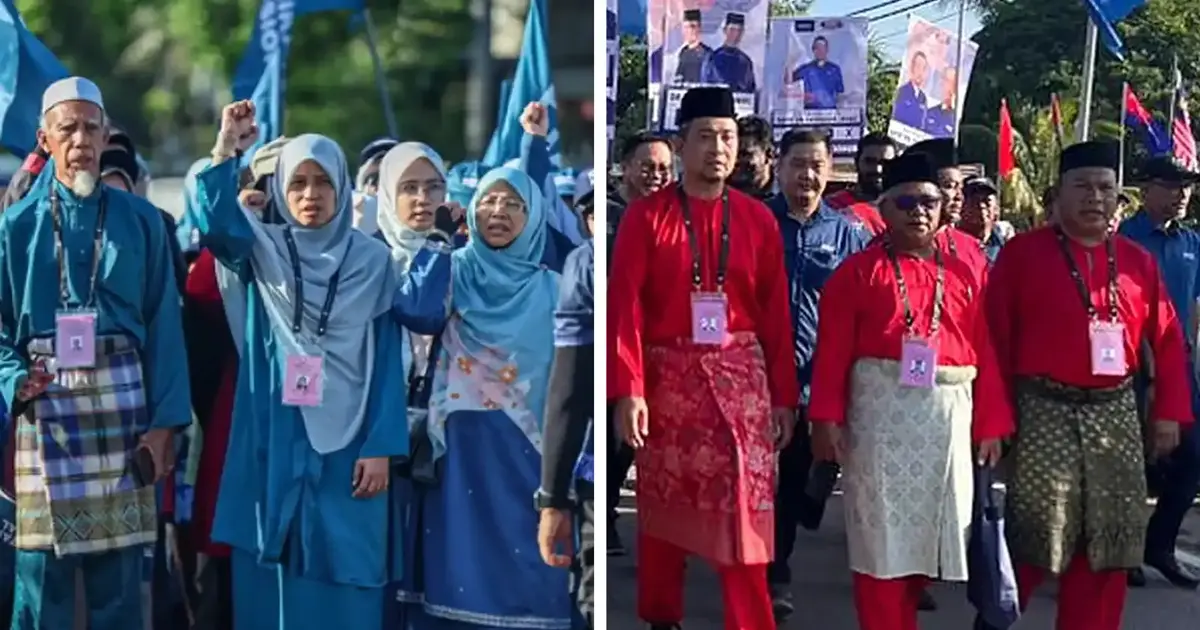
The political fragmentation within Perikatan Nasional threatens to become a significant liability during the Johor state election, with observers warning that disunified campaign messaging from its two largest components—PAS and Bersatu—risks alienating the electorate and squandering the coalition's organisational advantages. The divergence between the Islamist party and former Prime Minister Mahathir's faction comes at a critical juncture, when voter sentiment remains volatile and opportunities for coalition-building remain fluid in Malaysia's intensely competitive electoral landscape.
Peering beneath the surface of this internal tension reveals deeper structural weaknesses within the pan-Malaysian opposition alliance. Where voters once perceived Perikatan Nasional as a united force capable of challenging the entrenched political establishment, the current public spectacle of separate campaign strategies and messaging platforms instead projects confusion and discord. In Johor particularly, where state politics have long been dominated by UMNO-led coalitions, a fractious opposition front struggles to present itself as a credible alternative capable of governing effectively. The appearance of infighting naturally raises questions among undecided voters about the coalition's capacity to deliver coherent policy and unified administration.
The origins of this discord trace to fundamental disagreements over governance philosophy and strategic direction between PAS, which has cultivated support through religious messaging and conservative constituencies, and Bersatu, which has positioned itself as a reformist centre-right force attracting urban and younger demographics. These competing visions inevitably produce different priorities during campaign periods. Rather than synthesising these perspectives into a complementary narrative, the two parties have instead chosen to emphasise their distinct identities, effectively conducting parallel rather than integrated electoral operations across Johor's diverse voting blocs.
Analysts observing Malaysian electoral behaviour consistently point to voter preference for unified, decisive political messaging, particularly in state contests where economic performance and administrative competence matter significantly to household considerations. The Johor electorate, encompassing both rural agricultural communities and increasingly urbanised industrial zones, requires a coalition message sophisticated enough to address this diversity while maintaining thematic coherence. Perikatan Nasional's current fragmentation makes delivering such nuanced messaging exponentially more difficult, leaving openings for rival coalitions to claim clearer, more consistent platforms.
The timing of this internal split carries particular strategic significance. Malaysian state elections invariably serve as barometers for national sentiment and provide crucial momentum for federal-level coalition positioning. A weak Perikatan Nasional performance in Johor—potentially attributable to internal disarray—would undermine the coalition's standing nationally and emboldened rival camps to consolidate support elsewhere. Conversely, unified campaign efforts could have positioned the coalition to capture significant ground even in traditionally hostile territory, demonstrating capacity for growth beyond its existing strongholds in the north.
Voter confidence, once eroded through perception of internal dysfunction, proves remarkably difficult to restore. Research into Malaysian electoral behaviour demonstrates that citizens view splits within coalitions as indicators of deeper institutional problems and leadership capacity issues. When major parties campaign separately rather than collaboratively, it signals to voters that the coalition lacks sufficient common purpose to work through disagreements—a troubling indicator for those considering delegating executive authority. This dynamic particularly affects swing voters and newly engaged citizens who must form initial judgements about whether a coalition merits their trust.
The implications extend beyond Johor's borders. If Perikatan Nasional stumbles in this state contest due to internal division, the negative precedent shapes how other state-level coalitions approach unity questions. Smaller component parties within the alliance observe whether fragmentation produces electoral penalties or rewards, informing their own decisions about maintaining coalition discipline. The result could be progressive weakening of Perikatan Nasional's entire structure, manifesting across multiple electoral cycles and geographic regions.
Regional observers in Southeast Asia, watching Malaysia's coalition politics closely, also draw conclusions from how Perikatan Nasional manages internal coherence. Political stability and investor confidence hinge partly on whether ruling and opposition coalitions demonstrate capacity for functional unity despite ideological differences. A coalition that splinters visibly during campaigns raises questions about Malaysia's broader institutional health and governance predictability—concerns that resonate across the region among those conducting business and diplomatic affairs with Malaysian entities.
For ordinary Johor voters, this fragmentation translates into reduced information quality and clearer policy platforms against which to evaluate their electoral choices. Voters understandably prefer campaigns where they can clearly distinguish between competing visions and understand what different coalitions genuinely stand for. Separate PAS and Bersatu efforts necessarily blur these distinctions, making voters' decision-making processes more difficult and potentially depressing overall election engagement.
Reversing this trajectory requires Perikatan Nasional leadership to undertake difficult internal negotiations before election campaigns properly commence. Whether PAS and Bersatu can subordinate their distinct institutional interests to broader coalition objectives remains genuinely uncertain. The immediate Johor contest may determine not only state composition but also the viability of Perikatan Nasional as a cohesive national force capable of presenting itself as a governing alternative to Malaysians across diverse regions and constituencies.

