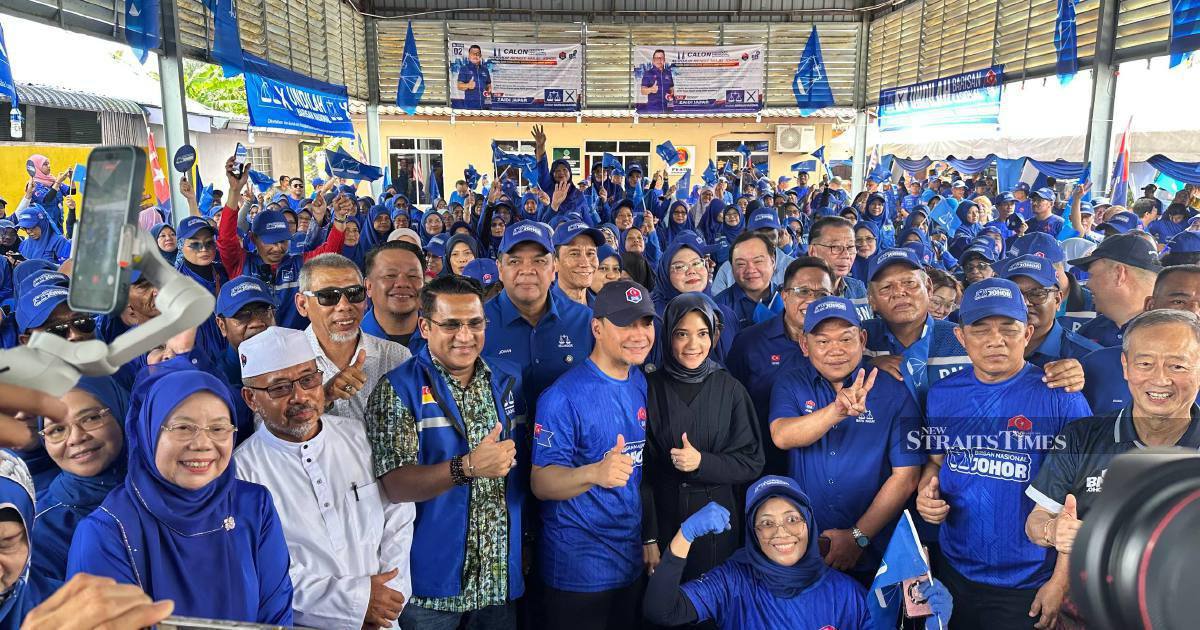
The appearance of two Pas division leaders at a recent Barisan Nasional gathering in Batu Pahat underscores the ongoing push by Umno to rebuild and strengthen its working relationship with fellow Malay-based political parties as the Johor state election approaches next month. Their attendance at the event represents a notable development in the broader coalition-building exercise that has defined Malaysian electoral politics in recent years, particularly as the dominant Malay party seeks to maximize its electoral footprint across key constituencies.
The significance of this meeting extends beyond simple political networking. For more than a decade, the relationship between Umno and PAS has been marked by considerable friction, competition, and at times outright hostility as the two parties vied for dominance within the Malay-Muslim voting bloc. This recent convergence, even in a limited form through divisional leadership participation, suggests that both parties may be recognizing the strategic value of a more unified front in state-level contests, particularly in Johor where the political landscape remains highly competitive.
Johor holds particular importance within the Malaysian political system as one of the nation's most populous and economically significant states. The state election carries implications well beyond Johor's borders, as results often serve as a barometer for broader national sentiment and can influence the strategic calculations of parties planning for federal-level contests. An Umno-led BN coalition performing strongly in the state would reinforce the party's claim to be the natural governing force in the country, while conversely, a disappointing showing could embolden rival coalitions and create openings for opposition parties.
PAS, despite its Islamic ideological foundation, has maintained a pragmatic approach to electoral cooperation when circumstances warrant it. The party has demonstrated willingness to work with BN in certain contexts while maintaining its independent political brand and pursuing its own organizational interests. The division-level leaders' participation at the Batu Pahat event may indicate that grassroots PAS cadres recognize the mutual benefits of closer coordination with Umno in Johor, even if such cooperation remains informal or incomplete.
For Malaysian voters and political observers, these subtle shifts in coalition dynamics merit close attention. The nature and depth of Umno-PAS cooperation in Johor could potentially reshape electoral competition in the state, affecting everything from candidate selection to voter mobilization strategies. If the two parties can translate this dialogue into concrete electoral cooperation, they might present a more formidable challenge to opposition forces that have made inroads in recent state elections.
The broader context of Malaysian coalition politics has become increasingly fluid since the 2022 federal election. The rise of Perikatan Nasional as a serious national competitor has forced traditional BN partners to reconsider their strategic options. For PAS, maintaining some degree of working relationship with Umno and BN provides a hedge against overcommitment to any single coalition while preserving options for future negotiations. Similarly, Umno recognizes that integrating PAS support, even partially, strengthens its electoral position without requiring major ideological compromises.
The Batu Pahat event occurred within a broader pattern of pre-election positioning where parties test and calibrate their relationships before formal campaigns commence. Such gatherings serve multiple functions: they allow leaders to assess grassroots support for closer cooperation, they send signals to potential voters about coalition stability, and they provide opportunities for behind-the-scenes negotiations over candidate placement and resource allocation. The fact that two PAS division leaders chose to attend suggests that at least segments of the party viewed such participation as politically advantageous or strategically necessary.
Regional observers from other Southeast Asian nations have noted Malaysia's continuing ability to execute complex coalition negotiations despite significant political fragmentation. The capacity of parties with ideological differences and historical grievances to cooperate pragmatically when electoral incentives align remains a distinctive feature of Malaysian politics. The Umno-PAS dynamic embodies this characteristic, as two parties separated by organizational culture and historical rivalry can still find common cause when facing shared threats or opportunities.
Looking toward the Johor election, the trajectory of Umno-PAS relations will likely determine the configuration of electoral competition and the ultimate political stakes. If such cooperation deepens, voters may face more straightforward binary choices between coalition blocs. Conversely, if cooperation remains limited or breaks down entirely, fragmentation could create openings for smaller parties and increase overall political unpredictability. The division leaders' Batu Pahat appearance therefore represents more than a routine political event—it constitutes evidence of the ongoing negotiations that will ultimately shape Johor's electoral outcome and potentially influence national political developments.

