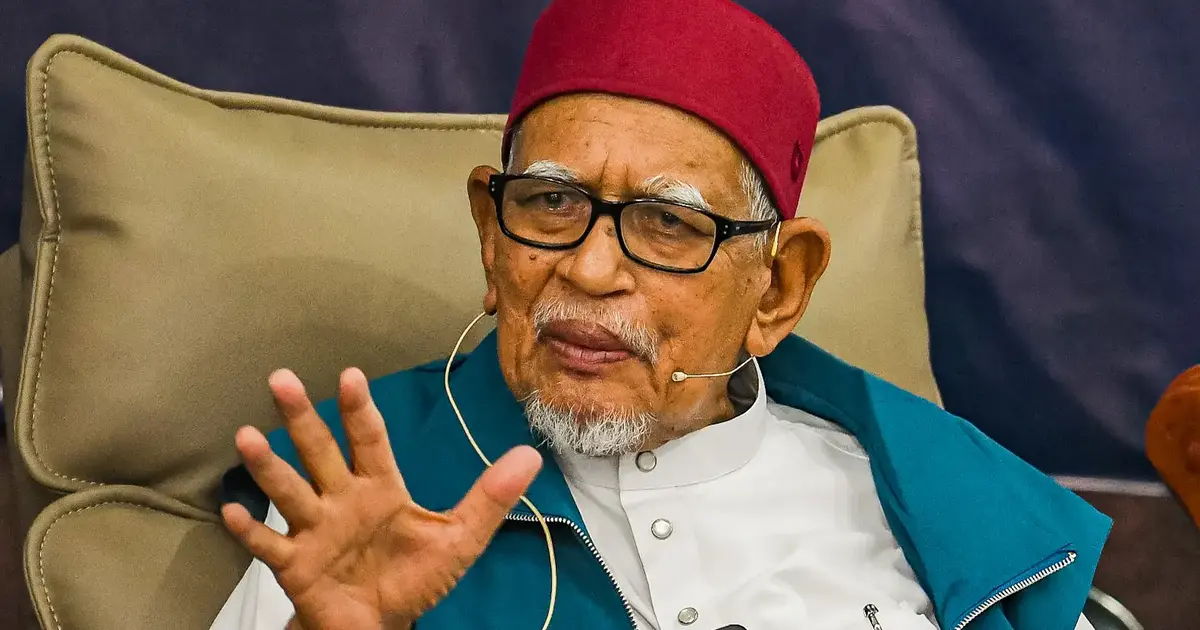
The leadership of Perikatan Nasional has offered insight into a significant tactical manoeuvre that shaped the coalition's approach to Johor politics, with PAS president Hadi disclosing that the arrangement to position Umno as the primary campaigning force was deliberately calculated to protect the Malay-Muslim party's dominance in the state. This strategic repositioning reflects deeper calculations within the Malay-led coalition about how to navigate electoral competition while maintaining internal cohesion and preventing rivals from capitalising on potential divisions.
The decision to have Umno take centre stage in Johor while Perikatan Nasional assumed a secondary role represents a departure from typical coalition dynamics, where all partners typically compete for prominence and resources. By consciously stepping back, the PN leadership sought to eliminate scenarios where a fractured opposition might exploit internal party competition or where Umno's electoral dominance could be challenged by coalition partners attempting to strengthen their own grassroots presence. This reflects a pragmatic understanding that the state government's continuity depended on maintaining Umno's institutional grip on power rather than on maximising individual party performance.
For Malaysian political observers, this arrangement signals an important evolution in how the PN coalition manages competing ambitions among its membership. The coalition, which includes parties with significant influence in their respective strongholds, must constantly balance the desire of component parties to expand their presence with the need to prevent electoral losses that could reshape the broader political landscape. Johor's significance amplifies these considerations—as Malaysia's second-largest state and a traditional Umno bastion, its governance directly impacts the party's national standing and the coalition's overall strength.
The rationale offered by PAS leadership underscores calculations about electoral mathematics in contemporary Malaysian politics. By allowing Umno to lead without facing significant internal competition from PN partners, the arrangement theoretically consolidated the Malay-Muslim vote around a single organisational structure. This consolidation strategy is particularly relevant in Johor, where demographic composition and historical voting patterns have historically favoured Umno, making it logical for the coalition to ensure the party retained its institutional advantages rather than dispersing electoral support across multiple component parties.
From a regional perspective, this strategic decision carries implications for how Southeast Asian coalitions manage inter-party tensions during competitive electoral periods. Malaysia's coalition politics have often been studied as a case study in how multi-party alliances navigate governance, and the Johor arrangement demonstrates sophisticated coordination mechanisms that prioritise stability over individual party advancement. This approach contrasts with coalition dynamics in neighbouring countries, where component parties typically compete aggressively for their own growth regardless of coalition-wide consequences.
The decision also reflects PAS leadership's assessment that strengthening Umno's electoral prospects in Johor would ultimately benefit the broader PN coalition by preventing Umno from defecting to other political groupings or from fracturing internally. In Malaysian politics, where party-switching and coalition realignments occur frequently, maintaining the cohesion of existing alliances sometimes requires individual partners to sacrifice short-term gains. PAS's willingness to adopt this subordinate role demonstrates either trust in Umno's commitment to the coalition or tactical recognition that Umno's loss would be more damaging than PAS's inability to expand in the state.
The strategic framework also illuminates how established parties like Umno leverage their institutional strengths during coalition arrangements. As the dominant party in Johor's state government and the largest component of PN, Umno could reasonably expect other parties to facilitate rather than obstruct its campaign objectives. This power dynamic, while sometimes contentious within coalition frameworks, has become normalised in Malaysian politics as a way to prevent electoral disasters that would destabilise governance arrangements.
However, this arrangement raises questions about how such agreements are negotiated and what compensation, if any, other coalition partners receive for moderating their own electoral ambitions. These unwritten but understood protocols within Malaysian coalitions typically involve allocating other resources—federal projects, ministerial positions, or influence in policy areas—to ensure that subordinate partners maintain commitment to the coalition framework. Without such balancing mechanisms, parties that consistently accept reduced roles risk membership dissatisfaction and internal pressure to pursue independent political strategies.
The Johor decision also demonstrates that Malaysian political coalitions operate with sophisticated strategic depth that extends beyond simple vote-counting or resource allocation. Coalition leaders engage in complex assessments of electoral psychology, voter behaviour, and the relationship between local governance success and national political fortunes. PAS leadership's public explanation of the arrangement suggests confidence that this transparency would reinforce rather than undermine coalition unity, implying that party members understand and accept the rationale for accepting a secondary role in exchange for broader coalition stability.
Looking forward, the sustainability of such arrangements depends on whether the results justified the sacrifice. If Umno successfully retained control of Johor's state government through consolidated electoral support, other PN parties may view similar arrangements as worthwhile. Conversely, if electoral outcomes disappointed expectations, future coalition negotiations might emphasize more balanced distribution of campaign prominence and resources, potentially creating friction that could reshape PN's internal dynamics and its broader political trajectory in Malaysian politics.

